
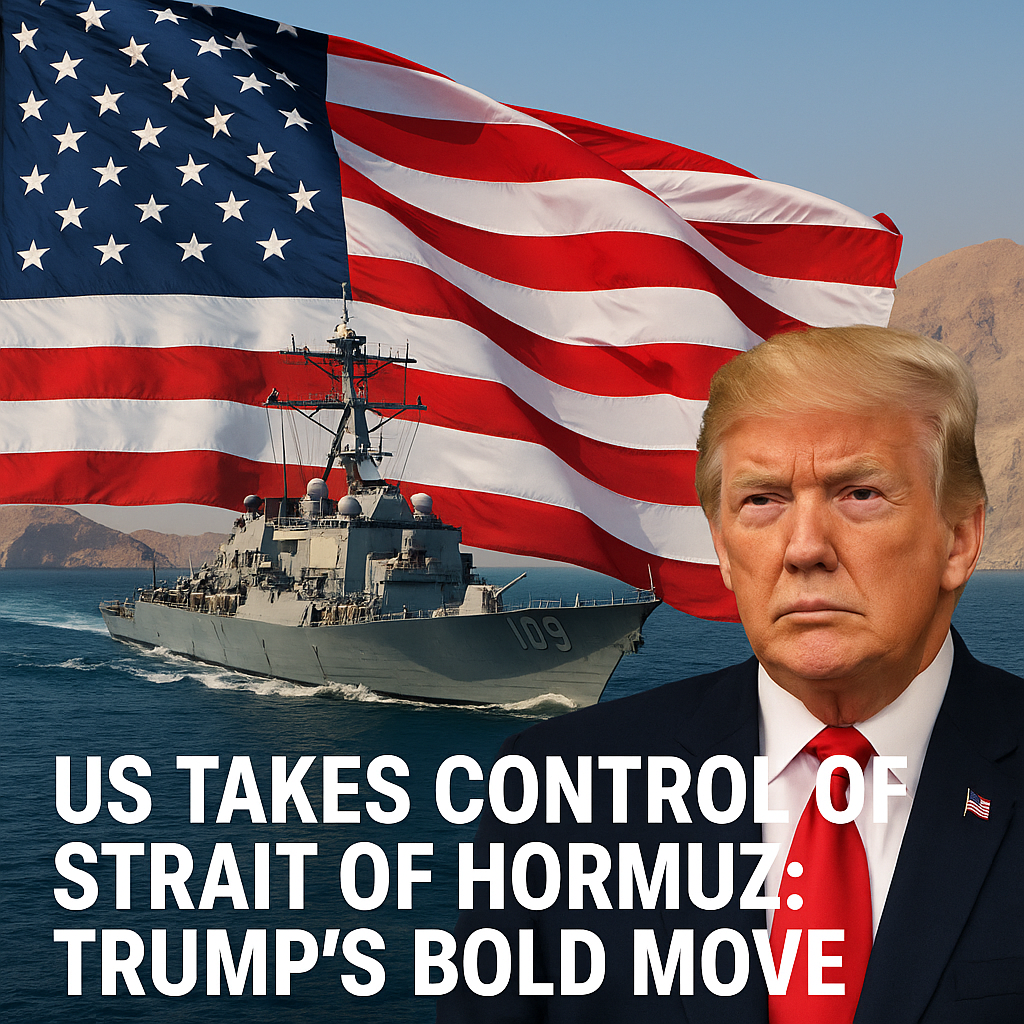
US Takes Control of Strait of Hormuz: Trump’s Bold Move
US Takes Control of the Strait of Hormuz: Trump’s Bold Move
The recent escalation of tensions in the Strait of Hormuz has reignited discussions about U.S. military action under former President Donald Trump. This vital maritime chokepoint, responsible for a significant percentage of the world’s oil transit, has become a hotspot for geopolitical maneuvering, particularly in the context of U.S.-Iran relations.

—

The Geopolitical Landscape
The Strait of Hormuz is strategically important, linking the Persian Gulf to the Arabian Sea and serving as a passage for nearly one-third of the world’s oil supply. Control over this narrow waterway is not just about military might; it’s about energy security and global economic stability.

According to reports from various news sources, Trump’s administration displayed an aggressive stance in the region, opting for a show of force to deter Iranian provocations. Alleging that Iran has continually threatened freedom of navigation, officials pointed to military deployments and naval exercises as necessary measures to ensure that maritime routes remain open. As one source from RT.com outlines, Trump’s approach involved not only immediate military deployments but also a broader strategy to counter Iranian influence in the region.
On the other hand, the Al Jazeera perspective suggests that such militarization risks escalating an already volatile situation. Critics argue that while showing strength can deter aggression, it could also provoke further Iranian retaliation and exacerbating hostilities. The fear is that a miscalculation could lead to a direct confrontation, with both sides caught in the crossfire of a geopolitical tug-of-war.
Military Movements and Diplomatic Fissions
Trump’s military strategy included the deployment of additional aircraft to bases in the region, alongside naval fleets conducting freedom-of-navigation operations. The aim was clear: to affirm U.S. commitment to its allies in the Gulf and maintain stability in international oil markets. Yet, the risk of military escalation remains high. A former intelligence analyst noted, “Every movement in this sensitive area is calculated, but could easily spiral out of control with just one wrong move.”
Yet, not all analysts agree with this militaristic approach. Some argue that engagement through diplomatic channels could yield better results than showdowns at sea. They emphasize the importance of balancing military readiness with diplomatic efforts, suggesting that dialogue may provide a more sustainable solution to regional tensions. This sentiment is echoed by various commentators in Sky News, who warn that further military posturing could isolate the U.S. internationally and destabilize the delicate balance of power in the Gulf.
Diverse Viewpoints and Ongoing Uncertainties
Opinions remain divided about the best way forward. Proponents of an assertive U.S. strategy point to historical precedents where military presence has deterred adversaries. They argue that a resilient posture helps reassure allies and stabilize markets, particularly under the looming threat of Iranian aggression.
Conversely, those advocating for caution stress the need to consider long-term consequences. They emphasize the necessity of understanding Iran’s motivations, often rooted in a complex history of perceived threats from U.S. actions in the region. Without careful diplomacy, they warn, any military strategy risks trapping the U.S. in a cycle of retaliation and conflict, rather than achieving stability.
Uncertainties persist, however, regarding the effectiveness of Trump’s strategy as geopolitical dynamics rapidly evolve. Potential shifts in leadership, both in Tehran and Washington, also complicate predictions about future conduct in the Strait of Hormuz.
In conclusion, the debate surrounding U.S. involvement in the Strait of Hormuz intertwines military strategy with broader geopolitical implications. As Trump’s bold moves continue to shape discussions on international maritime security, the situation remains fluid. The balance between deterrence and diplomacy will likely define relations in this strategically crucial area for years to come.















