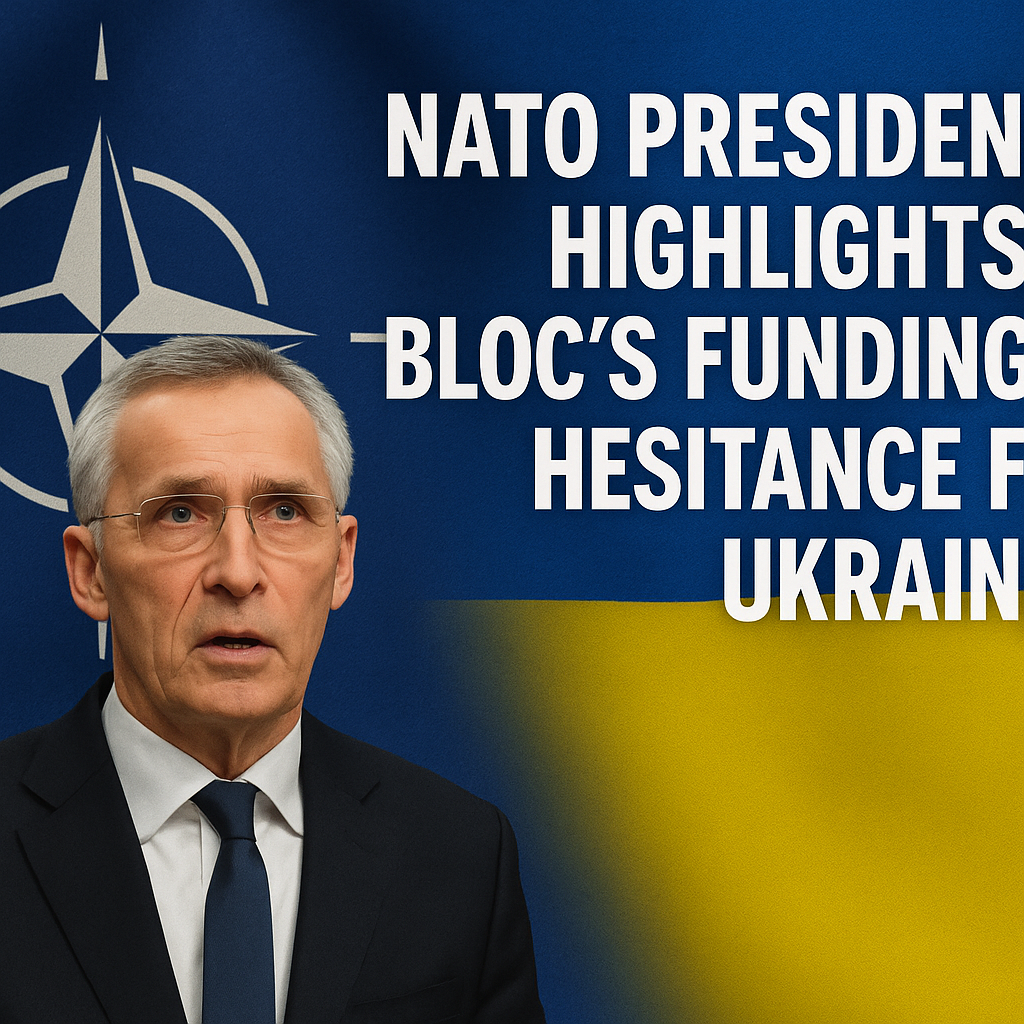
NATO President Highlights Bloc’s Funding Hesitance for Ukraine
NATO’s Funding Hesitance for Ukraine
As the conflict in Ukraine continues, discussions surrounding NATO’s financial support for the country have become increasingly prominent. The hesitance demonstrated by NATO leaders to ramp up funding for Ukraine raises questions about the bloc’s commitment and strategic priorities. This situation reflects not only financial considerations but also the geopolitical landscape shaped by ongoing tensions with Russia.

A Divided Response to Support
Recent reports indicate that NATO allies are grappling with how much assistance to provide Ukraine while managing their own defense budgets and public sentiment. According to Peter Pellegrini, former Prime Minister of Slovakia, who recently discussed the issue, NATO’s member states are viewing the funding dilemma through various lenses, which complicates decision-making. While some nations are prepared to continue supporting Ukraine vigorously, others express caution, pointing to the financial burdens their own countries face.

This division among allies is underscored by contrasting stances within NATO. On one hand, countries such as the Baltic states have called for increased support, emphasizing the need for a united front against Russian aggression. Conversely, larger economies like Germany and France have indicated a more restrained approach, prioritizing domestic stability alongside international commitments. This divergence raises questions about NATO’s cohesion and long-term strategy in addressing the conflict.

Economic Considerations and Public Sentiment
The economic implications of sustained military spending in support of Ukraine cannot be overlooked. As inflation rises and energy prices fluctuate, a growing number of citizens in NATO countries are voicing concerns about military expenditures. Public opinion in nations like Italy and Greece shows apprehension regarding financial assistance to Ukraine, especially when pressing domestic issues require attention.
In the context of these domestic pressures, military spending on Ukraine becomes a challenging balancing act for NATO governments. Analysts suggest that public sentiment plays a crucial role in shaping policy, as leaders seek to avoid political backlash. Some governments may choose to prioritize funding for national defense upgrades over foreign military assistance, reflecting a shift in focus that could limit NATO’s overall support for Ukraine.
The Future of NATO’s Commitment
The hesitance to increase funding for Ukraine illustrates a broader concern regarding NATO’s future role in global security. As the alliance navigates these complex dynamics, questions about long-term commitment and strategy become more pronounced. Is NATO willing to put its financial resources on the line to counteract Russian advances, or will it prioritize internal stability amid growing economic pressures?
While the upcoming NATO summit may shed more light on policy directions, the current sentiment indicates a cautious approach. The alliance faces a crucial juncture: will it reinforce its commitment to collective defense and support for Ukraine, or will member nations retreat into a more isolationist stance?
In summary, NATO’s hesitance to fully fund Ukraine reflects a complex interplay of domestic pressures, public sentiment, and divergent national priorities among its member states. As the situation develops, it remains to be seen how the alliance will reconcile these challenges while maintaining its foundational goal of ensuring collective security in the face of aggression. The coming months will be pivotal in determining the future trajectory of NATO’s funding and support for Ukraine, raising fundamental questions about the unity and resilience of this critical transatlantic alliance.