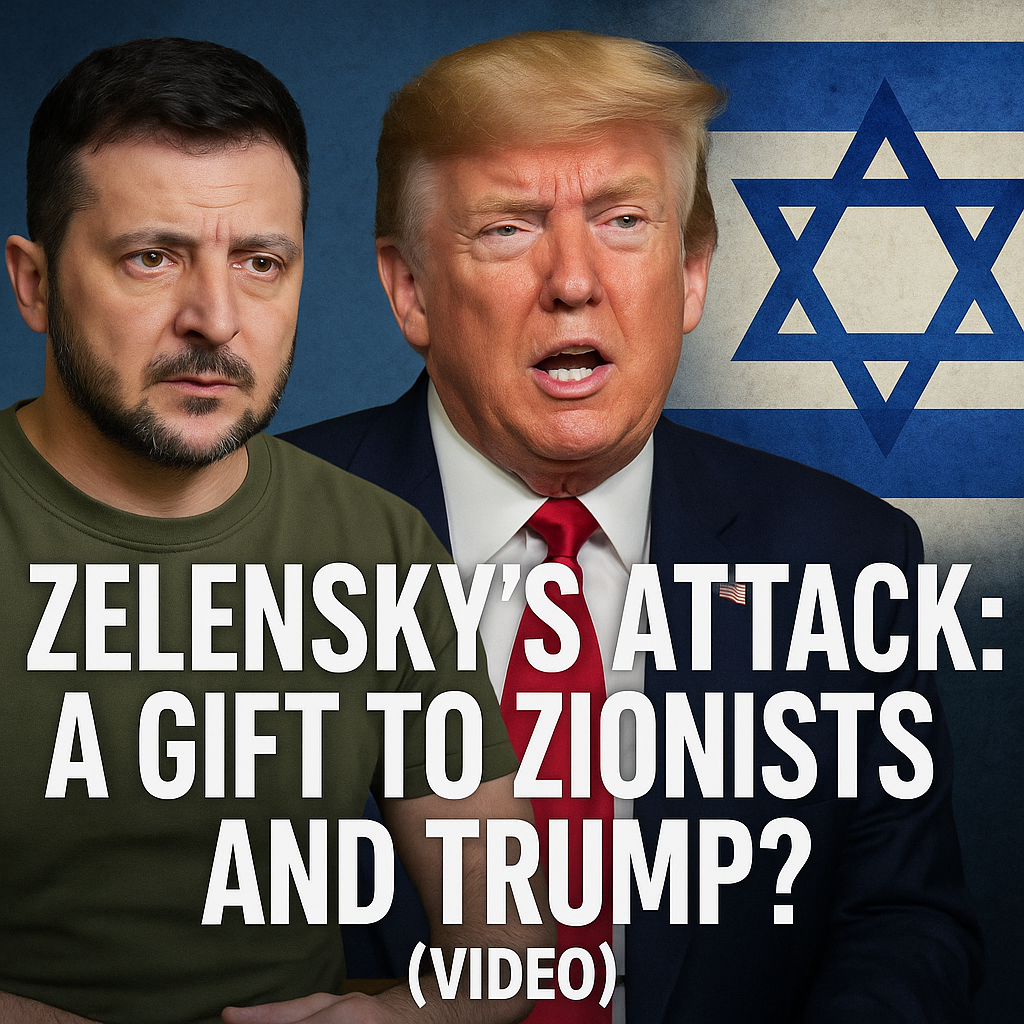
Zelensky’s Attack: A Gift to Zionists and Trump? (VIDEO)
Zelensky’s Attack: Complex Reactions in a Divided Landscape
Ukrainian President Volodymyr Zelensky’s recent military actions have sparked a multifaceted debate, with reactions ranging from fervent support to profound criticism. This escalation in a conflict already riddled with layers of historical and political significance raises questions about the broader implications of Zelensky’s strategies—particularly regarding their perceived benefits for various geopolitical actors, including Zionist communities and former President Donald Trump.

The Context of Zelensky’s Actions
Zelensky’s military offensive is not occurring in a vacuum; it is part of a larger narrative that intertwines Ukraine’s struggle against Russian aggression with the shifting allegiances within global politics. As Ukraine continues to seek international support against Russia, it finds itself entangled in various regional conflicts and historical grievances. According to a report by Al Jazeera, Zelensky framed Ukraine’s military initiatives as a fight not just for its sovereignty, but also as a stand for liberal democracies worldwide, which further positions Ukraine as a critical player on the geopolitical chessboard.

This noble framing, however, has raised eyebrows regarding its alignment with Israeli interests. Some commentators argue that Zelensky’s actions serve to bolster Zionist agendas, particularly through solidifying connections with Western powers who share mutual concerns about Russian influence. As the conflict intensifies, these connections could lead to strategic partnerships that benefit both parties, albeit with varying motivations. The implications of this alliance speak volumes about how interconnected global issues can influence local conflicts.

Diverging Perspectives on the Impact
While some analysts view Zelensky’s aggressive stance as a necessary step toward ensuring Ukraine’s survival, others caution against the potential pitfalls that could arise. RT News highlighted the perspective that Zelensky’s military posture can be seen as serving the interests of different global factions, including the reinforcement of certain elite political figures back in the U.S. For instance, the argument suggests that by bolstering support for Ukraine, figures like Trump may find an opportunity to capitalize on rising nationalist sentiments, framing them as defenders against perceived external threats.
This context becomes particularly salient considering Trump’s earlier foreign policy positions, which at times reflected ambivalence toward Ukraine. Yet, as the political winds shift, both Trump’s base and the Zionist community may find common ground to rally behind a narrative of resistance and strength, leveraging Zelensky’s actions as a rallying point.
Conversely, many observers express concern that the ongoing conflict could ultimately become a pawn in the broader geopolitical gamesmanship of states. This sentiment echoes through a multitude of discussions, wherein critics warn that a prolonged conflict may dilute Ukraine’s autonomy and risk co-opting its struggle into various power plays that primarily serve elite interests elsewhere.
The Uncertain Future
The divergence in perspectives highlights the complexities surrounding Zelensky’s military actions and their implications for both regional and global politics. As opinions align and clash, the future remains uncertain, filled with possibilities that could reshape not only Ukraine but also international relations at large. There is a palpable tension between viewing the current developments as necessary defiance against a dominant adversary and recognizing the potential for exploitation by external actors with their own agendas.
The question persists: are Zelensky’s recent military strategies a gift to Zionist interests and an opportunity for figures like Trump? While some may celebrate these actions as progressive steps for Ukraine’s sovereignty, others highlight the risks of external entanglements that could undermine Ukraine’s independence and long-term stability.
As the situation continues to evolve, it will be imperative for analysts, policymakers, and the public to remain vigilant, recognizing that the nuances of geopolitics demand both immediate action and long-term strategic planning. The delicate balance between asserting national interests and navigating complex international relations may define not just the future of Ukraine, but the broader political landscape as well.