Palestinians Challenge Israeli Settlers Over Hebron Land Grab

Palestinians Challenge Israeli Settlers Over Hebron Land Grab
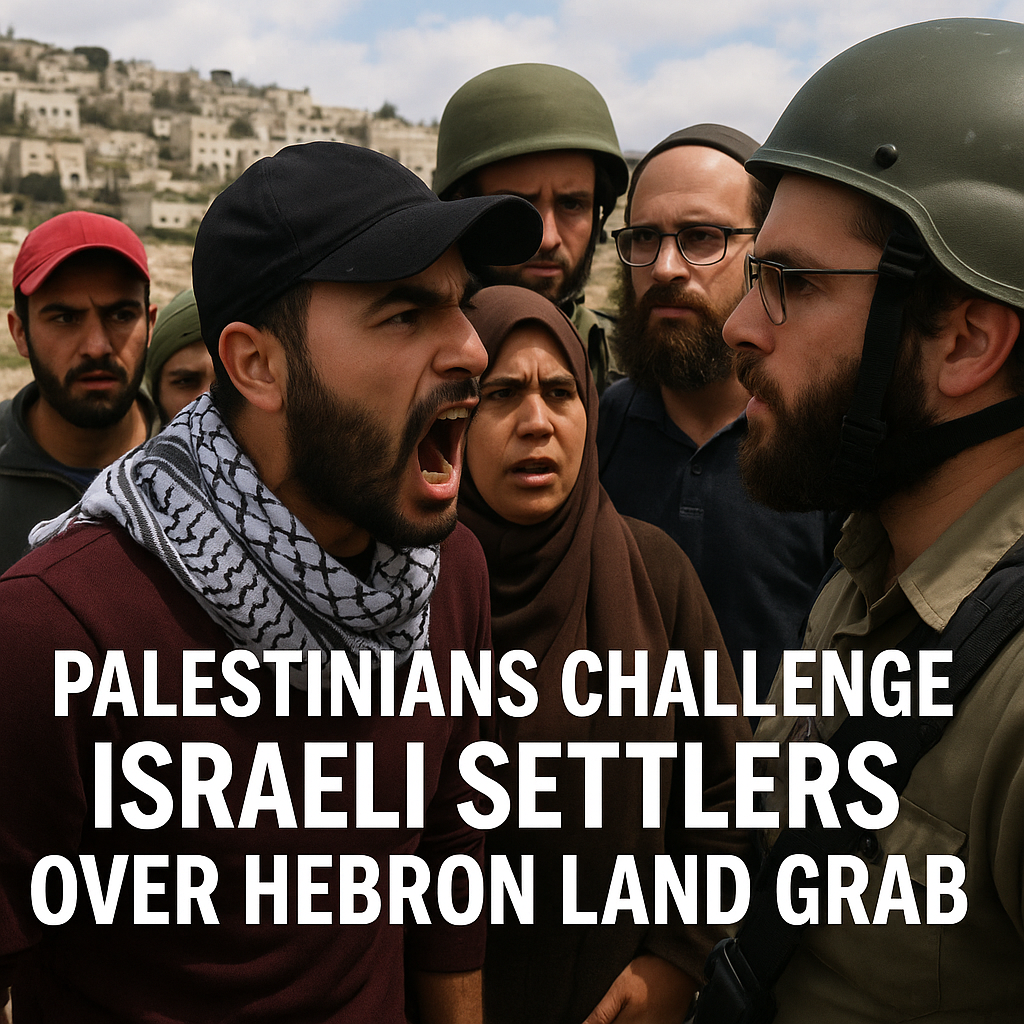
In recent days, tensions have escalated in Hebron, as Palestinians confront Israeli settlers over what many describe as an unlawful land grab. The conflict in this volatile area underscores deeper historical and political tensions that continue to resonate throughout the region.

The Context of Land Disputes
Hebron, home to a significant Palestinian population and located near important religious sites, has long been a flashpoint in the Israeli-Palestinian conflict. The recent confrontation stems from a series of events wherein settlers have allegedly expanded their footprint into areas that Palestinians claim as theirs. Reports indicate that settlers have been asserting control over land that Palestinian families have occupied for generations, igniting a response characterized by both local protests and broader mobilization efforts.


This situation sheds light on the ongoing issues surrounding land rights in the West Bank. Many Palestinians see the actions of the settlers as part of a larger strategy to undermine their presence and rights in the region. “These lands have been ours for centuries,” said one local resident during a protest, epitomizing the sentiments of many who feel threatened by the settlement expansions.


Settler Claims and International Responses
In contrast, Israeli settlers argue that they are reclaiming land that rightfully belongs to them, often citing historical and biblical connections to the territory. This perspective is further bolstered by statements from various Israeli officials who promote the expansion of settlements as a form of national security and civilizational right. Government support for settlements has remained steadfast, with controversial policies being backed by some in the Israeli political landscape.
Internationally, the situation garners mixed reactions. Some nations and human rights organizations decry the settlement activities as illegal under international law, calling for an end to the expansion. Human Rights Watch and various other entities have repeatedly called attention to what they describe as an ongoing violation of Palestinian rights. Conversely, supporters of Israeli settlement policies argue for their legitimacy based on historical narratives and self-defense.
Escalation of Protests and Tensions
Recently, videos surfaced showing confrontations between Palestinians and Israeli settlers, illustrating the immediate emotional stakes involved. Palestinians confronted Israeli settlers on the land, leading to a stand-off that was both daunting and tense. During these confrontations, a potent mix of local frustrations and broader concerns about displacement came to the forefront.
The use of force, both by settlers and, at times, by Israeli military personnel, has further complicated the situation. While some international observers have called these responses excessive, others see them as necessary for maintaining order in an increasingly volatile environment. The differing narratives about these confrontations illustrate the complexities involved; one side views them as a defensive action, while the other perceives them as an aggressive violation of rights.
Conclusion: Navigating a Complex Situation
The land grab in Hebron continues to symbolize a broader battle over identity, history, and rights in a region steeped in conflict. The acts of confrontation witnessed recently serve as a microcosm of the larger dispute, involving intricate layers of cultural, political, and legal complexities.
As the situation evolves, the international community remains alert to developments. While some organizations push for policies promoting peace and dialogue, others find themselves entangled in the political rhetoric that often escalates tensions rather than diminishes them. This enhances the uncertainty over the future of Hebron and the broader Israeli-Palestinian relationship.
As both sides dig in their heels, the question remains: can a path to peace be forged amidst such deep-seated grievances, or are the confrontations in Hebron merely a glimpse into a protracted standoff? The answer may lie in new approaches to dialogue that respect the historical narratives and rights of both Palestinians and Israelis.