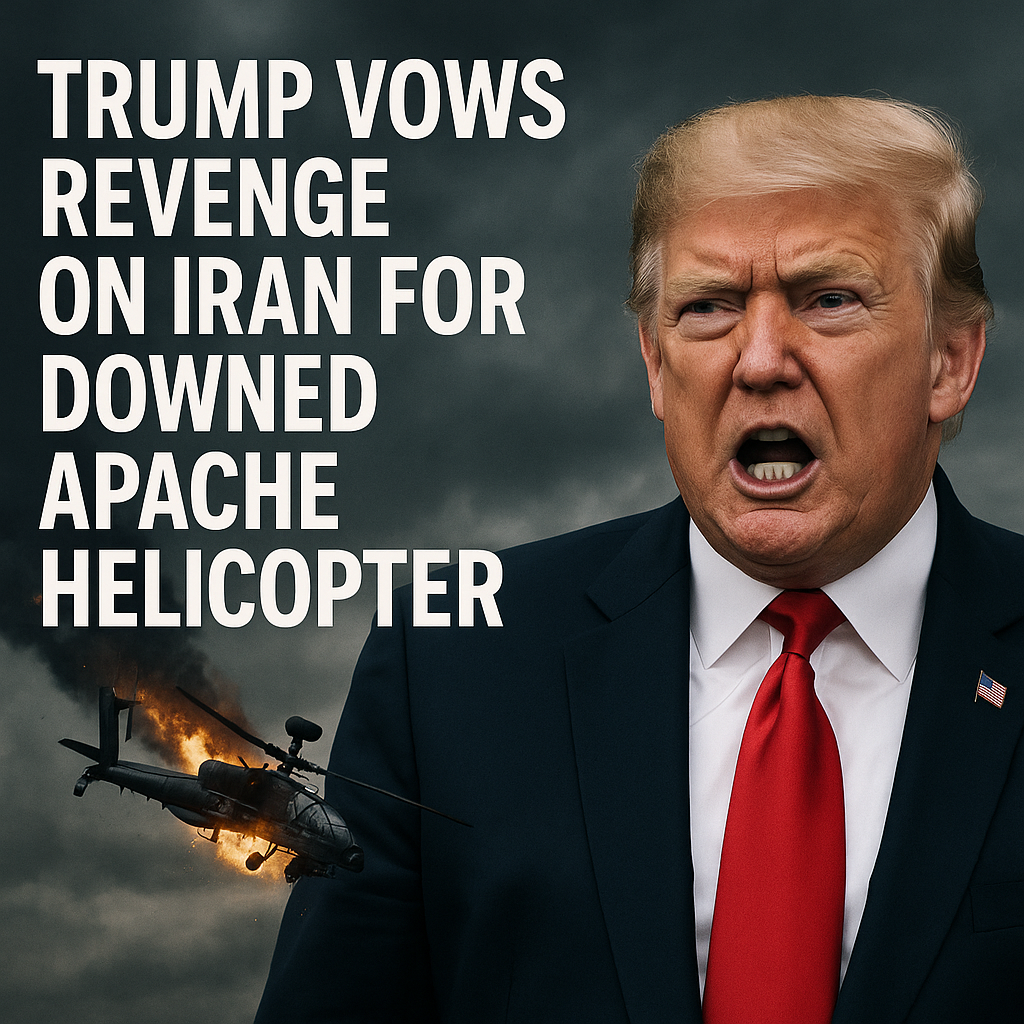
Trump Vows Revenge on Iran for Downed Apache Helicopter

Trump Vows Revenge on Iran for Downed Apache Helicopter
In a recent escalation of geopolitical tensions, former President Donald Trump has made headlines by vowing “revenge” on Iran following the reported downing of a U.S. Apache helicopter in Iran’s airspace. This incident, which has sparked a flurry of responses from various political factions, raises questions about future U.S.-Iran relations and the implications for regional stability.

The Incident and Immediate Reactions
According to various reports, the downing of the Apache helicopter was attributed to Iranian surface-to-air missile systems. Trump’s reaction was swift, promising that there would be severe consequences for Iran’s actions. His statements reflect a pattern of using provocative rhetoric that aims to galvanize support among his political base while positioning himself as a staunch defender of American interests abroad.


The Iranian government, on the other hand, characterized the action as a legitimate exercise of national sovereignty, asserting their right to defend their airspace from foreign military incursions. This incident is part of a persistent cycle of tensions between the U.S. and Iran, exacerbated by historical grievances dating back decades.


Divergent Perspectives
Various analysts have weighed in on Trump’s vows of revenge, bringing forth a diversity of viewpoints. Proponents of a strong stance against Iran argue that the U.S. must respond decisively to maintain credibility in both domestic and international arenas. They point to the dangers of perceived weakness, claiming that Iran’s aggressive actions could embolden other adversaries and lead to further destabilization in the region.
Conversely, critics urge caution, emphasizing the potential for escalation into military conflict. They argue that Trump’s fiery rhetoric could lead to unintended consequences, drawing the U.S. deeper into a conflict and potentially putting American lives at risk. Diplomats and foreign policy experts fear that a heavy-handed response would only serve to exacerbate tensions and hinder future negotiations.
Historical Context and Implications
The context of U.S.-Iran relations is crucial in understanding the ramifications of this incident. For decades, relations have been fraught with distrust, punctuated by events such as the Iran Hostage Crisis, the Gulf War, and the more recent withdrawal of the U.S. from the Iran nuclear deal. Each of these pivotal moments has contributed to a complex relationship characterized by alternating phases of engagement and confrontation.
The recent rhetoric from Trump may also appeal to an audience skeptical of diplomatic solutions. His administration’s past policies, including sanctions and military interventions, resonate with voters who prioritize a hardline approach over diplomatic negotiation. However, such positions can alienate voices advocating for de-escalation and collaboration.
Looking Ahead: Potential Scenarios
As the situation unfolds, several scenarios remain on the table:
– Military Retaliation: If Trump’s plan for revenge includes military actions, this shifts the U.S. into a more confrontational position, increasing the likelihood of armed conflict and regional instability.
– Increased Sanctions: Instead of military action, the U.S. could impose additional sanctions on Iran, aiming to economically constrict the nation in hopes of curtailing any future military initiatives.
– Diplomatic Channels: There is always the possibility of renewed diplomatic channels aimed at de-escalation. While currently unlikely given the rhetoric, unexpected shifts in leadership or regional dynamics could create openings for negotiations.
– Public Sentiment: The American public’s reaction will also be a crucial factor. A substantial push from voters seeking peace over warfare could pressure political leaders to reconsider aggressive posturing.
In conclusion, Trump’s vow for revenge presents a complex crossroads for U.S.-Iran relations. With multiple factors at play, careful consideration is required to navigate the ever-changing landscape of international diplomacy. While proponents of military action point to national honor and deterrence, the specter of escalation looms large, urging decision-makers to tread cautiously in order to protect both American lives and broader regional stability.