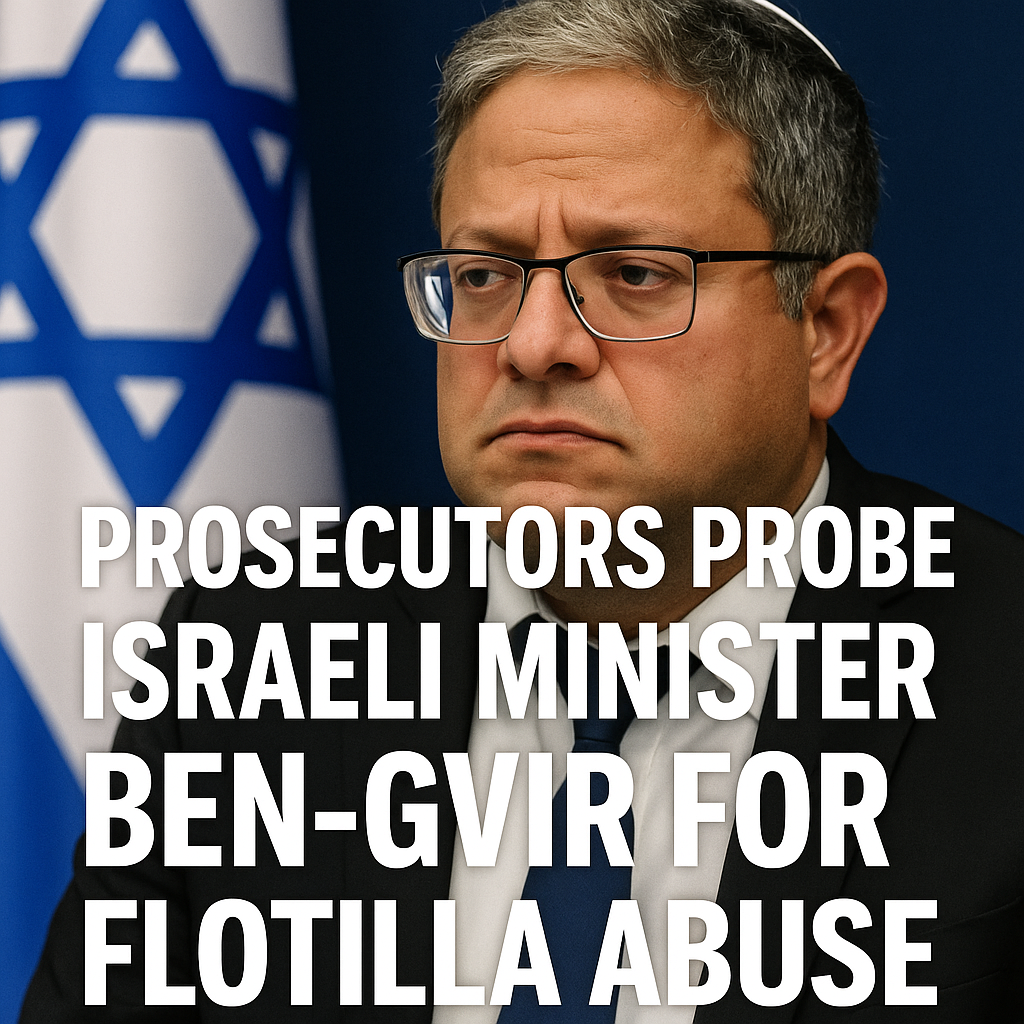
Prosecutors Probe Israeli Minister Ben-Gvir for Flotilla Abuse

Prosecutors Probe Israeli Minister Ben-Gvir for Flotilla Abuse
The scrutiny surrounding Israeli Minister Itamar Ben-Gvir has intensified, with Italian prosecutors launching an investigation into allegations of abuse connected to his role in a flotilla incident. This probe raises critical questions about international law, state accountability, and the complex dynamics of Israeli politics.

Background of the Allegations
Ben-Gvir, a prominent figure within Israel’s far-right political sphere, has been accused of promoting a violent response during a naval operation aimed at intercepting a flotilla carrying aid to Gaza. The incident, which occurred several years ago, has resurfaced as prosecutors in Italy seek to hold individuals accountable for actions that allegedly contravened both humanitarian principles and international regulations governing maritime conduct.


Reports indicate that Ben-Gvir played a substantial role in advocating for aggressive measures against the flotilla. Critics argue that his actions reflect a broader trend within the Israeli government to adopt increasingly hardline positions on Palestinian issues. The investigation could potentially expose not only Ben-Gvir’s actions but also the legal frameworks that protect or hinder state officials from accountability on the international stage.


International Implications of the Investigation
The investigation orchestrated by Italian authorities could have ramifications beyond Ben-Gvir. It underscores a growing trend in which international legal systems are being called upon to address actions taken by government officials that may violate global norms, particularly concerning human rights.
While critics in Israel view this move as an unjust attack on their sovereignty, supporters argue that it reflects a necessary evolution in the international community’s willingness to confront crimes against humanity, regardless of political borders. According to human rights organizations, such investigations are crucial for establishing accountability frameworks that discourage future violations.
However, the landscape is complicated. Notably, some commentators suggest that the probe could further polarize opinions within Israeli society. Supporters of the far-right agenda may interpret this investigation as another example of perceived foreign overreach and bias against Israel, while moderates might see it as an opportunity for legitimate discourse around accountability and reform.
The Political Context and Reactions
The political landscape in Israel has been deeply affected by Ben-Gvir’s leadership within the government, which has embraced hardline policies that resonate with a significant segment of the electorate. His critics contends that his policies have not only exacerbated tensions with Palestinians but have also led to increased violence and unrest within Israel itself.
Ben-Gvir’s tenure has often been framed in tandem with the rising influence of similar far-right figures across Europe, igniting fears among those who advocate for peaceful resolutions to the Israeli-Palestinian conflict. The response from Israeli officials to the ongoing investigation has been mixed, with some backing Ben-Gvir while others express concern over the international implications any findings might have for Israel’s image abroad.
The investigation has generated a range of reactions. Proponents of international law express optimism that it could lead to a stronger accountability mechanism, whereas others view it as a distraction from peace negotiations. The contrasting perspectives further highlight the complexities involved in navigating global justice and domestic political agendas.
Conclusion: Navigating Accountability and Sovereignty
As the investigation of Israeli Minister Ben-Gvir unfolds, it brings to light crucial discussions about state power, international law, and accountability. The allegations serve as a reminder of the ongoing tensions not only in the Israeli-Palestinian conflict but also within international diplomatic relations.
Ultimately, the outcome of this probe could set significant precedents for how nations address accusations of state-led violence and the protection of human rights on the global stage. As both supporters and detractors of the investigation mobilize their arguments, the balance between national sovereignty and the pursuit of justice remains a contentious battleground.