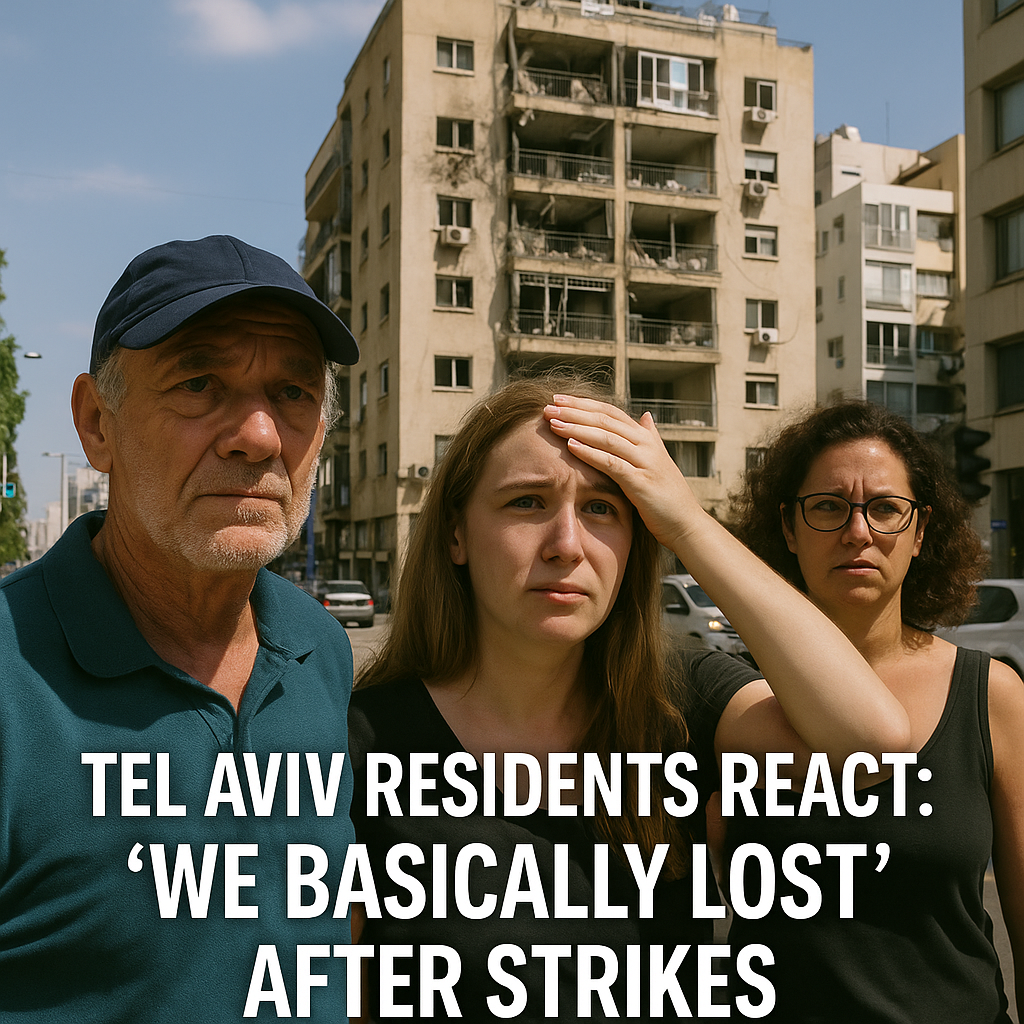
Tel Aviv Residents React: ‘We Basically Lost’ After Strikes

Tel Aviv Residents React: Insights on Recent Strikes
In the wake of escalating tensions and strikes in the region, residents of Tel Aviv express a complex mixture of emotions, leading many to declare, “We basically lost.” This sentiment reflects deep-rooted feelings of fear, uncertainty, and the search for resilience in the face of ongoing conflict.

Understanding the Context of Recent Strikes
In early June, tensions flared between Israel and Iran, culminating in a series of strikes that left many in Tel Aviv grappling with feelings of vulnerability and distress. According to reports, these attacks were not merely physical; they represent a significant psychological toll on the residents.


Al Jazeera highlighted the everyday anxieties faced by civilians, as many lament the desensitization to violence over the years. One resident, illustrating the pervasive dread, remarked, “Every siren takes us back to the past,” suggesting that the scars of previous conflicts continue to shape their reactions and responses to today’s crises. Those interviewed conveyed a sense of emotional exhaustion—a chronic state where hope seems elusive.


However, it’s important to note that perspectives within the city are not monolithic. Some residents exhibit a firmer resolve, expressing a determination to continue their lives despite the strikes. This dichotomy illustrates the varying coping mechanisms people employ, navigating between despair and resilience.
Mixed Reactions: A City in Turmoil
The psychological impact of the strikes has sparked contrasting feelings among the populace. While some residents voiced despair, others maintained a level of defiance. As reported by Sky News, one Tel Avivian expressed, “We cannot let fear control us; we must live our lives.” This illustrates a stark contrast to the prevailing narrative of defeatism, suggesting that while many feel they have lost, others see an opportunity for defiance and continuity.
The understanding of loss varies significantly. For many, it’s not just about physical safety; it’s about a perceived loss of normalcy, community, and stability. The repetitive cycle of conflict has frayed the social fabric in ways that are difficult to quantify, and each emotional response is valid in its own right.
Emotional Landscape: Grief and Defiance
The emotional responses have morphed into a broader communal dialogue, prompting forums for discussion and engagement. Residents convene to share their thoughts and fears, engaging in both cathartic and constructive conversations. This collective effort reveals an underlying resilience, with many emphasizing the importance of community support in times of crisis.
Moreover, the strikes have ignited a sociopolitical discussion about the future of peace in the region. Local activists argue for the need to focus on dialogue, stressing that despair should not eclipse the hopes for a peaceful solution. They advocate for a proactive stance that seeks to address the root causes of such conflicts rather than merely reacting to them.
In contrast, others emphasize the need for defensive strategies, arguing that Israel must prioritize its security needs amid regional instability. These viewpoints highlight the complexity of the situation, where the desire for peace coexists with the need for protection. Public opinion is undeniably bifurcated, yet the overarching theme remains consistent: the longing for a resolution that minimizes suffering and restores a sense of safety.
The Road Ahead: Hope Amid Despair
As Tel Aviv grapples with its current reality, the community faces the dual challenge of managing immediate fears while maintaining hope for a better future. The sentiment of having lost may linger, but it’s interwoven with the possibility of resilience and growth.
The importance of dialogue in the midst of crisis cannot be overstated. Conversations among residents, whether filled with grief or defiance, are crucial for healing. These discussions foster a sense of unity, helping to transform hopelessness into collective action aimed at fostering a more peaceful coexistence.
In conclusion, the reactions of Tel Aviv’s residents encapsulate the multifaceted nature of living in a conflict zone. While the rhetoric of loss permeates much of the discourse, the undercurrent of resilience and determination signifies a community poised to advocate for a brighter tomorrow, even in the shadow of recent strikes. Through engagement, solidarity, and an unwavering spirit, they continue to navigate the harrowing landscape of conflict, embodying both grief and hope for the future.