
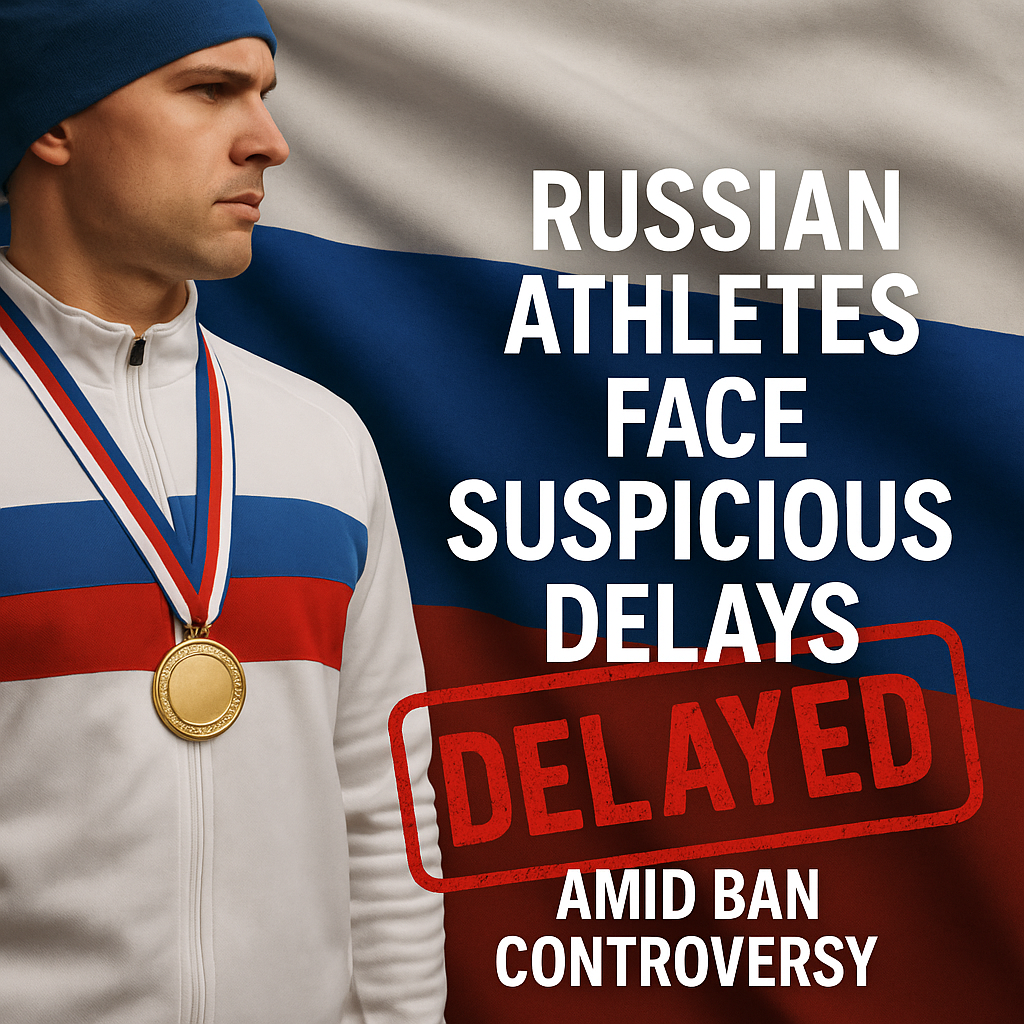
Russian Athletes Face Suspicious Delays Amid Ban Controversy

Russian Athletes Face Suspicious Delays Amid Ban Controversy
In the wake of the ongoing geopolitical tensions, Russian athletes are facing suspicious delays in their participation in international competitions. This situation has provoked a cascade of reactions, as it raises significant questions about fairness, politics, and the future of sportsmanship.

The Context Behind the Ban
The suspension of Russian athletes from international sporting events began after the country’s invasion of Ukraine. Global sports organizations, including the International Olympic Committee (IOC), responded with bans and restrictions. While the intent behind these actions may be rooted in political solidarity and moral stance, the resulting situation appears to be more complex.


According to sources from RT News, the exclusion of Russian athletes from competitions is not just a matter of sport, but also reflects broader geopolitical concerns. Many Russian gymnasts, for instance, have been unable to participate in major tournaments, which has led to not only missed opportunities but also mental and emotional distress.


Conversely, Al Jazeera highlights a growing divergence in how different nations respond to the ongoing situation. Some countries advocate for the inclusion of Russian athletes under neutral flags, arguing for a separation of politics from sports. This perspective suggests that punishing individual athletes for their government’s actions is fundamentally unjust. As international sports bodies grapple with these divergent opinions, the delays and bans continue to evolve, often without clear communication or rationale.
Athletes’ Perspectives on the Ban
Individual athletes have expressed a wide range of emotions regarding their situation. On one hand, many Russian competitors feel isolated and stigmatized. A report on Sky News offers insights from athletes who describe the heartache and uncertainty resulting from these decisions. “It’s not just about medals,” said one gymnast, whose training regimen has been upended. “It’s about our lives. We dedicate everything to this sport, and now it feels like we are not allowed to represent our hard work on the world stage.”
On the other hand, some athletes have publicly supported the ban, citing national pride and a call for accountability. This fraction argues that the current geopolitical climate necessitates such restrictions, positioning athletes as representatives of their countries rather than just individuals working within a global framework.
The Uncertain Path Forward
The lack of a unified stance from international sporting bodies leads to an uncertain future for many athletes. With the next Olympic Games approaching, questions linger over whether Russian athletes will compete as neutrals or will be excluded altogether. This ambiguity creates a brewing controversy; many athletes are left in limbo, unsure if their hard-earned qualifications will matter in the end.
While some sporting organizations have announced tentative steps toward re-inclusion of Russian competitors, the timeline and conditions remain murky. An IOC statement acknowledged the need to reassess policies, but without clear guidelines, athletes find themselves navigating a convoluted and often contradictory landscape.
Public and Political Reaction
Public sentiment on the matter varies widely, with proponents of both inclusion and exclusion vocal in their views. Many fans and advocates for fair play argue that punishing individuals who have no control over their government’s actions creates a dangerous precedent. On the other hand, there’s a growing chorus insisting that sports cannot be divorced from the political realities of the world.
There is also significant pressure from civil society organizations, such as the Human Rights Watch, which underscore the ethical implications of the bans. They argue that the rights of athletes to compete must be honored, independent of their government’s actions, yet this stance is not without its critics.
Concluding Thoughts: The Intersection of Politics and Sports
As this situation unfolds, it serves as a poignant reminder of the intersectionality of sports and politics. Russian athletes face a unique set of challenges that are not merely about athletic prowess but encompass broader themes of identity, national pride, and international relations.
While the hope for a resolution remains, the path forward involves countless negotiations and a willingness from all parties to bend and adapt to our rapidly changing geopolitical landscape. In what appears to be an ongoing saga, one can only wonder if future athletic competitions will echo the themes of collaboration and shared humanity—or reflect the divisions that currently characterize much of the world today.
In this charged atmosphere, the dialogue around the participation of Russian athletes illustrates the complex interweaving of sport with larger global narratives, leaving many to ponder where—if anywhere—this path will lead.















