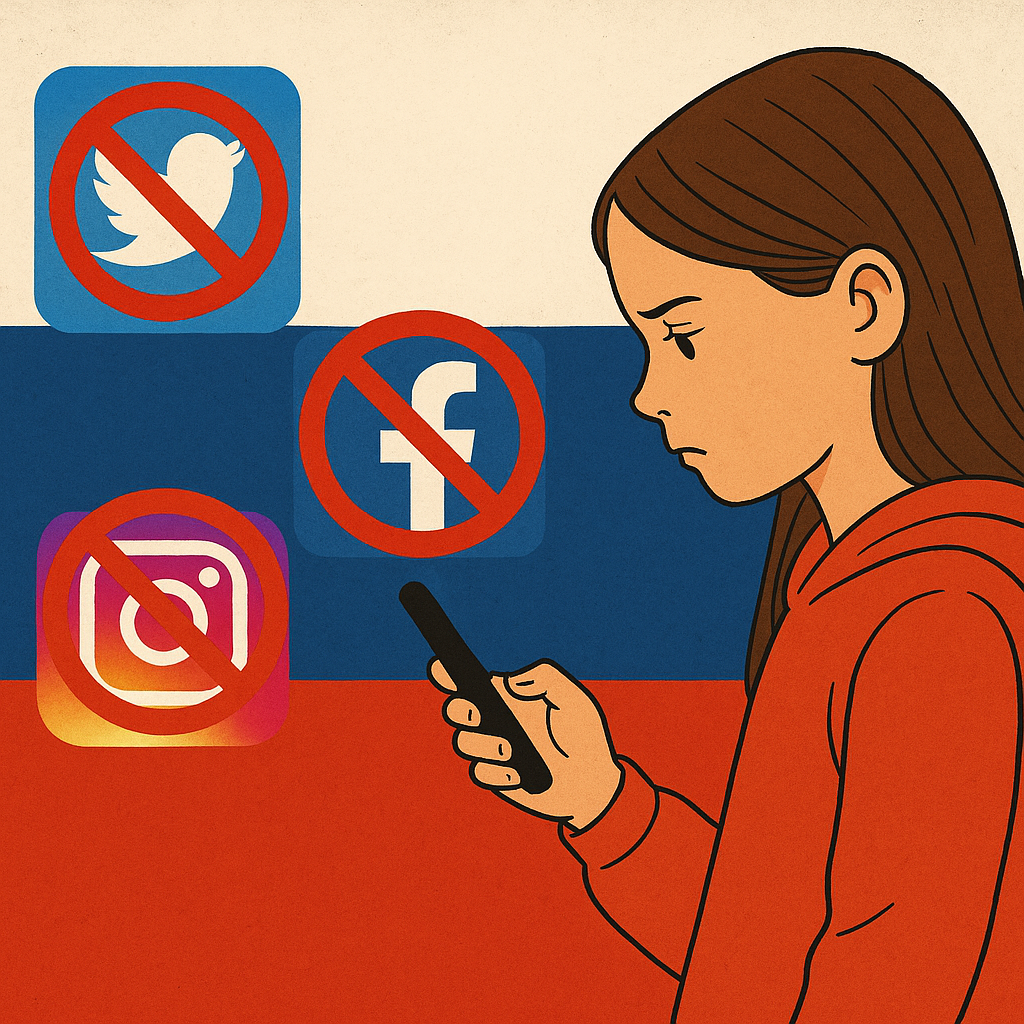
Social Media Bans Won’t Protect Your Child in Russia

The Complex Reality of Social Media Bans in Russia
In the age of digital communication, the efficacy of social media bans as a means to protect children has become a topic of heated debate, particularly in Russia. As the government grapples with the challenges of a burgeoning online landscape, many are questioning whether these measures truly serve their intended purpose or simply mask deeper issues.

The Argument Against Social Media Bans
Recent discussions highlight a concerning perspective: social media bans may not effectively shield children from potentially harmful content. According to a report from RT, experts argue that banning platforms like Instagram and Facebook will not stop youngsters from accessing information they are curious about. Instead, children may use alternative means—such as VPNs or other encrypted applications—to circumvent these restrictions. The reality is that the digital environment offers ample avenues for exploration, and the allure of the “forbidden” can often drive curiosity rather than deter it.


The Broader Context of Online Safety
While the intention behind social media bans is well-meaning, the complexity of online safety extends beyond just banning apps. Al Jazeera has pointed out that effective digital education and open dialogue between parents and children play an essential role in guiding young individuals through the complexities of the internet. Teaching children about safe online practices—including recognizing misinformation, understanding privacy settings, and engaging in respectful online communication—can be far more constructive than simple prohibition.


Furthermore, these discussions bring to light the issue of digital literacy. Many youth are already proficient in navigating online environments, making the act of banning an app not only futile but potentially harmful. The absence of guidance can lead to an unsafe online experience instead. Parents need to empower their children with the skills to critically assess online content rather than restrict access.
The Role of Governance and Parental Responsibility
Governments bear a significant responsibility in creating protective measures for minors. In a nation like Russia, where the media landscape can be heavily controlled, the government often cites children’s safety as a justification for restricting access. However, when children can easily bypass such restrictions, the legal framework appears ineffectual.
Contrasting views from news outlets suggest that while the state’s role is crucial, parental involvement remains irreplaceable. Parents must actively engage in monitoring their children’s online activities and fostering a relationship built on trust and communication. Providing children with the tools to navigate the digital world safely can foster resilience and understanding rather than punitive measures that only promote rebellion.
The Ongoing Debate: Two Perspectives
While it is clear that banning social media is not a panacea for protecting children, opinions differ on the best approach for ensuring their safety online. On one side, proponents of digital restriction emphasize the potential risks associated with unfettered access to harmful content and the rapid spread of disinformation. They advocate for stricter regulations and monitoring to shield children from impacts they deem detrimental.
On the other hand, critics argue that restrictions create a false sense of security. They point out that children will always find ways to access content, whether through VPNs, alternate technologies, or peer networks. As such, rather than clamping down on access, the focus should shift towards fostering a safe and informed online environment.
This divergence illustrates that there is no one-size-fits-all solution to the challenges posed by social media. Different families and communities may require tailored approaches based on their unique cultural contexts and values.
The Bottom Line
The question of whether social media bans can protect children in Russia remains complex. While such measures may seem like a straightforward solution to a multifaceted problem, they often fail to address the underlying issues of education, governance, and parental responsibility. In a digital age where information is abundant and ever-evolving, the emphasis should perhaps be placed on empowering children rather than restricting their access to the digital world.
Ultimately, fostering a supportive environment where children can learn to navigate online spaces responsibly may provide a more effective safety net than mere prohibitions. While the conversation continues, the need for a balanced, well-rounded strategy remains essential for promoting both safety and personal growth in a swiftly changing world.