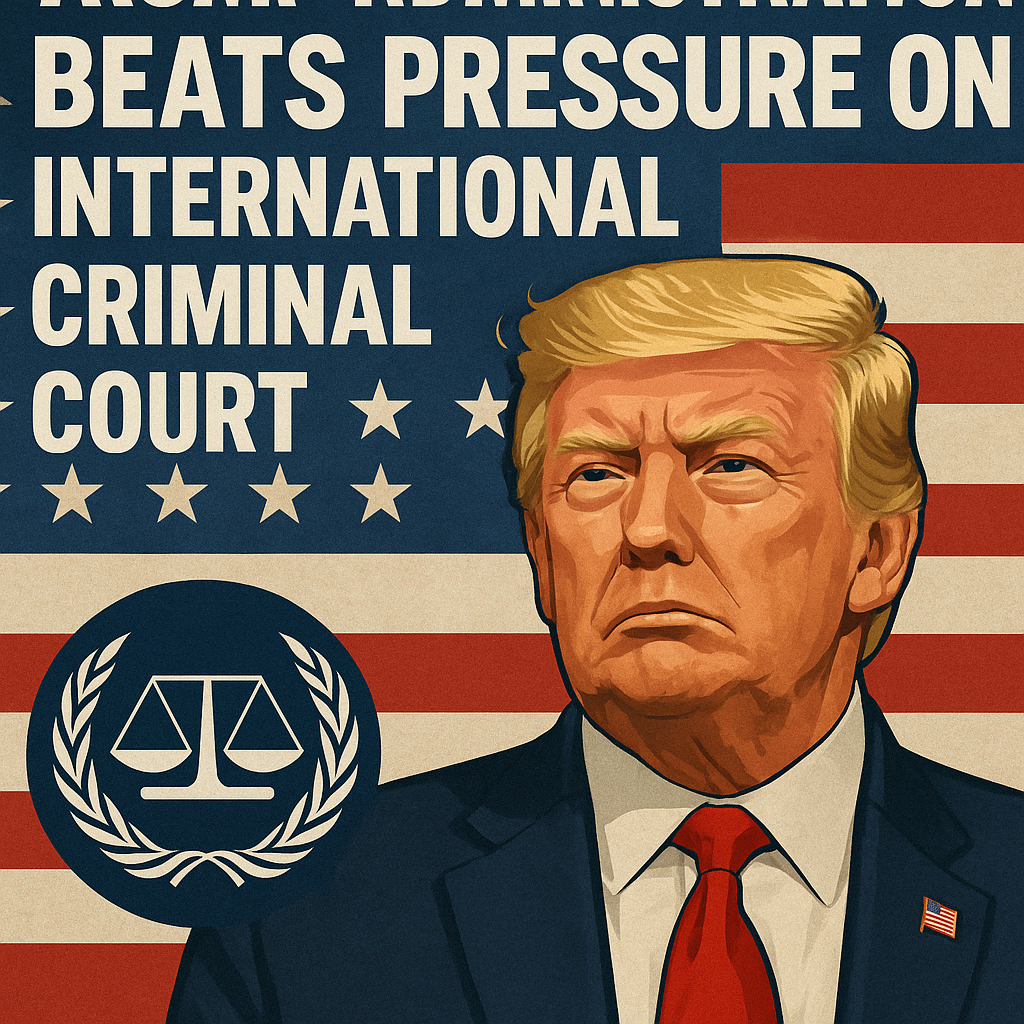
Trump Administration Beats Pressure on International Criminal Court

Navigating the Pressure: The Trump Administration and the International Criminal Court
The Trump Administration has faced significant challenges surrounding its stance on the International Criminal Court (ICC). As global scrutiny increases, the U.S. government’s decision to exert pressure on the ICC has sparked diverse opinions and reactions from various stakeholders, including human rights advocates, legal experts, and international relations analysts.

The Administration’s Position on the ICC
Under the Trump Administration, the U.S. has taken a firm stand against the ICC, branding it as a threat to national sovereignty and a potential venue for politically motivated prosecutions. This viewpoint was notably reinforced when the administration imposed sanctions against ICC officials investigating alleged war crimes by U.S. military personnel in Afghanistan. Critics argue that such actions undermine global accountability mechanisms that allow for the prosecution of war criminals.


Key Arguments:
– National Sovereignty: Proponents of the administration’s approach, including various conservative lawmakers, emphasize that the ICC’s operations often impede U.S. sovereignty. They argue that foreign jurisdictions should not have authority over American citizens or military actions.
– Political Motivations: The administration has contended that the ICC often serves as a political tool for adversarial nations, thereby jeopardizing American interests abroad.


However, critics from various quarters, including human rights organizations and some members of the legal community, see this position as detrimental to the cause of international justice. They warn that denying the legitimacy of the ICC could embolden war criminals and dissuade victims from seeking justice.
Diverse Perspectives on Accountability
The debate surrounding the ICC is not merely about U.S. sovereignty; it also reflects broader concerns about international law and accountability. Several viewpoints emerge, highlighting the complexity of the issue:
Pro-ICC Views:
– Global Accountability: Advocates for the ICC argue that it is essential for promoting accountability for atrocities, especially in conflict zones where national courts may be unwilling or unable to prosecute war crimes. They stress that the court is a critical mechanism to deter future violations of human rights.
– Victim Perspectives: Many victims of war crimes and human rights abuses view the ICC as a beacon of hope. Proponents argue that sanctioning the court discredits the voices of those seeking justice and undermines international human rights efforts.
Critical Views:
– Potential Bias: Some analysts contend that the ICC has demonstrated bias in its investigations, often targeting nations with less geopolitical power while overlooking actions by more influential states. This perception raises questions about the court’s impartiality and effectiveness.
– U.S. Leadership Role: Detractors of the Trump Administration’s strategy assert that withdrawing from collaborative efforts with the ICC sets a concerning precedent. They argue that U.S. leadership is vital in promoting global norms around human rights and accountability.
The Future of U.S. Relations with the ICC
As the Trump Administration continues to navigate the complexities surrounding the ICC, the implications for international relations remain significant. With some analysts forecasting a potential shift in U.S. policy depending on future elections, there is an ongoing debate about what the future holds for the ICC and its relationship with the United States.
The mixed reactions to U.S. actions suggest a broader unease in global responses to allegations of war crimes. While some countries may choose to align with the U.S. stance, there is a palpable frustration among others who see the ICC as a crucial institution for international law.
Uncertainties Ahead:
– Changing Leadership: Future U.S. administrations may adopt varying approaches to the ICC, which could lead to a reassessment of the court’s role in global justice. The evolving political landscape will likely shape the dynamics of international cooperation in this regard.
– Geopolitical Tensions: As tensions between nations increase, the ICC’s role may become even more contentious. The administration’s pressure on the court could either fracture or galvanize international coalitions around justice and accountability.
Conclusion
The Trump Administration’s approach to the International Criminal Court encapsulates the complexities of power, international law, and human rights. While the assertion of national sovereignty resonates with some factions, the counterarguments highlight a potential distortion of justice on a global scale. As discussions continue, it is essential to weigh the merits and downsides of such a polarizing stance, recognizing that the path forward remains fraught with uncertainty and debate.