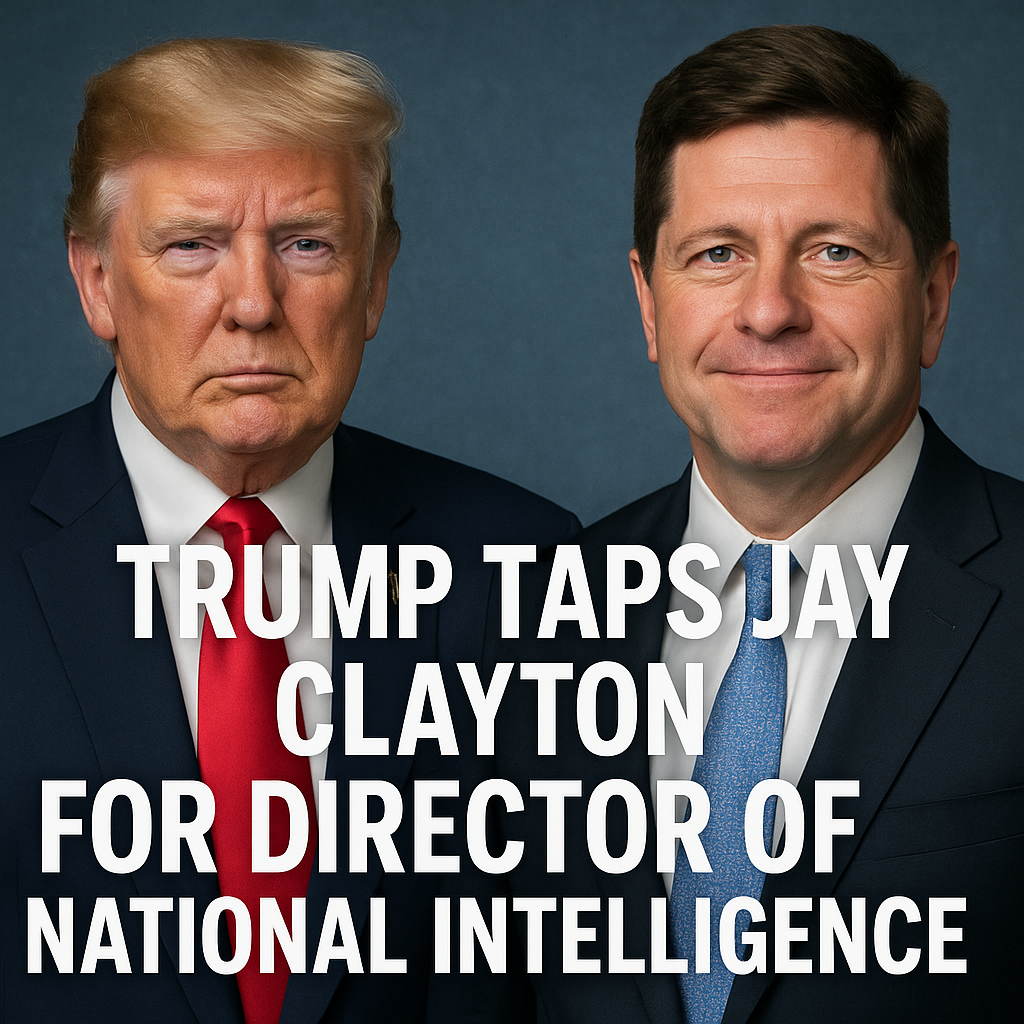
Trump Taps Jay Clayton for Director of National Intelligence

On June 11, 2026, President Donald Trump made headlines by announcing his decision to appoint Jay Clayton as the new Director of National Intelligence (DNI). This move has sparked diverse reactions and discussions surrounding Clayton’s qualifications and the broader implications for national security.

Who Is Jay Clayton?
Jay Clayton is a prominent figure in the legal and financial realms. Before this appointment, he served as the 31st Chairman of the U.S. Securities and Exchange Commission (SEC) from 2017 to 2021. Known for his credentials as a corporate lawyer, his time at the SEC was characterized by a focus on deregulation and an emphasis on market integrity. Clayton’s background primarily centers on financial oversight, making his transition to intelligence oversight seem unusual to some observers.


Critics have begun to question the appropriateness of his expertise for the DNI role, highlighting that the job traditionally requires a significant background in intelligence and national security matters. Supporters argue that Clayton’s experience in navigating complex regulatory environments could provide a unique perspective in overseeing intelligence operations.


Reactions and Implications
The appointment has been met with a complex mixture of skepticism and cautious optimism. Media sources like Al Jazeera report concerns from experts in the national security community regarding Clayton’s lack of direct experience in intelligence work. It is noted that previous DNIs have typically had backgrounds in military service, intelligence analysis, or foreign affairs. This raises the question: can a leader without traditional credentials effectively unify and direct national intelligence agencies?
In contrast, other analysts argue that the DNI position could benefit from a fresh perspective, particularly in our increasingly interconnected and technology-driven landscape. Proponents assert that Clayton’s financial acuity could help address issues like cybersecurity and the economic dimensions of national security.
The Political Landscape
Trump’s choice also signifies a broader strategy within his administration, which has often prioritized loyalty over expertise. Throughout his presidency, Trump has made various appointments that have sparked debates about the relevance of experience versus political alignment. Some commentators from RT emphasize that Clayton’s appointment may reflect a continuing trend of partisan maneuvering, potentially leading to challenges in intelligence-gathering efficacy and credibility.
Moreover, the timing of the appointment comes amidst ongoing geopolitical tensions, including relations with countries like China and Russia. Critics argue that appointing someone with minimal intelligence experience could weaken the U.S. position in global negotiations and undermine key intelligence initiatives.
Despite these concerns, Clayton’s supporters highlight his ability to streamline operations. They point out that transitions of any executive role often face scrutiny, and the real test of Clayton’s leadership will be his ability to adapt, learn quickly, and earn the trust of the intelligence community.
Looking Forward
As Trump officially enacts this appointment, the future of the Directorate of National Intelligence will walk a tightrope between traditional methodologies and innovative approaches. The effectiveness of Clayton in this pivotal role remains to be seen.
The implications of his appointment could reverberate beyond immediate intelligence concerns, potentially affecting the overall relationship between civil liberties and national security. The intelligence community often faces the challenge of upholding privacy rights while ensuring the safety of citizens, particularly in light of increased surveillance technologies. Clayton’s previous work at the SEC could provide insights into striking the right balance in these areas, but it also poses questions about his prioritization of these issues.
With ongoing discussions about the role of intelligence in a rapidly changing world, the narrative surrounding Clayton’s appointment will undoubtedly evolve. Observers will be keen to gauge not just his performance but how his leadership may redefine what the DNI role entails in the months and years ahead.
In conclusion, while the landscape of national intelligence is complex and multifaceted, Clayton’s selection as DNI may represent a pertinent crossroads. The confluence of financial oversight and national security provides both opportunities and challenges, making this appointment a significant point of interest for analysts, policymakers, and the public alike.