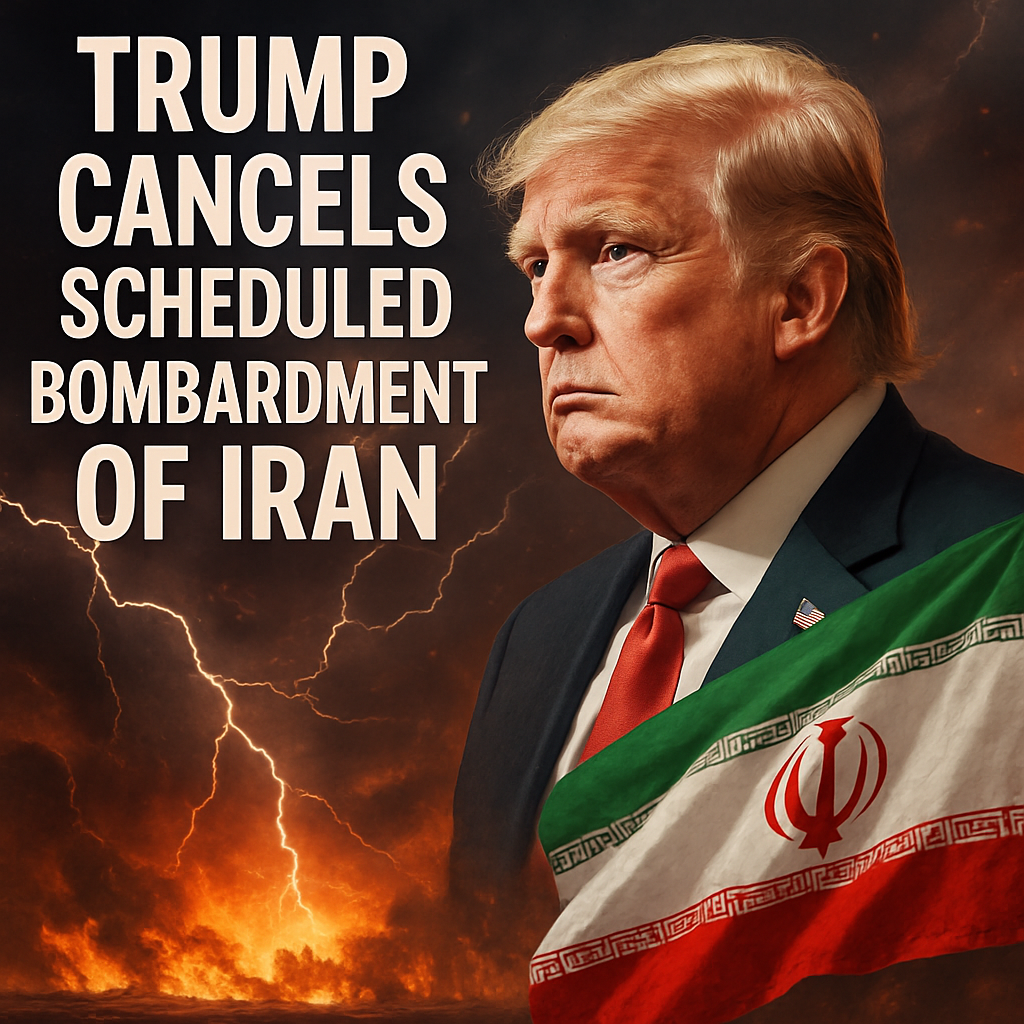
Trump Cancels Scheduled Bombardment of Iran

The Unexpected Turn: Trump Cancels Scheduled Bombardment of Iran
In a surprising and controversial decision, former President Donald Trump has called off a planned strike against Iran, a move that has reignited discussions about U.S.-Iran relations and the strategic calculations behind military engagements in the region. This development encapsulates the complexities of diplomacy, military strategy, and national security interests.

An Unfolding Crisis
The backdrop to this cancellation involves escalating tensions between Iran and the United States. Following multiple incidents, including attacks on U.S. assets in Iraq attributed to Iranian-backed militias, the Trump administration positioned itself toward a potential military response. As reports suggest, the planned bombardment was aimed at key Iranian military installations believed to be responsible for these provocations.


However, recent intelligence assessments indicated that such an action might not only endanger American lives but could also exacerbate tensions further, leading to an extended conflict in the region. U.S. officials have expressed concerns that striking Iran could ignite retaliatory attacks across the Middle East, altering the balance of power in a region already fraught with instability.


Diverging Perspectives on Military Action
Opinions on Trump’s decision to cancel the operation differ markedly among experts and analysts. Some view the cancellation as a necessary restraint, advocating that a strike would have stirred regional chaos. Kenneth Pollack, a senior fellow at the American Enterprise Institute, stated, “Given the current geopolitical landscape, any military action against Iran poses significant risks that far exceed potential benefits.” This sentiment resonates with those who argue for a more diplomatic approach to resolving international conflicts.
Conversely, other analysts, particularly those advocating for a tougher stance on Iran, argue that the missed opportunity could embolden Tehran. Michael Doran from the Hudson Institute remarked, “Cancellation illustrates a lack of decisiveness and may send the wrong message to adversaries.” This perspective highlights the fear that a delay in demonstrating military resolve could ultimately embolden Iranian aggressions and undermine U.S. deterrent capabilities.
Implications for U.S.-Iran Relations
The decision carries weight not only in military circles but also politically. The complexities of U.S.-Iran relations over the past decades have oscillated between confrontation and negotiation. A military strike, or the lack thereof, will likely shape future interactions. Many experts believe the U.S. must balance deterrence with diplomatic engagement to navigate these turbulent waters effectively.
Moreover, the cancellation of the bombing has left many questions unanswered regarding U.S. foreign policy strategy under Trump’s leadership. Will this signify a new direction towards more diplomatic maneuvers, or is it merely a tactical pause? As history shows, U.S. actions often reverberate throughout the region, impacting alliances and hostilities alike.
The Role of International Actors
Responses from allies and regional powers have been diverse, with countries like Israel expressing concern over Iran’s capabilities but also emphasizing the need for caution. Israeli Prime Minister Naftali Bennett insisted on a proactive approach, suggesting that any perceived weakness may allow adversaries to exploit the situation.
On the other hand, nations that have maintained a diplomatic channel with Tehran—such as China and Russia—may view the cancellation as an opportunity to strengthen their ties with Iran. In a statement, a Chinese official underscored the need for dialogue and multifaceted communication, which would foster a more stable regional environment.
The Path Ahead
As the dust settles from this unexpected decision, one thing is certain: the geopolitical chessboard in the Middle East remains intricate and fraught with uncertainty. The cancellation of the bombing represents not just a tactical moment but a pivotal point in ongoing discussions about how countries can assert their interests without triggering conflict.
Moving forward, it will be crucial for U.S. policymakers to reassess their strategies towards Iran—not just in military terms, but within a broader spectrum of diplomacy, coalition-building, and economic pressure. The long-standing challenges of trust and historical grievances demand careful navigation as all parties involved seek a balanced approach that serves their national interests.
This situation serves as a reminder of the unpredictability of international relations, where a single decision can pivot the course of diplomacy and alter the future landscape of global politics. The complex interplay of military might, diplomatic efforts, and multilateral negotiations will undoubtedly define how the U.S. and Iran engage in the years to come.