US Carmakers Could Build Missiles, Trump Suggests

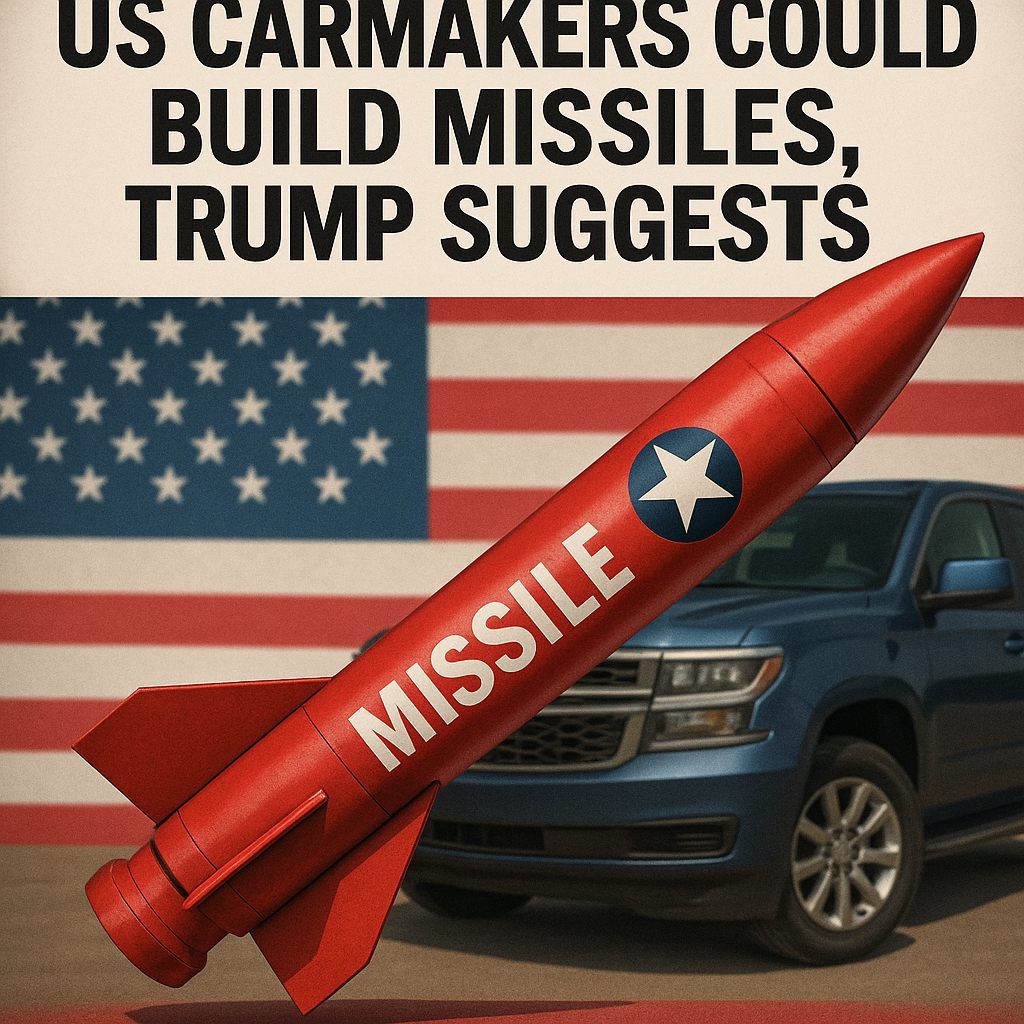
In recent statements, former President Donald Trump suggested that U.S. car manufacturers could pivot their operations to produce missiles, a controversial notion that has sparked diverse reactions from various sectors. The proposal positions the automotive industry as a potential supplier for defense needs amid rising global tensions.

The Context of Trump’s Suggestion
Trump’s comments came during a period of heightened geopolitical uncertainty, especially regarding U.S. relations with countries such as China and Russia. As tensions escalate in regions where military preparedness is crucial, the idea of cross-industry collaboration for defense purposes has garnered attention. According to the RT report, Trump emphasized that American carmakers could readily transition to manufacturing missiles—a suggestion that blends national security with corporate capability.


This perspective feeds into a broader discussion about the dual-use nature of manufacturing facilities. Many plants across the U.S. are equipped with advanced technology that could theoretically be adapted for defense production. Historically, the automotive industry has been repurposed during wartime, producing everything from military vehicles to aircraft in the past. The idea of revamping manufacturing lines for missile production is provocative yet not entirely without precedent.


Diverse Reactions
Reactions to Trump’s proposal have been mixed, with various experts weighing in on its viability and implications.
Economic Considerations
From an economic standpoint, some analysts argue that such a move could create jobs and bolster technological advancement within the automotive sector. Trump supporters assert that redirecting resources towards military manufacturing could invigorate both industries amid a struggling economy post-pandemic. Conversely, critics warn that transitioning from civilian to military production could lead to unintended consequences, such as reduced investment in consumer vehicles during a time when the auto industry is recovering.
National Security Perspectives
National security experts also express differing viewpoints. While some endorse the idea as a pragmatic solution to enhance U.S. missile defense capabilities, others caution against the risks of increased militarization of the private sector. As highlighted by reports from Al Jazeera, there’s a concern that this approach might blur the lines between commercial and military production, leading to ethical dilemmas and heightened domestic tensions.
The Technological Landscape
The technological landscape significantly impacts the feasibility of Trump’s notion. While automotive companies possess the machining capabilities and workforce necessary for large-scale production, missile manufacturing requires specialized knowledge and regulatory oversight. The transition would necessitate not only a shift in production lines but also an adaptation to comply with defense standards, which can be heavily regulated.
Moreover, many in the automotive sector are currently investing heavily in electric vehicles (EVs) and sustainable technologies. This commitment to innovation raises questions about the long-term sustainability of a pivot to military production. Industry leaders might be hesitant to shift their focus away from the lucrative, burgeoning market of EVs—a move that could alienate a growing customer base concerned with environmental accountability.
Conclusion: A Complex Landscape
Trump’s suggestion that U.S. carmakers could step into the line of missile production is a multifaceted proposition. It taps into themes of national security, economic revival, and the evolving landscape of manufacturing. However, the challenge lies in balancing potential benefits with ethical implications and practical feasibility.
As tensions continue to rise globally, the discussions surrounding defense production—and its intersection with consumer industries—are crucial. While the idea may hold promise for a robust defense initiative, extensive deliberation is needed to navigate the implications for both the automotive industry and national security as a whole. The conversation is just beginning, and only time will reveal how this proposal might evolve in the context of U.S. manufacturing and defense policy.