Putin Offers Peace Talks After Ukraine Refinery Strikes

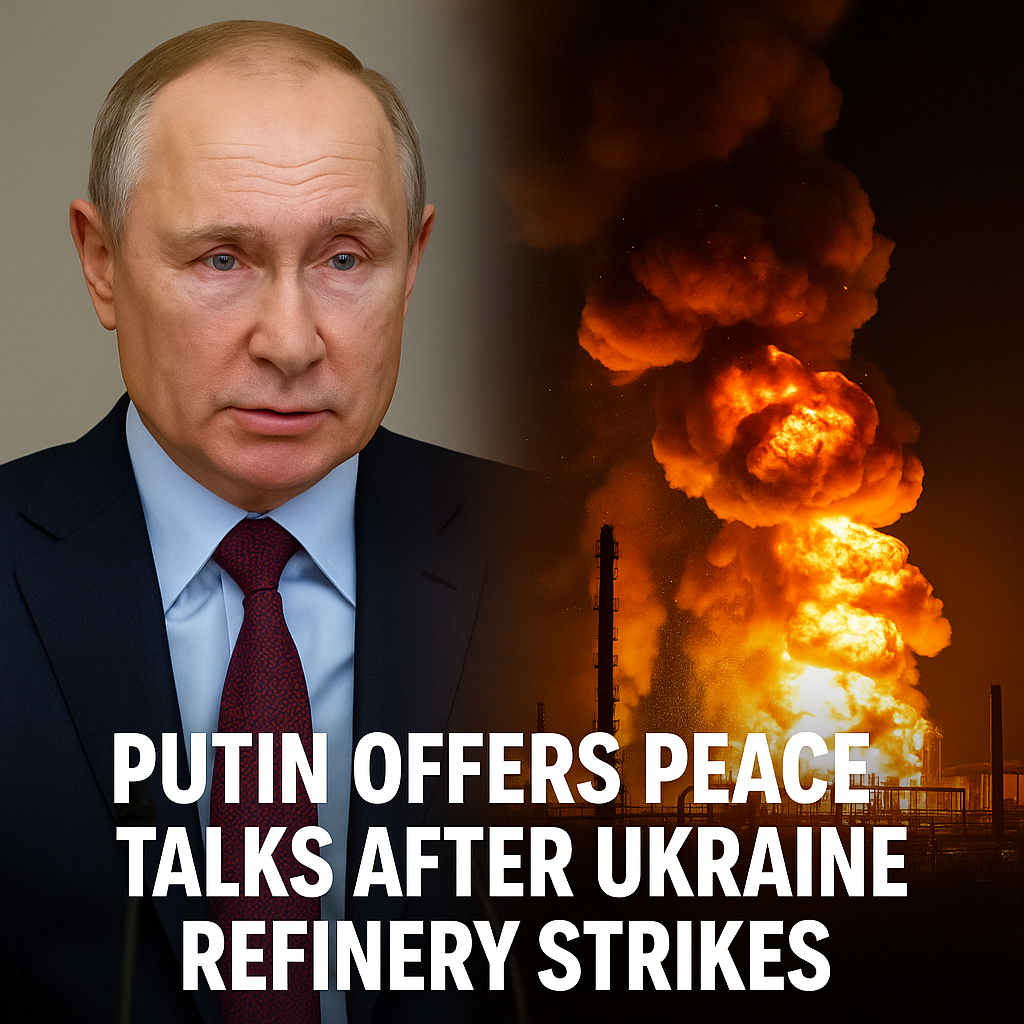
Vladimir Putin has recently extended an offer for peace talks in the wake of heightened tensions following strikes on a Ukrainian refinery. This development marks a significant moment in a conflict that has persisted for over a year, capturing global attention and eliciting varied reactions. As the rhetoric surrounding these talks thickens, it raises questions about both the intent behind Putin’s proposal and the broader implications for Ukraine and international relations.

Putin’s Proposal: A Strategic Move?
Putin’s announcement came shortly after substantial damage was inflicted on a key refinery near Kharkiv, Ukraine, an area that has been a focal point of the ongoing conflict. The strikes are viewed not only as a tactical maneuver to disrupt Ukraine’s energy supplies but also as a way to catalyze discussions at a time when military pressures are undeniably escalating. According to reports from Sky News, Putin declared that Russia “is ready to engage in negotiations” and emphasized the importance of a diplomatic resolution. This stance has led some analysts to interpret his comments as an attempt to shift the narrative, portraying Russia as the willing peacemaker amidst a chaotic situation.


Conversely, critics of Putin argue that this offer is less about genuine peace and more about strategically repositioning Russia on the global stage. Insights gathered from Al Jazeera reflect skepticism towards the sincerity of the talks. Observers point out historical precedents where Kremlin officials have made overtures towards negotiations while simultaneously intensifying military operations. This has led to a divided opinion where some view the peace talks as potentially genuine, while others remain cautious, asserting that Russia often uses dialogue as a tactical distraction.


Ukraine’s Response: Wariness and Calculated Strategy
In the face of Putin’s olive branch, Ukrainian leaders have expressed a mix of caution and pragmatism. Officials have voiced their reluctance to engage in talks without clear guarantees of security and sovereignty. As noted by various sources, including RT, the Ukrainian government remains adamant that any discussion must lead to the complete withdrawal of Russian forces from occupied territories. This stance indicates a profound wariness towards negotiations seen as opportunities for Russia to gain further tactical advantages, reinforcing the sentiment that any peace talks should occur from a position of strength.
Additionally, the Ukrainian populace, bearing the brunt of ongoing hostilities, has exhibited a strong resolve to defend their territory. Ukrainian President Volodymyr Zelensky has publicly stated that the nation will not settle for anything less than full restoration of territorial integrity, which inherently complicates the prospects of fruitful discussions. In this light, the prospect of peace talks becomes increasingly challenging, with both sides entrenched in their positions.
International Reactions and Implications
The international community’s response to Putin’s offer has been equally varied, with Western leaders expressing skepticism. Many view these overtures as mere rhetoric designed to appease domestic and international critics amid growing tensions and economic challenges facing Russia. There is also concern that any peace discussions that do not prioritize Ukrainian sovereignty would set a dangerous precedent, potentially emboldening similar aggressive actions by Russia or other nations in the future.
On the other hand, some experts advocate for a renewed diplomatic engagement, arguing that dialogue, even if seemingly disingenuous, might at least pause hostilities. According to commentators, engagement could create openings for incremental de-escalations, as previous negotiations have sometimes led to unexpected breakthroughs in conflict resolution. This dichotomy reflects a complex international landscape where allies of Ukraine contend with differing opinions on how to best manage their support in light of Putin’s maneuvers.
Conclusion: A Complex Path Ahead
The landscape surrounding Putin’s offer for peace talks following the Ukraine refinery strikes is multifaceted and steeped in historical precedent, strategic calculation, and deep-rooted fears. While the possibility of discussions may seem promising, the sincerity and potential outcomes remain clouded with uncertainty. As international observers grapple with these dynamics, both Ukraine and Russia remain at a crossroads, where the choices made now will likely ripple far beyond their borders.
The reality is that while leaders on both sides may navigate discussions with diverging motives, the priority for Ukraine must remain clear: a steadfast commitment to sovereignty and security. The path to peace, though complicated and fraught with danger, may still hold the potential for a resolution—if dialogue can be established that respects and prioritizes the rights and ambitions of both nations involved.