
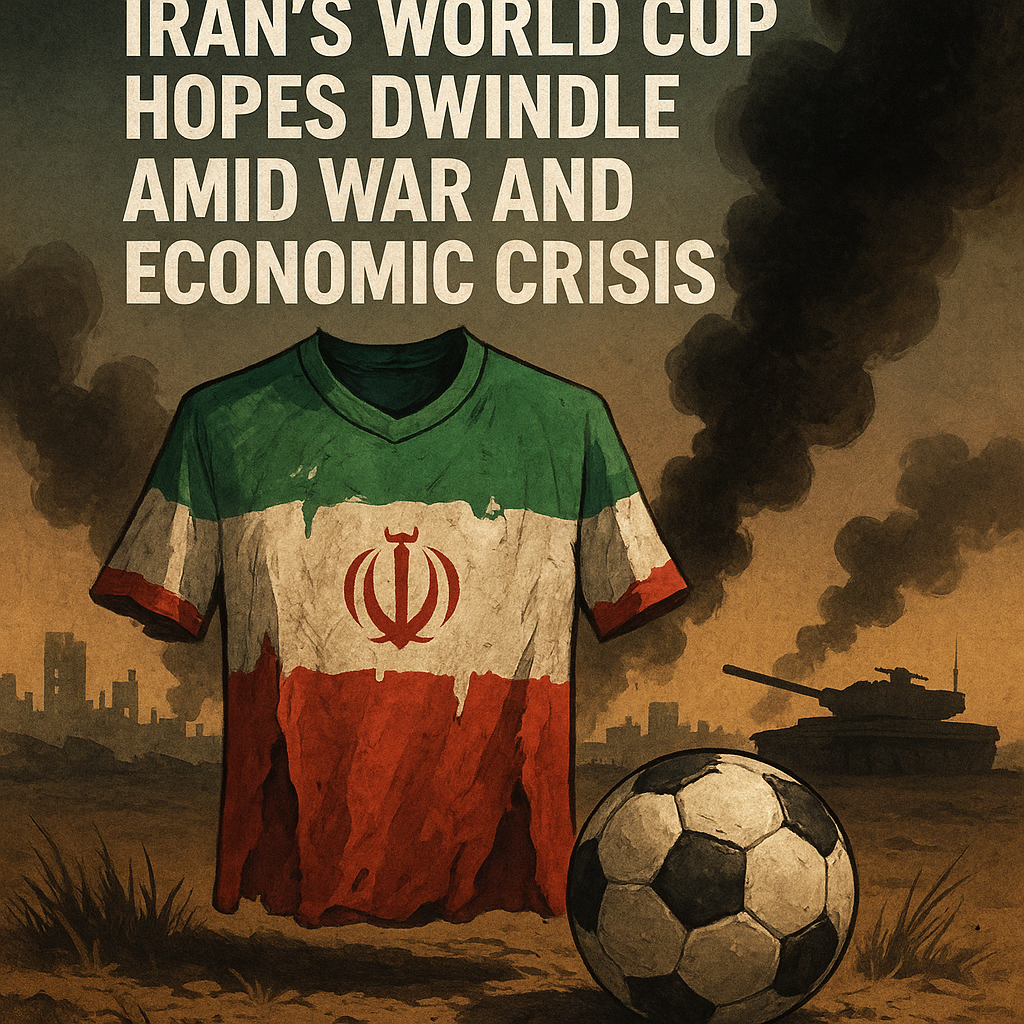
Iran’s World Cup Hopes Dwindle Amid War and Economic Crisis
Iran’s World Cup Hopes Dwindle Amid War and Economic Crisis
Iran’s aspirations for success in the World Cup are increasingly dimmed by the pervasive realities of war and a deep-rooted economic crisis. As the global sporting community gears up for the prestigious tournament, the Iranian national football team faces hurdles that extend far beyond the playing field.

The Economic Background
The Iranian economy has been struggling for years, primarily due to ongoing sanctions and domestic mismanagement. According to Al Jazeera, inflation rates have soared, with food prices skyrocketing, placing a significant burden on the average citizen. Essential goods are becoming more scarce, leading to widespread discontent. For many Iranians, football—once a source of national pride and community unity—now seems trivial amidst the daily fight for survival.

Moreover, reports indicate that unemployment is rampant. With young people representing a large portion of the unemployed, the sense of hope that sports can unite the nation is increasingly challenged by grim economic realities. The enthusiasm that typically accompanies World Cup season is subdued, as many fans cannot afford to attend matches or even invest in merchandise. The national team may be gearing up for international competition, but the populace is preoccupied with far more pressing concerns at home.

The Impact of Conflict
The geopolitical landscape of the Middle East has also cast a long shadow over Iran’s soccer ambitions. Sky News highlights that external conflicts, including tensions with neighboring countries and international powers, affect not just political stability but also sports initiatives. Support for the national team often comes intertwined with nationalistic sentiments, yet the ongoing crises create an environment where such feelings are complicated by broader socio-political issues.
As the Iranian team prepares for qualification rounds, players are increasingly seen as representatives of a nation grappling with turmoil. The international spotlight can both elevate and burden athletes. Expectations can be overwhelming when they are viewed as symbols of resilience amid hardship. Yet, many fear that instead of being celebrated, Iranian players may face scrutiny both at home and abroad for their association with a regime battling accusations of human rights abuses and wartime aggression.
Disparity of Opinions
While many sports analysts and fans maintain a glimmer of hope for the Iranian team’s performance, there is a growing sentiment of pessimism. Some commentators argue that the team’s ability to perform on an international stage may be hampered by domestic instability. The juxtaposition of sporting ambition against a backdrop of economic despair creates a complex emotional landscape for fans.
Conversely, sports enthusiasts hold onto the transformative power of football. They argue that collective support for the national team can serve as a unifying force against the backdrop of division and crisis. This perspective emphasizes the potential of sports to inspire hope, foster community spirit, and momentarily transcend daily struggles. In contrast, others express that external factors, such as economic hardship and political strife, drain the enthusiasm from fans and players alike.
Navigating the Future
As the World Cup approaches, the challenges facing Iranian football cannot be ignored. The dual realities of economic hardship and political conflict raise questions about whether the national team’s efforts can restore some measure of pride. With preparations underway, it remains unclear how much support the team can truly expect from a population grappling with basic needs.
The uncertainty surrounding Iran’s World Cup journey reflects a deeper narrative about resilience, unity, and the socio-political landscape. Many fans are left conflicted, torn between the desire to support a team with a storied history and the sobering realities that dominate their lives.
The narrative of Iran’s World Cup hopes is a poignant one—exemplifying the intersection of sports, national identity, and the struggles of everyday life. As the tournament nears, the nation’s focus on football may provide a brief escape, but it will also challenge the world to look deeper into the complexities of life in Iran today.















