
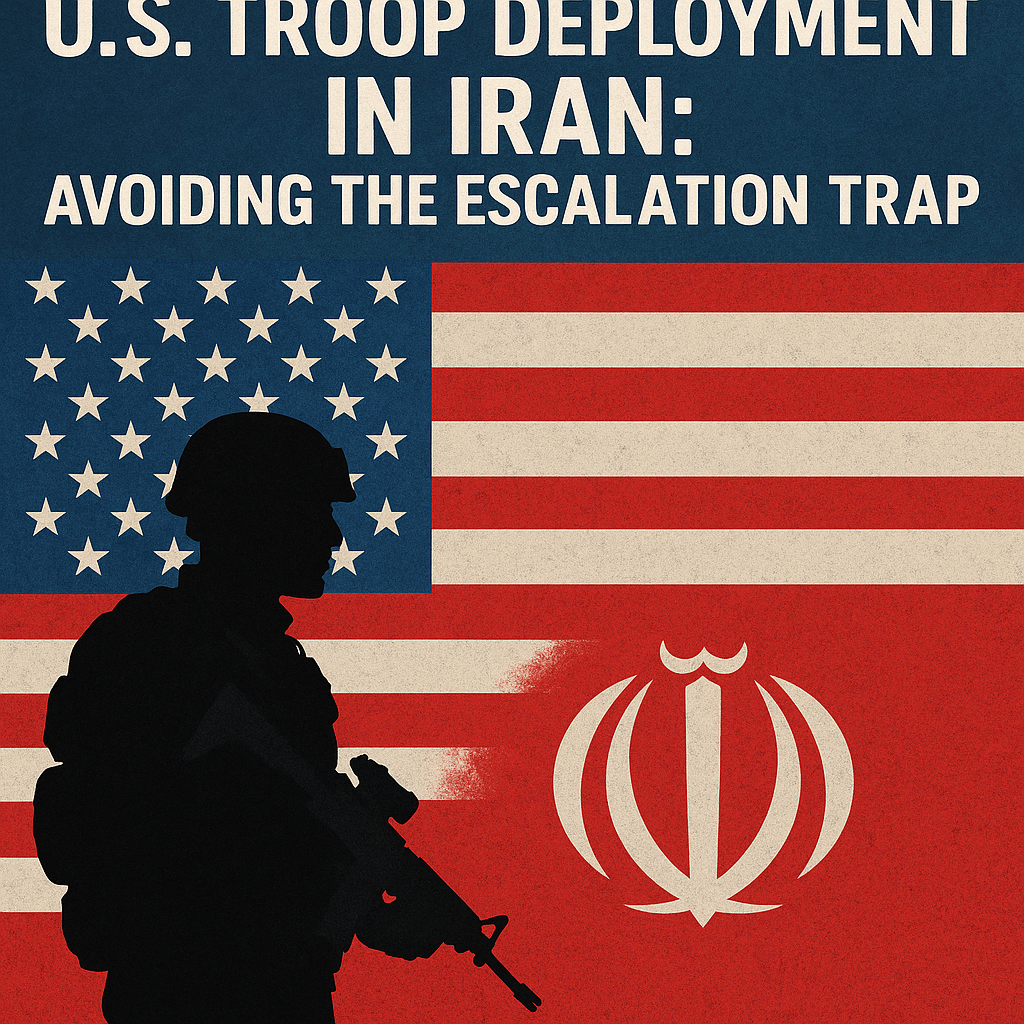
US Troop Deployment in Iran: Avoiding the Escalation Trap
US Troop Deployment in Iran: Avoiding the Escalation Trap
The potential for US troop deployment in Iran raises alarm bells across multiple corridors of geopolitical discussions. As tensions rapidly evolve, it is critical to analyze the implications of such an action and the risks involved in exacerbating an already volatile situation.

Understanding the Stakes
The backdrop to this discussion is marked by recent provocations in the Persian Gulf, including confrontations involving Iranian naval forces and threats to shipping lanes crucial for global trade. Reflecting on these developments, experts from various viewpoints emphasize that any military escalation could spiral out of control, drawing the US deeper into a conflict with Iran that could destabilize the entire region.

The Iranian government has firmly condemned any plans for troop deployment, labeling it an aggressive act that would “ignite further tensions.” Analysts warn that this could not only provoke Iranian retaliation but also endanger US allies in the region, such as Israel and Saudi Arabia. Former military officials have expressed concern that a troop presence could escalate into a protracted commitment, reminiscent of past US involvements in Middle Eastern conflicts.

Diverse Perspectives on Deployment
Risks of Escalation
As reported by Al Jazeera, military analysts argue that deploying troops could significantly entrench the US in the region, much like past interventions. They highlight that Iran views any foreign military presence as a direct threat, which could provoke aggressive responses. A former advisor to the US National Security Council pointed out, “The key question is not just what happens if we deploy troops, but how Iran will respond. History has shown us that military actions often lead to unintended consequences.”
In contrast, proponents of a troop deployment argue that a show of force might deter Iran’s increasingly bold maneuvers. They emphasize that the US must demonstrate its commitment to allies and global security. However, many experts believe this approach underestimates Iran’s calculated responses and the complexities involved.
The Cost of Military Engagement
On the ground, the sentiment against troop deployment resonates strongly with the American public and lawmakers alike. Majority opinions express skepticism about military interventions given the substantial human and financial costs associated with past wars in the Middle East. Newly surfaced polling data indicates that many Americans prefer diplomatic solutions over military involvements to handle tensions with Iran.
Moreover, financial analysts warn that a troop deployment would likely divert significant resources from domestic issues, complicating an increasingly fragile economic recovery. With rising inflation and unemployment concerns, the call for military funding faces steep resistance, further highlighting the internal debate regarding military involvement abroad.
Diplomatic Alternatives and Their Viability
Given the arguments surrounding troop deployment, discussions increasingly pivot toward diplomatic solutions. Engaging with Iran through negotiations and international coalitions remains a favored route for many analysts. The idea here is to avoid escalation while addressing the underlying issues that prop up hostilities.
Experts suggest establishing backchannel communication, which could ease tensions and foster a more stable environment. This approach emphasizes understanding Iranian perspectives while articulating US concerns regarding nuclear developments and regional behavior. As noted in recent reports, diplomatic engagements have previously yielded temporary truces that allowed for de-escalation.
Conclusion: A Balanced Approach
In weighing the evidence surrounding US troop deployment in Iran, it is evident that while the immediate risks of escalation are significant, the long-term impacts of a military commitment could lead to a more complicated geopolitical landscape. Those advocating for diplomacy present a case that reflects historical lessons learned over decades of conflict.
The situation remains layered with uncertainty, necessitating a cautious and strategic approach from US policymakers. Engaging in measured dialogue, seeking collaborative solutions with allies, and encouraging de-escalation efforts may prove to be the most prudent path forward amid rising tensions. Ultimately, avoiding the escalation trap requires a nuanced understanding of both regional dynamics and the costs of military engagements versus diplomatic initiatives.















