
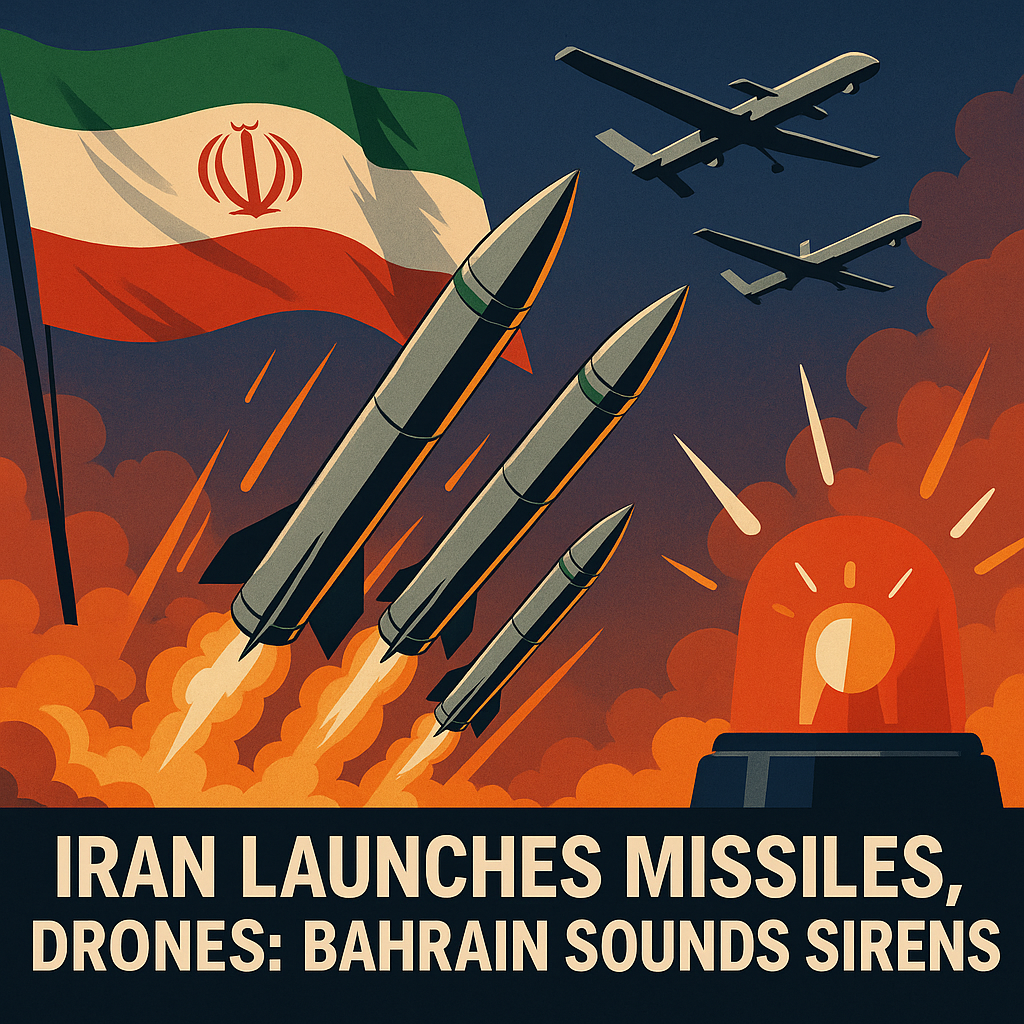
Iran Launches Missiles, Drones: Bahrain Sounds Sirens
Context of the Attacks
Recently, the geopolitical landscape of the Middle East has been shaken by Iran’s launch of missiles and drones, prompting Bahrain to activate emergency sirens. This alarming series of events underscores the heightened tensions in the region, further complicating the already intricate diplomatic relations among Middle Eastern countries.

Iran’s Military Actions
According to reports from Al Jazeera, Iran launched a significant barrage of missiles and drones in a display of military might that has raised concerns among neighboring nations. This move has been interpreted as a show of force, signaling Iran’s intent to bolster its military presence amidst rising tensions with adversaries in the Gulf region. The nature and scale of the attacks have alarmed several nations, particularly Bahrain, which is closely aligned with the United States and Saudi Arabia.

While Iran maintains that these military exercises are intended for defensive purposes, critics argue that such escalations pose a direct threat to the stability of the Gulf. The drone strikes and missile launches seem to coincide with ongoing disputes over nuclear negotiations and regional conflicts, further illustrating Iran’s desire to project strength.

Regional Reactions and Countermeasures
Bahrain’s Urgent Response
In response to the missile launches, Bahrain swiftly activated its air defense systems, as confirmed by various news outlets including RT News. The sound of sirens echoed through the streets, prompting panic and a quick reaction from local authorities. This defensive measure showcases Bahrain’s vulnerability amid its proximity to Iranian military capabilities.
Bahrain’s reaction is reflective of a wider regional anxiety. Countries in the Gulf Cooperation Council (GCC), including Saudi Arabia and the UAE, have expressed solidarity with Bahrain’s call for heightened security measures. The international community has also responded with mixed reactions; while some support Bahrain’s defensive stance, others caution against escalating tensions further.
Contrasts in Diplomatic Stances
Reports indicate that while Iran’s leadership presents a united front in claiming that these military actions are defensive, many other Gulf nations perceive this as a direct provocation. This divide showcases the complexities of regional politics, where alliances and enmities often shift based on broader geopolitical strategies.
Moreover, the U.S. response has been to reaffirm its commitment to regional security, while advocating for diplomatic solutions to de-escalate tensions. However, skepticism lingers regarding the effectiveness of such diplomatic efforts, given Iran’s historical resistance to external pressure and its ongoing military developments.
Analyzing the Broader Implications
The current situation raises several important questions about the future of security and stability in the Gulf region. As Iran continues to enhance its military capabilities, other nations may feel compelled to respond similarly, potentially entering a cycle of arms escalation that could destabilize the region further.
– Potential for Conflict: The risk of miscalculated actions or misunderstandings remains high, especially with nationalistic sentiments running strong in various countries. There is a fear that a minor incident could ignite a much larger conflict.
– Impact on Diplomacy: Ongoing nuclear negotiations with Iran remain precarious. As military tensions increase, the prospects for constructive dialogue diminish, leaving the international community with fewer options to address the underlying issues of nuclear proliferation and regional security.
Conclusion
Iran’s recent missile and drone launches, coupled with Bahrain’s urgent sirens, signal a critical turning point in the Middle East’s security landscape. As various nations react and adapt to these developments, the complex web of alliances and enmities will play a crucial role in shaping the region’s future. While some argue for a reassessment of Iran’s military capabilities, others advocate for diplomatic engagement as a way to defuse tensions. This multifaceted situation demands careful observation, as the outcomes could have profound implications for both local and international stability.















