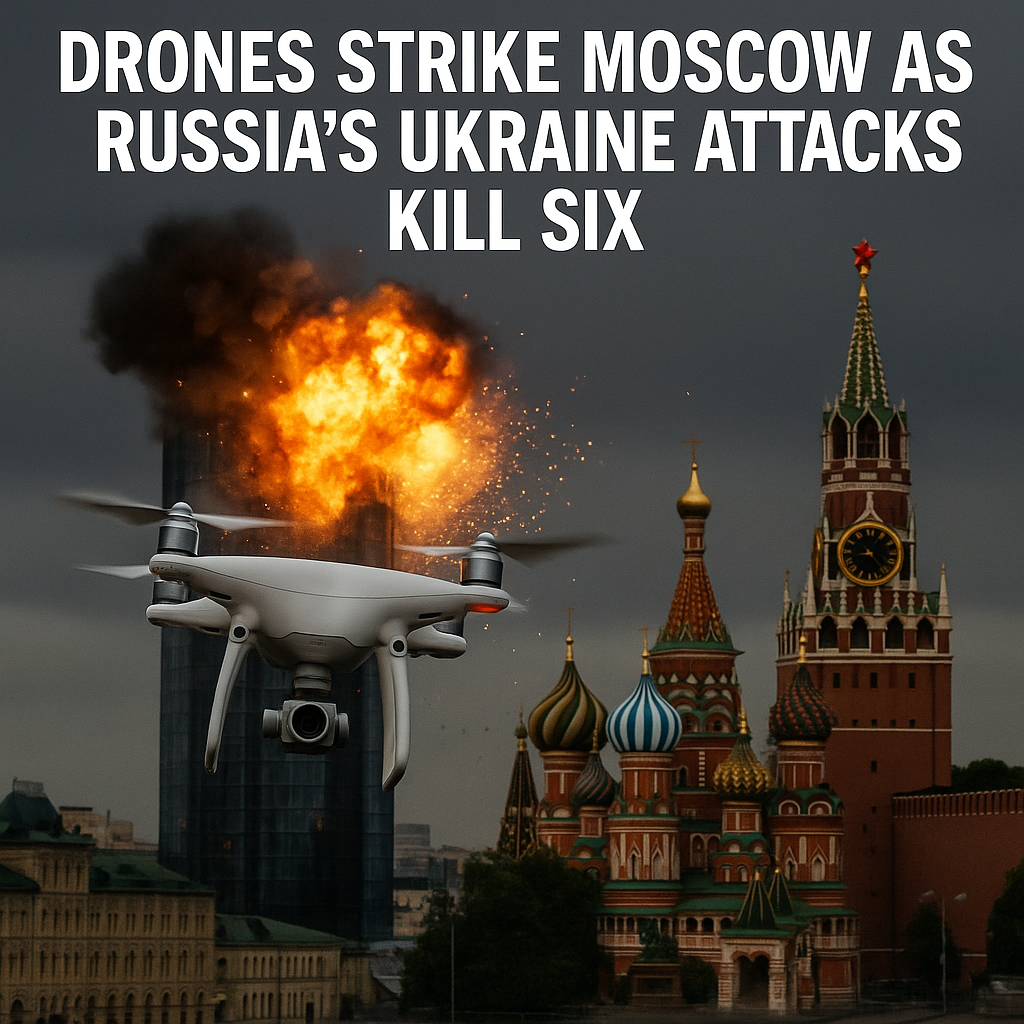
Drones Strike Moscow as Russia’s Ukraine Attacks Kill Six

In recent days, the airspace over Moscow has turned into a battleground as drones strike the capital, coinciding with Russian missile attacks that left six people dead in Ukraine. This escalation of hostilities marks a disturbing shift in the ongoing conflict, raising questions about the implications for both nations and the broader international community.

Emergence of Drone Warfare in the Russian-Ukrainian Conflict
Drones have emerged as a pivotal component of modern warfare, altering the dynamics of how nations engage militarily. In the case of the ongoing conflict between Russia and Ukraine, both sides have harnessed drone technology to conduct operations with unprecedented precision and reach.


As reported by Sky News, the recent drone strikes targeting Moscow signal a strategic shift for Ukraine, allowing it to project power deep into Russian territory. These attacks have reportedly struck several locations across the city, indicating a level of operational capability that Ukraine has not demonstrated previously. Analysts suggest that this could be a response to Russian strikes on Ukrainian civilians, thereby elevating the stakes for both countries.


Moreover, the use of drones in this conflict reveals significant advancements in military technology, empowering smaller nations like Ukraine to effectively challenge a larger, more entrenched military force. Drones facilitate asymmetric warfare, enabling Ukraine to exploit vulnerabilities in Russia’s air defenses and logistics. This method of warfare not only causes physical damage but also seeks to undermine the morale of the Russian populace.
Casualties and Human Costs of Conflict
While drone strikes over Moscow capture headlines, the human toll of Russian assaults on Ukraine cannot be overlooked. As reported by Al Jazeera, a recent series of missile strikes has left a grim aftermath, with families grieving over the loss of loved ones. The six casualties underscore the ongoing suffering endured by civilians, further complicating an already dire humanitarian crisis.
Such casualties evoke a wide range of sentiments, from outrage to fear. Families in Ukraine are navigating the anguishing reality of loss, while those in Russia may be grappling with feelings of vulnerability as drone strikes breach their capital. This duality emphasizes the tragic nature of modern warfare, where advances in technology consistently decrease distance yet increase devastation.
Human rights organizations have raised alarms over potential civilian harm stemming from military operations on both sides. As drone warfare evolves, the principles of distinction and proportionality, which are cornerstones of international humanitarian law, come into question. Questions about accountability and justice loom large over the conflict, as both Ukrainian and Russian military actions lead to significant civilian casualties.
The Complex Path Forward
The recent escalations present a complex array of challenges for diplomatic negotiations. A cycle of retaliation could ensue, with both parties feeling compelled to respond aggressively to their adversary’s actions. As each side doubles down on military engagements, the potential for prolonged conflict increases, jeopardizing the chances for peace.
Internationally, this situation poses a dilemma for stakeholders seeking to mediate between the two nations. The United States and European allies have supported Ukraine through military aid, while also voicing concerns over the humanitarian implications of the conflict. As a result, there is a growing call for a balanced approach that addresses security concerns without exacerbating the humanitarian crisis.
While all eyes are on military developments, it is critical to remember that every strike reverberates beyond the battlefield. Domestic sentiments, international alliances, and the mental toll on the populations of both countries will ultimately dictate the trajectory of the conflict.
As the drone warfare saga continues, individuals, nations, and international organizations must grapple with the complexities of this war. The recent drone strikes in Moscow and the tragic loss of life in Ukraine highlight that this conflict is multifaceted and deeply human, demanding responses that prioritize not just victory but also the restoration of peace and dignity for all affected.
In conclusion, as drone warfare changes the landscape of battle, the humanitarian implications cannot be ignored. External observers and internal stakeholders alike must navigate these treacherous waters cautiously, pursuing paths that may one day lead to reconciliation rather than further animosity. The urgency of seeking peace grows ever more pressing, amidst the shadows cast by drone strikes and the cries of those mourned.