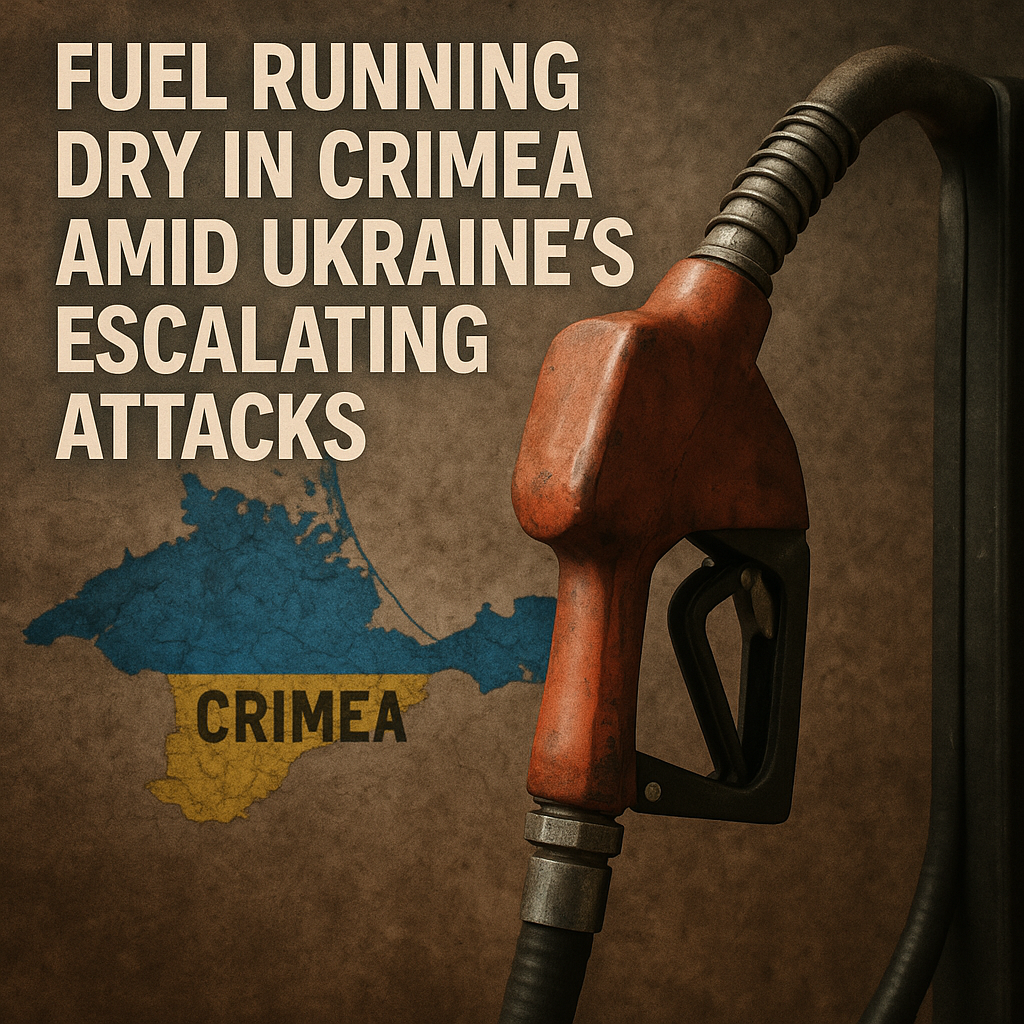
Fuel Running Dry in Crimea Amid Ukraine’s Escalating Attacks

Fuel Running Dry in Crimea Amid Ukraine’s Escalating Attacks
As tensions rise in Eastern Europe, fuel shortages are becoming increasingly evident in Crimea, exacerbated by Ukraine’s strategic escalation in its military actions against Russian-held territories. This dynamic illustrates the intricate relationship between military conflict and resource availability, while also spotlighting the humanitarian implications of such resource strain on civilian populations.

The Current Situation in Crimea
Recent reports indicate a substantial decrease in fuel supplies across Crimea, particularly in major cities like Simferopol and Sevastopol. Local authorities have acknowledged the shortages, attributing them largely to the heightened military activity by Ukrainian forces against Russian positions. Al Jazeera highlighted that the logistics networks, crucial for fuel transportation, have been significantly disrupted due to targeted strikes. This situation raises serious questions about how long these fuel stocks can sustain both military and civilian needs.


Interestingly, while official Russian sources, such as RT, downplay the impact of these fuel shortages, emphasizing resilience and preparedness in the region, civilian experiences on the ground reveal a different reality. Local citizens report queuing for hours at gas stations with supplies running dry more frequently than before. This discrepancy between governmental proclamations and ground realities reflects a broader narrative often seen in conflict zones, where the state’s resources are increasingly stretched as military needs take precedence over civilian comfort.


Military Strategic Implications
The fuel crisis in Crimea is not simply a logistical issue; it plays a critical role in the military strategies employed by both Russia and Ukraine. Ukraine’s decision to ramp up its operations, seemingly correlating with the fuel shortages, may be part of a broader strategy to weaken Russian capabilities by targeting supply lines. This military escalation is not without risks, as it may provoke harsher retaliatory measures from Russia, further complicating an already precarious situation.
Moreover, experts have noted the broader implications of these attacks. As supply lines are increasingly strained, Russian forces might face challenges in sustaining their operations not only in Crimea but also in surrounding areas. This links back to the significant reliance on fuel for both vehicles and military installations, suggesting that controlling fuel supplies could be a tactical advantage for Ukraine.
Humanitarian Concerns Amidst the Conflict
The fallout of the fuel shortage goes beyond military tactics—it directly affects civilians who are trying to navigate life in a conflict zone. With fuel becoming scarce, transportation challenges emerge, impacting not just daily commutes but also essential services such as food deliveries and medical assistance. Hospitals in Crimea, which were already operating under strain, are particularly vulnerable. A consistent supply of fuel is vital for emergency vehicles and hospital generators, making the interruption of fuel supply a potential humanitarian crisis.
Moreover, local food markets are feeling the pinch, with supply shortages leading to rising prices and limited availability of groceries. Public sentiment is quickly souring as citizens grow more anxious about the long-term consequences of dwindling resources. While Russian officials may assert that the situation is “under control,” the reality for ordinary citizens suggests otherwise, underscoring the disconnect between political rhetoric and lived experiences.
Conclusion: An Uncertain Path Ahead
As the situation evolves, it remains imperative to consider the broad implications of fuel shortages in Crimea amidst Ukraine’s military escalation. While immediate tactical advantages may be leveraged by Ukraine’s actions, the long-term impacts on civilians and regional stability remain uncertain. Both sides are treading a fine line between military strategy and humanitarian responsibility, with potential ramifications that could reshape the conflict landscape in Eastern Europe for years to come.
In this charged atmosphere, an objective analysis of the interplay between military actions, resource availability, and the humanitarian impacts cannot be overstated. The ongoing developments will crucially depend on how both governments respond to these pressing challenges, and how they address the needs of civilians caught in the crossfire.