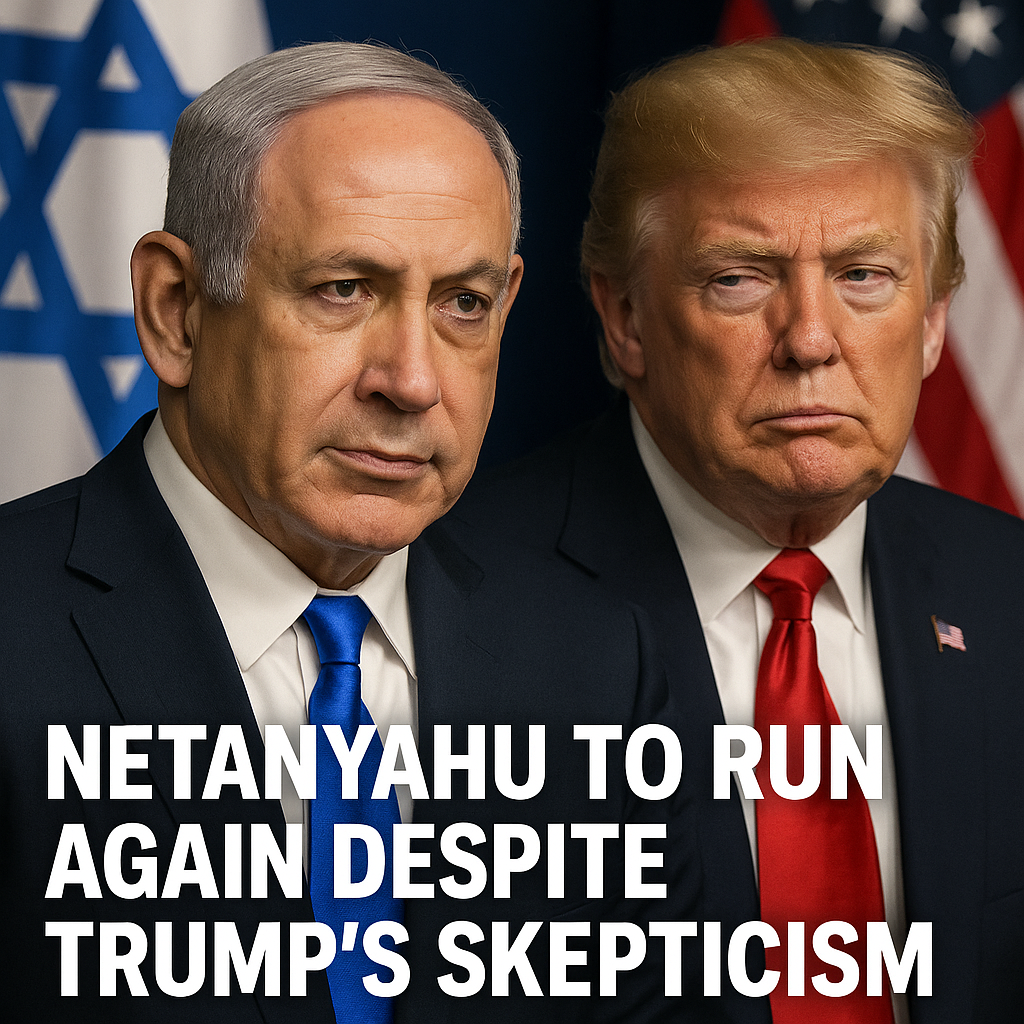
Netanyahu to Run Again Despite Trump’s Skepticism

Netanyahu’s Political Comeback: Reactions and Implications
Israeli Prime Minister Benjamin Netanyahu’s announcement to run for office once again has ignited discussions across global political arenas, particularly in light of skepticism from former U.S. President Donald Trump. This complex scenario reflects not only Netanyahu’s ambitions but also the shifting dynamics within Israeli politics and the broader geopolitical landscape.

The Political Landscape in Israel
Netanyahu, who heads the Likud party, returned to power in late 2022 amid a tumultuous political climate marked by intense public protests over various issues, including judicial reforms and the ongoing Israeli-Palestinian conflict. His return to office was buoyed by a coalition that capitalized on national security concerns and economic anxieties prevalent in Israel, making it a pivotal moment for not just his career, but for the future of Israeli governance.


However, his political future has suddenly become uncertain due to Trump’s recent remarks questioning Netanyahu’s effectiveness. The former American president expressed concerns over Netanyahu’s handling of relationships with other world leaders and internal discord, particularly regarding his administration’s hardline stance on Palestinian issues and the judicial system. Trump’s skepticism raises eyebrows given the traditional support for Netanyahu from the U.S. right, indicating a potential rift that could impact future U.S.-Israel relations.


Divergence in Views
The responses to Netanyahu’s decision to run again have been diverse. Proponents argue that his extensive experience in politics positions him well to tackle ongoing challenges, including security threats and economic stability. They contend that his governance has historically favored a strong Israeli identity, making him an asset at a time when domestic and global uncertainty persists.
Conversely, critics cite Trump’s doubts as reflective of broader concerns that Netanyahu may have lost touch with essential diplomatic nuances. Many believe that during his last term, Netanyahu fostered divisions that complicated relations not only with Palestinians but also with international allies. The call for a change in leadership resonates within segments of Israeli society eager for new approaches to long-standing issues, particularly as protests against the judicial reforms spotlight divisions within Israeli political culture.
The Future of Netanyahu’s Leadership
Despite the surrounding skepticism, Netanyahu has made clear his intention to lead the Likud party into the next election cycle. Some party insiders express confidence that his brand of leadership will galvanize a base still loyal to his promises of security and economic growth. Yet, others warn that the political landscape is fraught with instability; historical data show that Netanyahu’s previous tenures have faced significant challenges, including legal battles related to corruption charges, which could resurface as campaign issues.
Netanyahu’s ability to engage with the concerns highlighted by both his supporters and detractors will be crucial. For instance, while many in his camp advocate for security-focused policies, there is a growing demand among voters for a more balanced approach that includes renewed efforts to engage with Palestinian leadership and work towards de-escalating tensions. This presents a complex tightrope for Netanyahu, who must navigate pressures from his party’s right wing while addressing the electorate’s desire for peace and stability.
Conclusion: A Delicate Balance
As Netanyahu gears up for another election, the interplay between his ambitions and external perceptions—particularly those expressed by influential figures like Trump—adds layers of complexity to his political narrative. The uncertainties surrounding his leadership, the viability of his strategies, and how they align with evolving public sentiment remain critical to watch.
The upcoming political battle will not only affect Netanyahu’s legacy but could also shape the future direction of Israel itself. With voices both supportive and critical of his comeback reinforcing the charged atmosphere, the way forward may very well hinge on Netanyahu’s ability to adapt and respond to the emerging landscape, both at home and on the global stage.