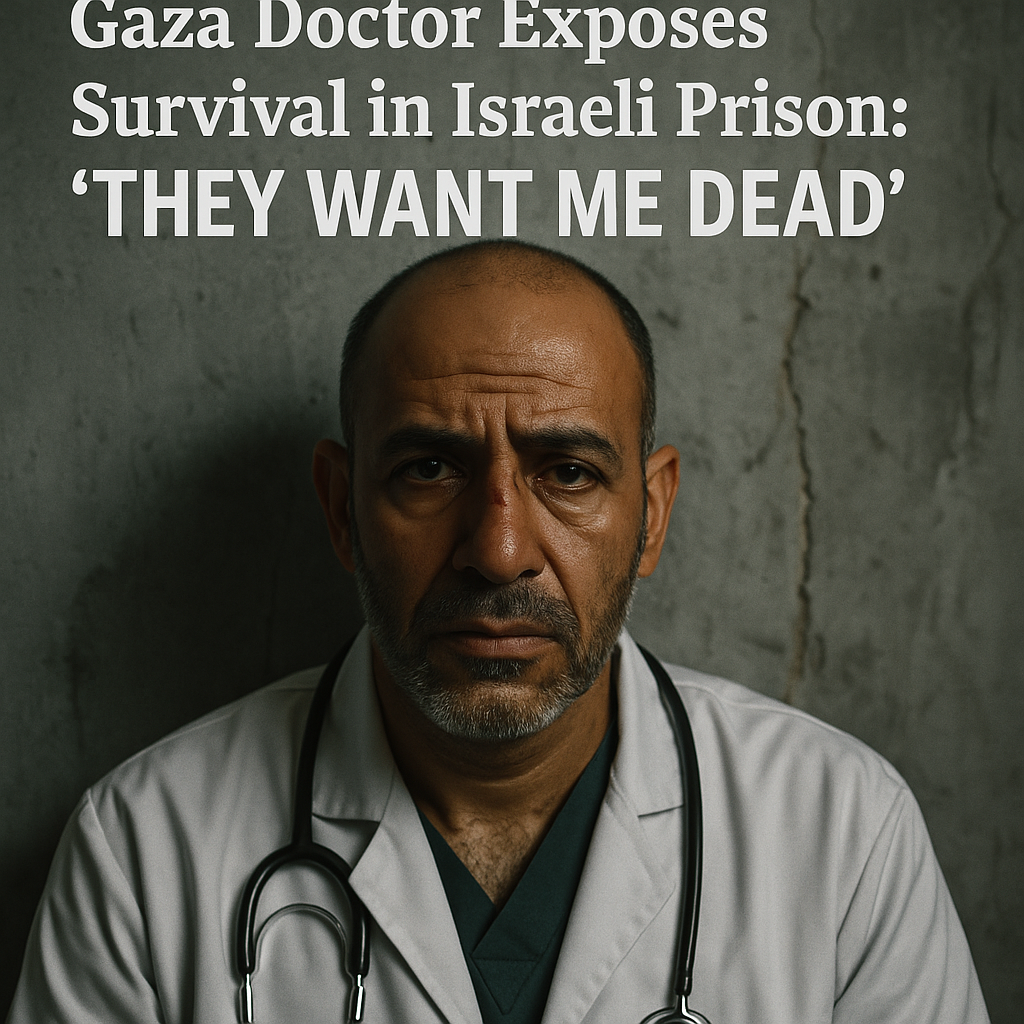
Gaza Doctor Exposes Survival in Israeli Prison: ‘They Want Me Dead’

Gaza Doctor Exposes Survival in Israeli Prison: ‘They Want Me Dead’
The ongoing conflict in Gaza presents profound humanitarian dilemmas, exemplified in the recent harrowing account of a Gaza-based doctor who describes life in an Israeli prison. His statement, “They brought me here to kill me,” echoes the intense fear and precariousness faced by many Palestinians under detention. This narrative not only highlights individual suffering but also raises larger questions surrounding human rights, health care access, and the treatment of political prisoners in the region.

The Context of Political Imprisonment
The Israeli-Palestinian conflict has a long and complex history, and the issue of political imprisonment is particularly contentious. Hundreds of Palestinians are held in Israeli jails, often under administrative detention, which allows for incarceration without trial. The statements from the detained doctor, as reported, accentuate the harsh realities faced by many.


According to reports from Al Jazeera, the doctor has described in painful detail the conditions within the prison, where he claims he has been subjected to physical abuse and neglect. Human rights organizations have consistently highlighted such claims, noting that many inmates suffer from inadequate medical care and harsh living conditions. This situation raises ethical concerns about the treatment of individuals in custody, particularly those who are part of a medical profession meant to preserve life.


Further complicating the narrative, observers from various organizations have drawn attention to the psychological effects of incarceration on both the individual and their families. Reports suggest that the mental toll of imprisonment can be particularly devastating in Palestinian communities, where familial ties and community relationships are deeply affected.
Disparate Perspectives on Detention and Treatment
While the account of the doctor sheds light on the dire circumstances faced by many prisoners, contrasting narratives emerge from different stakeholders involved in the conflict. Some Israeli officials argue that these detentions are necessary for national security, claiming that individuals like the doctor are part of broader networks that threaten the state’s safety. They maintain that the investigations into these detainees’ activities warrant their prolonged custody.
On the other hand, human rights advocates counter that such justifications often lack transparency and can lead to the perpetuation of systemic abuses. Organizations such as Amnesty International and Human Rights Watch have called on Israel to uphold international laws governing the treatment of prisoners and to provide adequate legal recourse and medical care for detainees. They argue that the conditions described by the Gaza doctor are not isolated incidents but are emblematic of widespread issues concerning the treatment of Palestinian prisoners.
Voices of Resistance and Humanitarian Appeals
The doctor’s dramatic testimony also resonates beyond the confines of his own experience. It serves as a rallying point for activism both within and outside of the Palestinian territories. Calls for international intervention and monitoring have emerged, encouraging global audiences to pay attention to the plight of political prisoners in Israel. Advocacy groups emphasize the importance of supporting movements that seek justice and reform, urging stakeholders to recognize the humanitarian crises resulting from prolonged conflict and detention practices.
In light of recent events, the situation remains complex and fraught with tension, marked by diverging narratives and heavy emotional weight. While some international observers express concern over the treatment of prisoners and advocate for improved conditions, others focus on security concerns, emphasizing the risks they believe accompany political dissent.
Conclusion: The Ongoing Struggle for Rights
The testimony of the Gaza doctor is a reminder that behind statistics and broad political narratives lie individual lives filled with suffering and resilience. It forces a confrontation with the uncomfortable realities of political imprisonment and challenges narratives that seek to simplify this intricate conflict.
As global attention turns towards the Israeli-Palestinian conflict, voices advocating for human rights must be amplified. The urgency to address these humanitarian concerns is now more critical than ever. Whether through reform, advocacy, or international intervention, the call for human dignity and justice must resonate across boundaries and engender real change for those caught in the web of conflict.