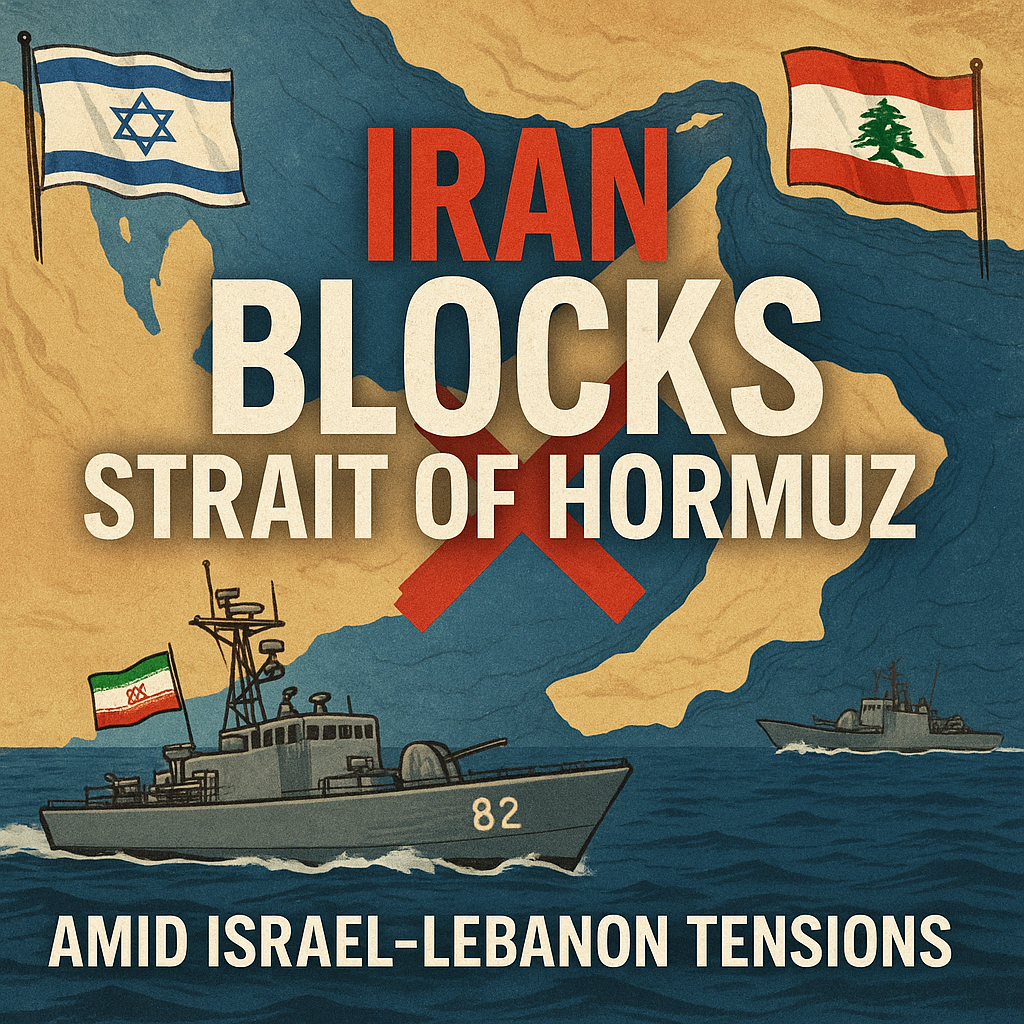
Iran Blocks Strait of Hormuz Amid Israel-Lebanon Tensions

Iran Blocks Strait of Hormuz Amid Israel-Lebanon Tensions
Recent geopolitical shifts have escalated tensions in the Middle East, particularly with Iran’s decision to block the strategic Strait of Hormuz. This pivotal waterway, through which a significant portion of the world’s oil supply is transported, now finds itself at the center of a complex web of conflicts involving Israel and Lebanon.

Context: The Strait of Hormuz and its Importance
The Strait of Hormuz is not only a critical maritime passage but also a flashpoint for international relations and energy security. Approximately 20% of the global oil trade passes through this narrow strait, making it a vital artery for economies worldwide. Iran’s control over its access has historically been a point of contention, particularly as tensions with Israel and regional allies have escalated.


In light of Israel’s recent military operations and discussions regarding its strategies with Lebanon, Iran’s move to block the waterway signifies more than a local geopolitical maneuver. It signals a calculated threat aimed at asserting dominance and responding to perceived encroachments by its adversaries.


Iran’s Stance and Strategic Objectives
Iranian authorities view the actions surrounding the Strait of Hormuz as both a demonstration of strength and a response to external aggression. In a context where Israel has intensified military operations against Hezbollah in Lebanon, Iran’s blockade serves as a show of solidarity with its ally and showcases its commitment to regional power dynamics.
Iranian state media has characterized these actions as defensive, claiming that they are necessary to protect their national sovereignty amidst escalating Western influence and perceived provocation. A representative stated, “As long as threats loom, we will not hesitate to demonstrate our capabilities and assert our rights over vital waterways.”
Israel’s Response: Military and Diplomatic Actions
On the other side, Israel sees its actions in Lebanon as part of a broader strategy to neutralize threats from both Hezbollah and Iranian influence in the region. Reports indicate that Israel has been conducting military tests to gauge its response capabilities in light of ongoing tensions. A senior Israeli military official commented, “Preventing the arming of Hezbollah is crucial to our national security and regional stability.”
Israel’s response also includes diplomatic channels, as it strives to strengthen alliances within the Gulf states against Iran. This multifaceted approach underscores Israel’s urgent need to address the implications of Iran’s actions, extending beyond immediate military confrontations.
The Global Impact and Reactions
The implications of Iran’s blockade extend far beyond the Middle East, affecting global oil markets and security policies. Analysts predict that any prolonged disruption in the Strait of Hormuz could result in significant price surges for crude oil, with consequences felt across the globe. The International Energy Agency (IEA) has issued alerts regarding possible ramifications for energy security if tensions escalate further.
Moreover, international response has varied. The United States, traditionally an ally of Israel and an opponent of Iranian actions, has yet to announce concrete measures following the blockade. Past responses have included increased naval presence and joint exercises with Gulf allies, signaling a commitment to maintaining open shipping lanes.
Conclusions: Navigating Complexity in Geopolitical Tensions
Navigating the complexities of the situation surrounding the Strait of Hormuz requires a delicate balance of diplomacy, military readiness, and regional cooperation. Both Iran and Israel are poised to react based on their strategic objectives, which continue to evolve in light of new developments.
As tensions grow, the prospect of a broader conflict remains a genuine concern, with analysts noting that while military posturing may serve short-term objectives, lasting resolution will necessitate comprehensive dialogue and international engagement. The future of the Strait of Hormuz and its role in global trade runs parallel to the peace — or lack thereof — between Israel, Iran, and their respective allies. Thus, the world watches closely, aware that the ramifications of this conflict could ripple far beyond its immediate geographic confines.