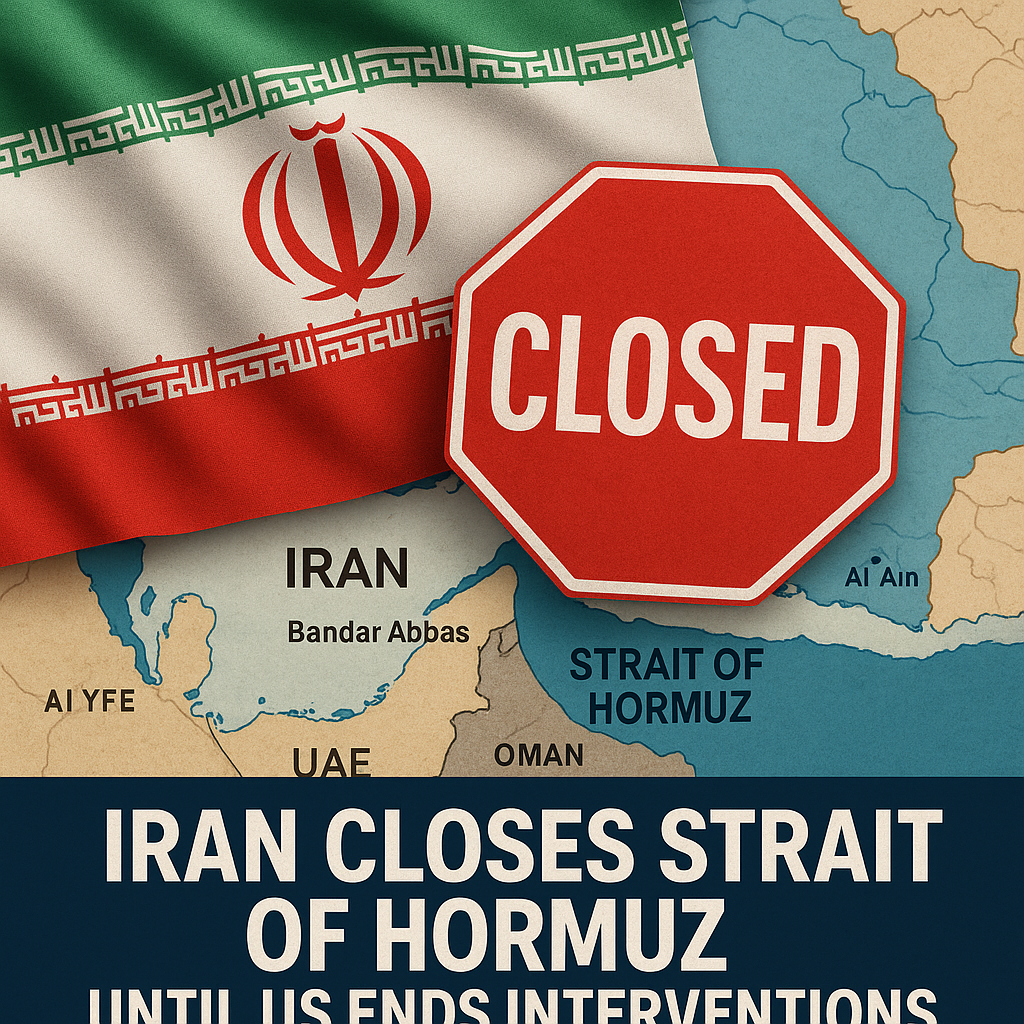
Iran Closes Strait of Hormuz Until US Ends Interventions

Tensions Rise as Iran Closes the Strait of Hormuz
Iran’s decision to close the Strait of Hormuz until the United States ceases its interventions marks a significant escalation in geopolitical tensions. This vital waterway, through which approximately 20% of the world’s oil passes, has become a focal point of conflict between Iran and the West. As global energy markets react, the implications of this closure extend far beyond the immediate region.

—


Understanding the Closure: Iran’s Rationale
Iran’s actions are rooted in a complex mix of national security concerns and long-standing grievances against U.S. policy in the region. Iranian officials have frequently asserted that U.S. naval presence represents a threat to their sovereignty. Recent statements from the Iranian government emphasize their intention to respond decisively to what they perceive as hostile actions, reinforcing that the closure is a strategic maneuver aimed at prompting the U.S. to reconsider its engagements in the Middle East.


Many experts argue that Iran’s closure can be seen both as a defensive strategy and a bargaining chip in diplomatic negotiations. By controlling access to this critical maritime route, Iran seeks to assert its influence and draw attention to what it views as unjust foreign interventions. “This move is a demonstration of power and an effort to assert control over its own territorial waters,” noted a Middle Eastern political analyst. Furthermore, Iran is facing significant economic challenges exacerbated by sanctions, and the closure could be a way to leverage its geographical importance into economic concessions.
—
Global Reactions: Mixed Signals from the West
On the other side of the spectrum, reactions from Western nations, particularly the United States, reflect a mix of concern and readiness to counteract Iran’s maneuvers. U.S. officials have expressed that they will continue their naval operations in the region to ensure the safety of shipping routes. This approach, however, risks increasing military presence in an already volatile area, further complicating the situation.
Comments from U.S. defense analysts indicate that maintaining open sea lanes is a priority, warning that failing to do so could lead to a rise in oil prices and disrupt global markets. The potential for conflict escalates as U.S. naval assets are dispatched to the region, signaling a readiness to challenge any unilateral attempts by Iran to control this key maritime chokepoint.
Countries reliant on oil exports, especially those in Europe and Asia, have expressed alarm at the prospect of increased instability in this crucial region. OPEC members are also watching closely, given that any significant disruption in oil flow could alter market dynamics and oil prices internationally.
—
The Human Element: Voices from Affected Regions
Amid these geopolitical machinations, civilian voices from Iran and neighboring countries paint a diverse picture of the implications of a closed Strait of Hormuz. For many Iranians, the heightened tensions mean more than just political maneuvering; they translate into everyday hardships exacerbated by sanctions and economic mismanagement. Small business owners express frustration at the instability impacting commerce, with fears that further military escalation could lead to direct threats against their livelihoods.
Conversely, citizens of Gulf nations are bracing for the potential economic fallout. The flow of oil directly affects not only their national revenue but also trade relations with larger powers such as the U.S. and China. As news of the closure circulates, anxiety spreads among populations that rely on stable oil prices for their economic security.
—
Looking Ahead: What’s Next?
The closure of the Strait of Hormuz will likely reshape the geopolitical landscape in the Middle East and beyond. With both sides entrenched in their positions, diplomatic channels appear strained. Experts suggest that direct negotiations might be the only avenue left to de-escalate the tensions, although the path to constructive dialogue is fraught with challenges.
The uncertainties surrounding the Strait of Hormuz closure reveal the intricate web of international relations, where localized actions can have far-reaching consequences not only in energy markets but also in global political stability. As the situation evolves, all eyes will be on how both Iran and the U.S. navigate these tumultuous waters.