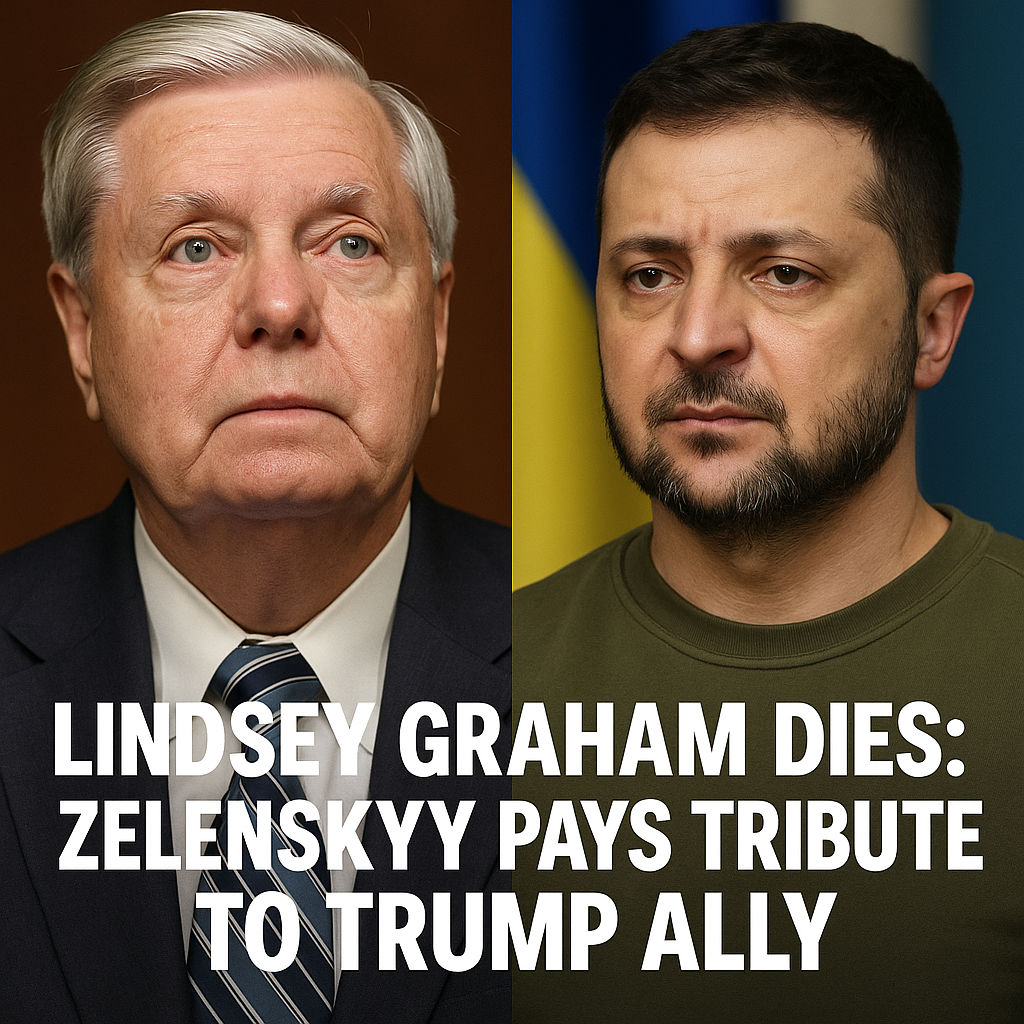
Lindsey Graham Dies: Zelenskyy Pays Tribute to Trump Ally

In a shocking turn of events, U.S. Senator Lindsey Graham has passed away, leaving behind a complex legacy that crosses political lines. Graham, a prominent ally of former President Donald Trump, was known for his staunch defense of conservative values and foreign policy that aimed to strengthen American influence globally. Notably, in a heartfelt tribute, Ukrainian President Volodymyr Zelenskyy acknowledged Graham’s unwavering support for Ukraine during its ongoing conflict with Russia, emphasizing the impact of his contributions on international security.

Graham’s Political Journey and Legacy
Lindsey Graham’s career spanned over two decades, marked by significant events that shaped his reputation. Initially entering the Senate in 2003, Graham quickly established himself as a key player in U.S. foreign policy discussions. His commitment to military intervention and support for NATO was clearly manifested in his consistent backing of Ukraine during the crisis stemming from Russia’s annexation of Crimea in 2014.


His advocacy for Ukraine brought him accolades from many corners, including from leaders like Zelenskyy. During a recent statement, Zelenskyy reflected on Graham’s dedication, calling him a steadfast ally during challenging times. This recognition highlights how Graham’s bipartisan efforts had a significant impact beyond American borders, fostering international alliances.


However, Graham’s career was not without controversy. His close association with Trump facilitated deep divides within the Republican Party and polarized opinions among constituents. While many supporters viewed him as a principled politician willing to stand against perceived threats, others criticized him for enabling a divisive political climate that some argue has led to increased polarization in American society.
International Reactions to Graham’s Passing
The news of Graham’s death elicited a variety of responses globally, illustrating the multifaceted nature of his legacy. In addition to Zelenskyy’s tribute, political leaders from both sides of the aisle in the U.S. expressed their condolences, acknowledging the impact Graham had during his tenure. Some described him as a true patriot, while others pointed out the contradictions in his policies that often leaned toward aggressive diplomacy.
In a similar tone, Russian officials framed Graham’s policies as adversarial, describing him as part of a broader “war hawk” narrative that exacerbated tensions between the U.S. and Russia. Their response underscores the contrasting perspectives surrounding Graham’s worldview and approach to international relations.
While many praised his commitment to supporting democratic values internationally, opponents argued that his strategies often overlooked the complexity of geopolitical landscapes, preferring instead a more militaristic approach. Critics contend that this has sometimes led to significant repercussions for U.S. foreign relations, especially in regions sensitive to American intervention.
The Impact on U.S.-Ukraine Relations
As the world reflects on Graham’s contributions, the future of U.S.-Ukraine relations becomes a pressing topic. Graham’s death raises questions about the trajectory of American support for Ukraine as it continues to face aggression from Russia. Following Graham’s legacy, it remains crucial for the U.S. to maintain its alliance with Ukraine and support its fight for sovereignty.
Zelenskyy’s tribute not only commemorates Graham but also serves as a reminder of the importance of bipartisan support in foreign policy matters. The role of Congress in sustaining Ukraine’s defense capabilities and promoting democracy abroad will be vital in the coming months. With shifts in political dynamics anticipated in the upcoming electoral cycles, stakeholders must carefully navigate the implications of Graham’s passing on international policy.
As various reactions continue to unfold, it becomes clear that Graham’s influence on U.S. foreign policy will be felt for many years to come. His mixed legacy—part champion of conservative values, part controversial figure—will likely continue to spark debates about the direction of American diplomacy and military involvement around the world.
In conclusion, Lindsey Graham’s death reverberates well beyond his political circles, triggering reflections on his contributions to American politics and foreign policy. The tributes from leaders like Zelenskyy suggest that despite domestic controversies, his commitment to global causes resonated strongly with allies. As the political landscape evolves, the necessity for informed dialogue about the complexities of international relations remains more pertinent than ever.