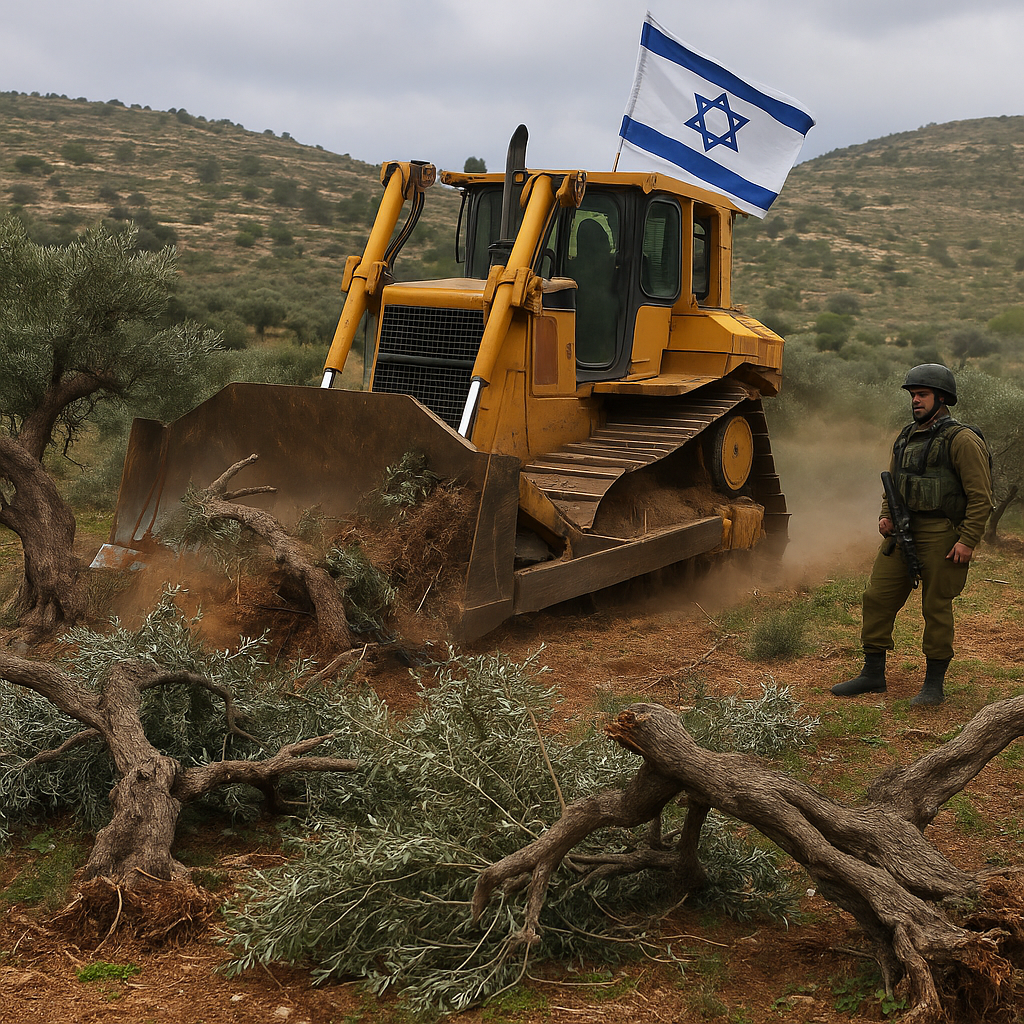
Israeli Forces Bulldoze Olive Groves in West Bank

Israeli Forces Bulldoze Olive Groves in West Bank
The recent bulldozing of olive groves by Israeli forces in the West Bank has once again reignited tensions between Israelis and Palestinians, shedding light on the complexities surrounding land use, agricultural rights, and the broader geopolitical landscape.

The Incident: Destruction of Livelihoods
Reports indicate that Israeli forces have systematically bulldozed thousands of olive trees in the West Bank, affecting numerous Palestinian farmers who rely on these groves for their livelihood. Olive trees are not just economic assets; they hold cultural significance and are deeply intertwined with Palestinian identity. According to Al Jazeera, local farmers describe the action as not only a loss of income but also as an attack on their heritage, leaving many families struggling to make ends meet.


In contrast, some Israeli sources argue that these operations are conducted in the interest of security. The Israeli government has claimed that the lands being bulldozed are often used for unauthorized construction, which they say threatens safety and poses challenges for regional stability. This perspective underscores a broader justification often employed by Israeli authorities: the need for security in a historically contested region.


Diverse Perspectives on the Ground
Among the different perspectives, Israeli officials emphasize the need for maintaining law and order, citing instances where land was said to be illegally occupied by Palestinian residents. However, this explanation has faced significant backlash both locally and internationally. Critics argue that these actions disproportionately affect Palestinian communities, exacerbating already fragile conditions and intensifying cycles of violence.
International human rights organizations have urged Israel to reconsider its policies regarding land appropriation and destruction. For instance, the UN has voiced concerns that such demolitions violate international law and undermine efforts for peaceful coexistence. Human Rights Watch has labeled the bulldozing of olive groves as a form of collective punishment, arguing that it only serves to inflame tensions further.
The Wider Implications of Land Use Policies
The bulldozing of olive trees is emblematic of a larger issue surrounding land use policies in the West Bank. The olive industry has historically been a cornerstone of the Palestinian economy, with estimates suggesting that approximately 80% of Palestinian agricultural land is used for olive production. Thus, when these groves are destroyed, it creates a ripple effect that jeopardizes food security, economic stability, and social cohesion within Palestinian communities.
Moreover, this destruction raises questions about the future of the Israeli-Palestinian relationship. As land becomes an increasingly contentious topic, actions like these may serve to alienate communities further, fostering animosity rather than dialogue. While some Israeli citizens support these bulldozing efforts based on security rhetoric, others express concern that such policies will only prolong conflict and undermine peace efforts.
Seeking a Balanced Approach
Finding a resolution to the cycles of violence necessitates understanding diverse viewpoints and acknowledging the emotional and economic ramifications on both sides. The olive tree, a symbol of peace and resilience, encapsulates the difficulties faced by Palestinians while highlighting broader issues of injustice.
While the security arguments from Israeli officials cannot be dismissed outright, it is crucial to engage in a dialogue that considers the historical and cultural contexts that land embodies for Palestinians. A sustainable resolution will require both parties to compromise and recognize the significance of land, not only as property but as part of each community’s identity and future.
The bulldozing of olive groves represents more than just an isolated incident; it symbolizes the ongoing struggle for dignity, heritage, and coexistence in a land marked by division. As both Israelis and Palestinians grapple with their histories and aspirations, understanding and respecting each side’s connection to the land may be a vital step toward forging a more peaceful future.