NATO Commander Urges Timeout for Trump: What’s Next?

NATO Commander Urges Timeout for Trump: What’s Next?
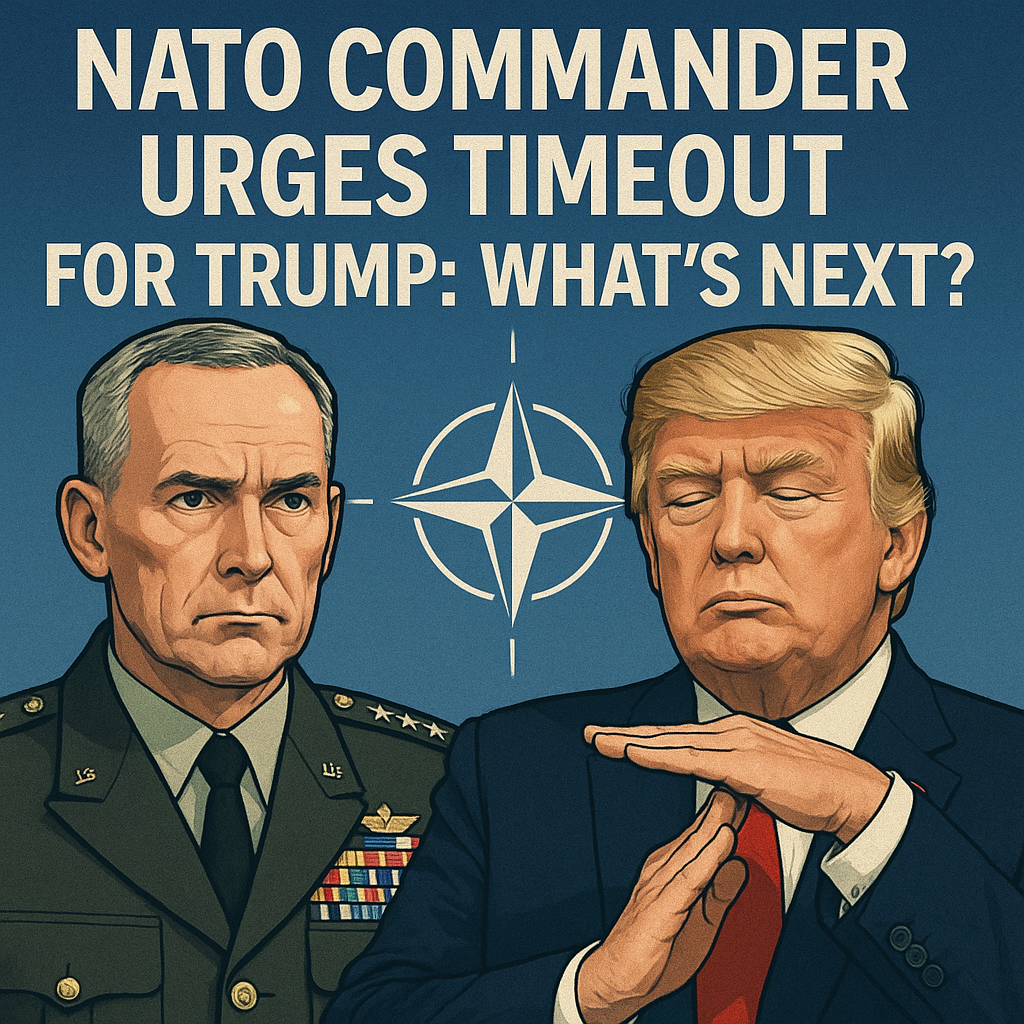
In recent discussions, NATO’s Senior Commander has suggested a “timeout” for former President Donald Trump amidst his potential return to political power. This comes as the geopolitical landscape grows increasingly complex, raising significant questions about U.S. leadership in NATO and global security.

The Context of the Commander’s Remarks
NATO Commander General Christopher Cavoli’s call for a timeout reflects an underlying concern about the implications of Trump’s erratic foreign policy approach during his presidency. Trump’s administration was marked by a highly transactional approach to alliances, often questioning the effectiveness and overall importance of NATO in modern geopolitics. Some NATO members felt sidelined, with concerns that Trump’s focus on national interests could undermine collective security.


General Cavoli’s plea is steeped in practical concerns; he is not alone in expressing that the uncertainty surrounding Trump’s future actions—including potential attempts at re-election—poses a risk to both U.S. foreign policy and NATO cohesion. His remarks suggest a desire for stability in an unpredictable political climate, asserting that NATO needs a reliable U.S. partner to effectively counter threats from adversaries like Russia and China.


Diverging Perspectives on Trump’s Influence
The reactions to General Cavoli’s comments are notably mixed, highlighting the polarized view of Trump’s influence on NATO and global affairs. Supporters of Trump argue that his “America First” policy revitalized the U.S. economy and pressured NATO allies to increase their defense spending. By prioritizing national interests, they claim, he worked to ensure that the U.S. was not shouldering an unfair burden in NATO operations.
Conversely, critics emphasize that Trump’s presidency fostered divisions within NATO. Allies like Germany and France openly questioned their security guarantees, fearing that a second Trump term might result in a complete reshaping of relations within the alliance. Moreover, this faction of critics believes his rhetoric may have emboldened adversaries, disrupting longstanding partnerships crucial for maintaining international security.
General Cavoli’s call for a timeout may suggest that the leadership of NATO desires a period of reflection, a moment to evaluate alliances without the looming unpredictability of Trump’s potential re-emergence. As the 2024 elections approach, many NATO member states are closely monitoring the situation, seeking assurance that American foreign policy will remain stable and predictable.
Implications for NATO and Global Security
The prospect of a Trump-led resurgence raises complex implications for NATO. If he returns to power, leaders within the alliance fear a shift back to unilateral decisions that could disregard the collective security agreements integral to NATO’s foundation. This brings to the forefront the question of how member nations will respond if faced with unpredictable leadership from a major ally.
Conclusion: Navigating an Uncertain Future
NATO’s future under a potentially re-elected Trump poses both challenges and opportunities for member states. While General Cavoli’s request for a timeout might be interpreted as a critique of current U.S. political dynamics, it also underscores the need for NATO to strategically plan for varying scenarios, including a return to traditional democratic leadership versus a continuation of an “America First” approach.
As debates continue to unfold over Trump’s impact on national and global security, it is vital for NATO and its allies to maintain a unified front, adapting to the geopolitical realities while preserving the values that bind them. The road ahead is unclear, but the stakes for global security and unity remain high.