
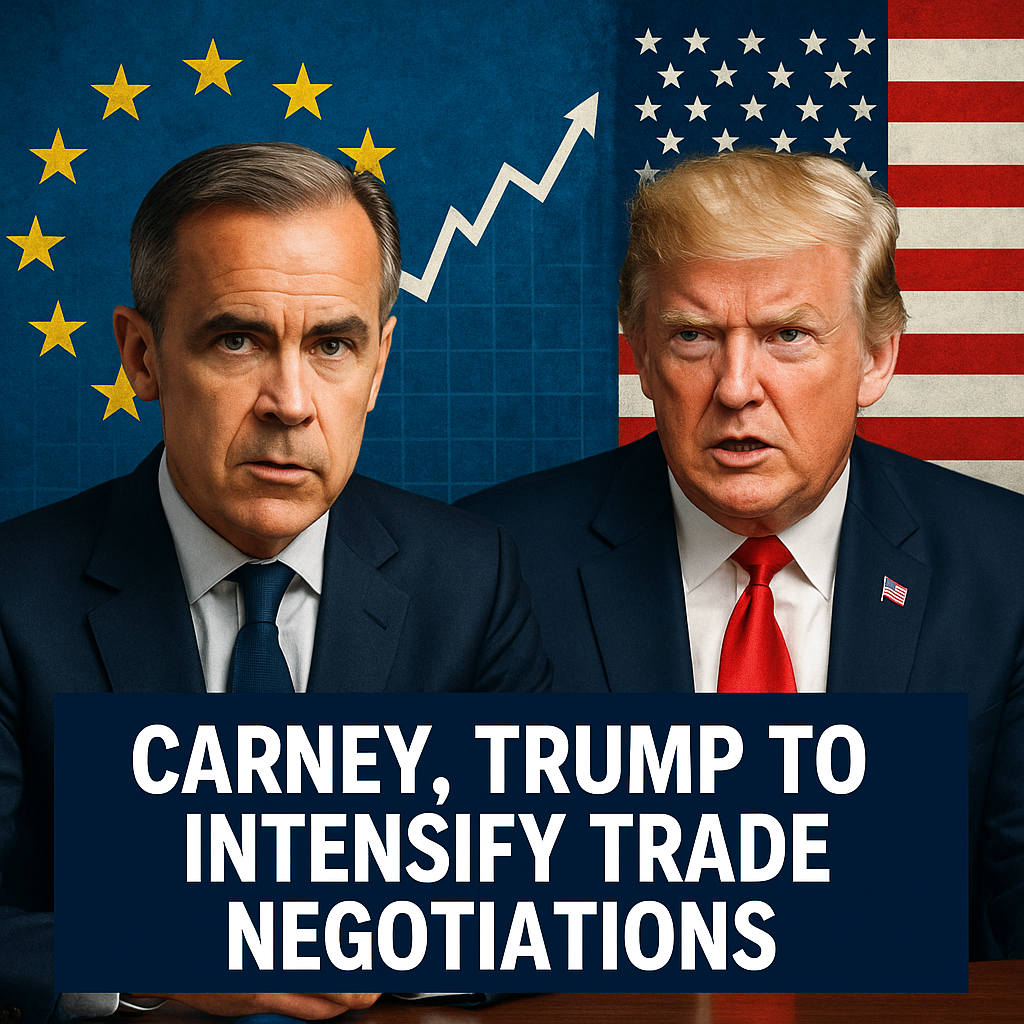
Carney, Trump to Intensify Trade Negotiations
Intensifying Trade Negotiations: Carney and Trump Take the Lead
In a significant development regarding international trade relations, recent announcements indicate that Mark Carney, the British economist and former Governor of the Bank of England, is set to intensify trade negotiations with former U.S. President Donald Trump. This initiative comes amid a backdrop of complex economic tensions, evolving market dynamics, and differing national interests.

The Context of Negotiations
Trade negotiations between the United States and other nations have historically been a contentious issue, often influenced by political ideologies and economic realities. Carney has emerged as a pivotal figure in these discussions, advocating for a more robust dialogue to address existing trade barriers. His alignment with Trump suggests a potential shift in strategy, particularly as both leaders emphasize the importance of reinvigorating economic growth through trade.

Many see Carney’s involvement as crucial given his extensive experience in both the public sector and financial markets. His approach appears to be driven by a desire to navigate the complexities of global trade, especially in light of the challenges presented by the COVID-19 pandemic and the ongoing war in Ukraine.

Diverging Views on Trade Strategy
While there seems to be a consensus on the necessity of enhanced trade talks, the methodologies employed by Carney and Trump differ significantly. Carney is likely to advocate for a multilateral approach, aiming to foster cooperation among various nations to create a fair trade environment. This perspective is often grounded in economic research that emphasizes mutual benefits derived from collaborative agreements.
Conversely, Trump’s historical approach has favored bilateral negotiations, characterized by a more aggressive stance focused on “America First” policies. This method has led to a reassessment of trade agreements perceived as disadvantageous to the U.S. interests. As negotiations evolve, balancing these contrasting strategies will be essential in achieving tangible outcomes.
Public and Economic Sentiment
Public perception plays an important role in shaping trade negotiations. Analysis from various news sources indicates that there is significant skepticism toward Trump’s trade policies among certain sectors of the U.S. population, particularly those impacted by tariffs and trade restrictions. On the other hand, Carney has garnered respect as a stabilizing force in economic discussions, lending some credibility to the negotiations.
Nevertheless, both leaders will need to address the concerns of ordinary citizens and businesses alike, who often feel the direct impacts of trade policies. Ensuring that negotiations lead to beneficial outcomes for both American workers and international partners is essential for fostering public support.
Navigating Uncertainties
Despite the optimism surrounding the intensified negotiations, uncertainties remain. Analysts caution that changes in leadership and geopolitical dynamics can derail even the most well-intentioned discussions. Additionally, with upcoming elections and fluctuating economic conditions, both Carney and Trump may face pressures that complicate their negotiation strategies.
Furthermore, achieving consensus on contentious issues—such as tariffs, intellectual property rights, and environmental regulations—poses a formidable challenge. These topics are not only economically significant but also deeply intertwined with national pride and political agendas.
Conclusion: A Path Forward
As Carney and Trump gear up to intensify their trade negotiations, a keen focus on diverse strategies and stakeholder concerns will be crucial. The melding of Carney’s multilateral approach with Trump’s bilateral emphasis may carve out a unique path forward in U.S.-UK trade relations.
The outcome remains uncertain, but the collaborative effort presents an opportunity to reshape the landscape of international trade. By maintaining open lines of communication and addressing the varied concerns of affected parties, Carney and Trump might find a way to forge agreements that benefit a broad spectrum of stakeholders while navigating the intricate web of global trade dynamics.















