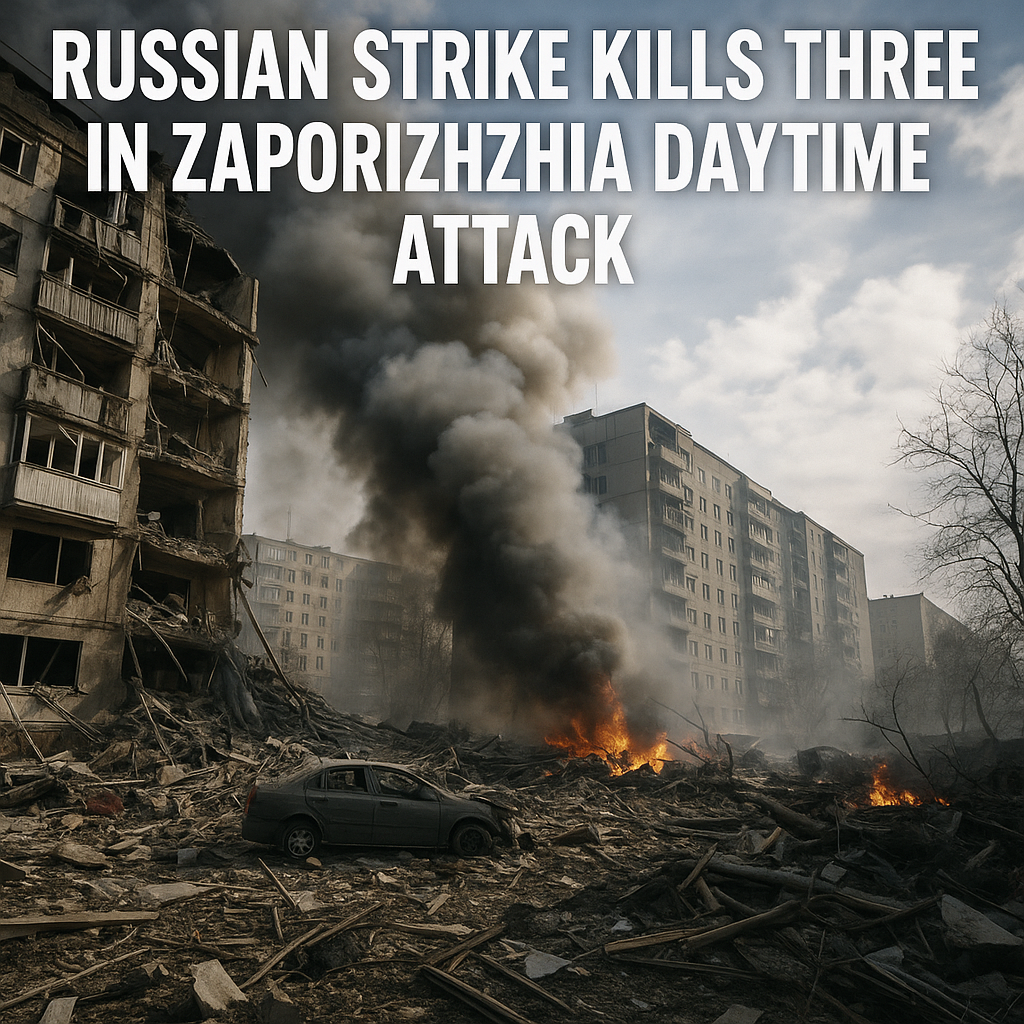
Russian Strike Kills Three in Zaporizhzhia Daytime Attack
In a tragic incident that has garnered international attention, a Russian strike in Zaporizhzhia killed three individuals during the daylight hours. This incident has intensified the discourse around the ongoing conflict in Ukraine, engendering questions about military tactics and the implications for civilians in conflict zones.

The Context of the Attack
As part of a broader military strategy, Russia’s recent attacks in Ukraine have raised significant concerns regarding compliance with international law and the protection of civilians. The Zaporizhzhia strike occurred in an area that has been a hotspot due to its strategic importance. Located in southeastern Ukraine, Zaporizhzhia has been under scrutiny not just for military engagements but also for its humanitarian crisis, exacerbated by ongoing hostilities.

Reports from various news outlets reveal contrasting perspectives on Russia’s military objectives in this region. Al Jazeera reports that the strike specifically targeted civilian areas, emphasizing the apparent disregard for civilian life in hostilities. The deaths of the three individuals—two of whom were women—serves as a grim reminder of the collateral damage wrought by military operations. Furthermore, Al Jazeera highlights the grief and outcry from local communities, illustrating the untold human suffering intertwined with geopolitical maneuvers.

Conversely, Russian state media, such as RT, frames the conflict in a different light. While they acknowledge the strike, RT presents it as a necessary military operation aimed at dismantling Ukrainian military capabilities. The narrative here often emphasizes that such measures are in direct response to perceived threats from Ukrainian forces. However, this position lacks acknowledgment of the broader humanitarian implications of such actions, leading to extensive criticism from international observers who argue that military engagements should prioritize protecting civilian lives.
Civilian Impact and Humanitarian Concerns
The consequences of military strikes on civilian populations cannot be overstated. The Zaporizhzhia attack has incited not just immediate grief but also long-term impacts on the community’s overall safety and mental health. Local officials and humanitarian organizations have raised alarms about the conditions faced by those living in conflict-affected areas. Access to essential services such as healthcare, food, and shelter has become increasingly precarious, leading to a pronounced humanitarian crisis.
The international community is grappling with how to respond to such incidents. The United Nations and various humanitarian organizations have called for increased accountability and urgent ceasefires, emphasizing the need for dialogue over military engagements. However, political will to implement these resolutions often falters, as nations navigate their foreign policy interests.
Navigating the Complexity of Geopolitical Narratives
What’s particularly striking about the discourse surrounding the Zaporizhzhia strike is the divergence in narratives. On one side, outlets like Al Jazeera advocate for humanitarian considerations and underline the need for protection of civilians under international law. They argue that attacks on civilian infrastructure not only violate basic human rights but also risk escalating tensions further.
On the flip side, Russian narratives often portray military actions as defensive and necessary within the context of a broader conflict. This perspective is bolstered by arguments of Ukraine’s military provocation, presenting a view that seeks to justify strikes under the guise of national security. This reasoning has drawn extensive criticism for diverting attention from the humanitarian fallout of such strikes.
Despite these contrasting viewpoints, a common thread can be identified: the struggle to reconcile military imperatives with the moral imperatives of protecting civilian lives. The Zaporizhzhia attack exemplifies this struggle, as communities mourn while governments navigate complex international relations and military strategy.
Conclusion: The Path Forward
The attack in Zaporizhzhia is more than just another statistic in the ongoing conflict; it exemplifies the profound humanitarian crisis at the heart of military engagements. As global attention sharpens on the plight of civilians affected by such strikes, it becomes imperative for both government officials and international organizations to prioritize humanitarian aid and call for accountability.
While the political landscape remains complicated, the voices of those impacted cannot be ignored. Understanding the multifaceted implications of military operations—especially on civilian populations—will be crucial in all discussions aimed at achieving a lasting peace in the region. The world watches as Ukraine grapples with the immediate consequences of conflict, hoping for resolution in a situation that continues to spiral into tragedy.