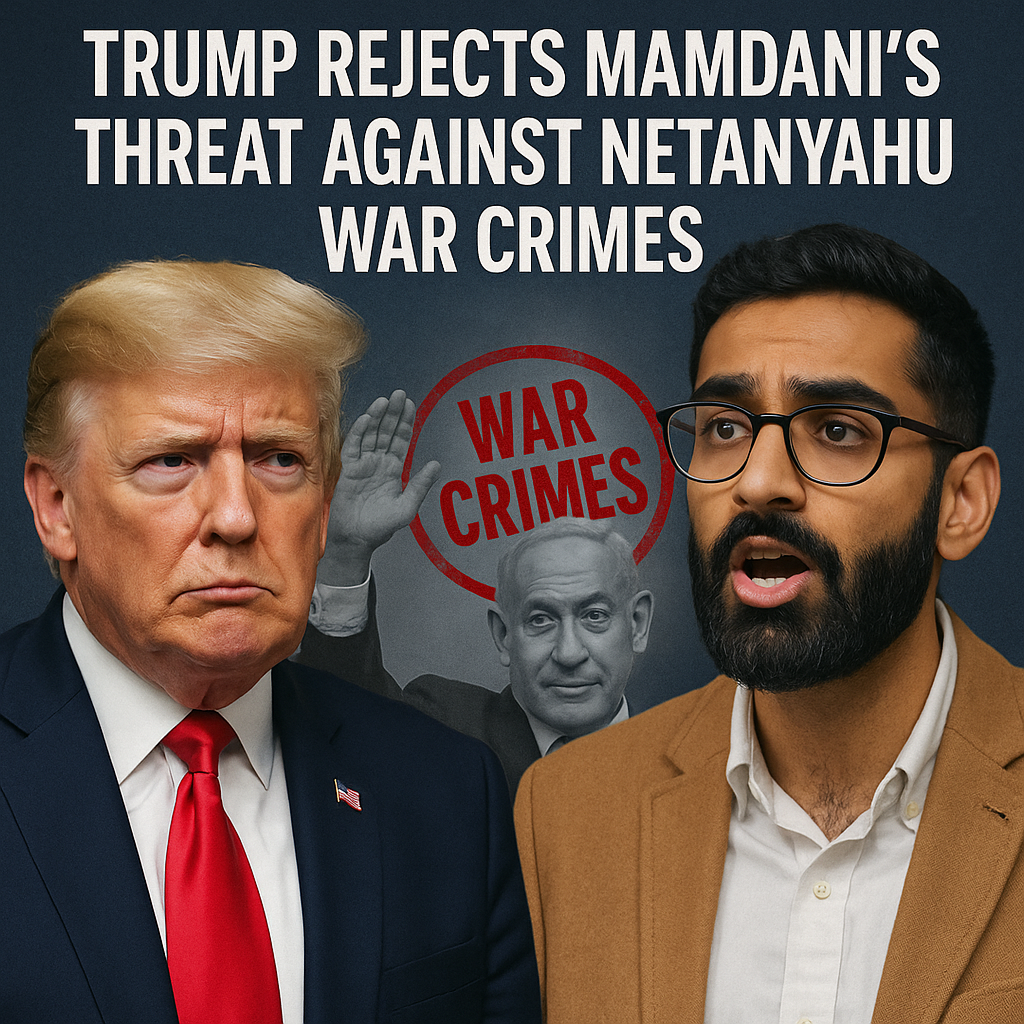
Trump Rejects Mamdani’s Threat Against Netanyahu’s War Crimes
Examining the Rejection of Legal Threats in International Affairs
In a recent turn of events, the political landscape has been stirred by former President Donald Trump’s rejection of a proposal by legal scholar and activist Rashid Khalidi Mamdani, who suggested arresting Israeli Prime Minister Benjamin Netanyahu for war crimes. This situation has not only gathered attention for its legal implications but also highlights the ongoing debates surrounding international justice, human rights, and geopolitical alliances.

The Context of the Controversy
Mamdani, a prominent figure in discussions about international law and human rights, proposed that Netanyahu should be held accountable for his actions during the Israel-Palestine conflict. In his view, this arrest would represent a necessary step towards enforcing international law and holding leaders accountable for war crimes. However, Trump’s dismissive stance towards Mamdani’s assertion reflects a broader narrative around U.S. foreign policy and its staunch support for Israel.

Trump’s rejection can be interpreted within the context of longstanding U.S. alliances. His response underscores a historical pattern where U.S. presidents, regardless of their party affiliation, have often shielded Israel from international legal repercussions. This protective stance raises questions about the balance between upholding moral or legal obligations and maintaining strategic alliances.

Diverging Perspectives on Accountability
The debate invites a range of perspectives on accountability in international relations. Supporters of Mamdani argue that international law must prevail over political ties. They contend that allowing leaders like Netanyahu to escape accountability undermines the principles of justice and human rights globally. Advocates for accountability emphasize that legal actions against individuals in power can instigate change and foster a culture of respecting human rights.
Conversely, Trump’s rejection aligns with a more pragmatic approach, where geopolitical interests take precedence. This viewpoint resonates with many who argue that accountability measures against Israeli leaders could further alienate a key U.S. ally in the Middle East. Thus, the rationale for non-action revolves around security concerns, reinforcing the idea that maintaining a strong alliance with Israel is paramount for U.S. interests in the region.
The Implications for U.S. Foreign Policy
Trump’s stance also raises critical questions about the future of U.S. foreign policy, particularly in regard to human rights and legal accountability. Critics argue that corroborating a narrative that protects leaders from legal action serves to perpetuate cycles of conflict and violence. Alternatively, proponents of Trump’s view argue that an unwavering alliance with Israel is essential for regional stability, suggesting that legal actions against leaders may not always yield desirable outcomes.
The tension between these views illustrates the complexities leaders must navigate when addressing international law and human rights. As nations grapple with these difficult ethical decisions, the implications of Trump’s rejection of Mamdani’s threat shed light on the multifaceted nature of international relations—one where ideals often clash with strategic interests.
Concluding Thoughts
In conclusion, the discourse surrounding Trump’s rejection of Mamdani’s call for legal accountability highlights a crucial intersection of international law, ethics, and foreign policy. While proponents of accountability may feel disheartened by Trump’s apparent dismissal of legal consequences for Netanyahu, the reality reflects a complex interplay of interests that often complicate straightforward legal principles.
As the global community continues to evaluate issues of justice and accountability in conflicts, the reactions of influential political figures like Trump will undeniably shape the narrative surrounding international relations. The conversation around this topic is far from over, and as historical contexts evolve, so too will the frameworks through which we understand these critical questions.