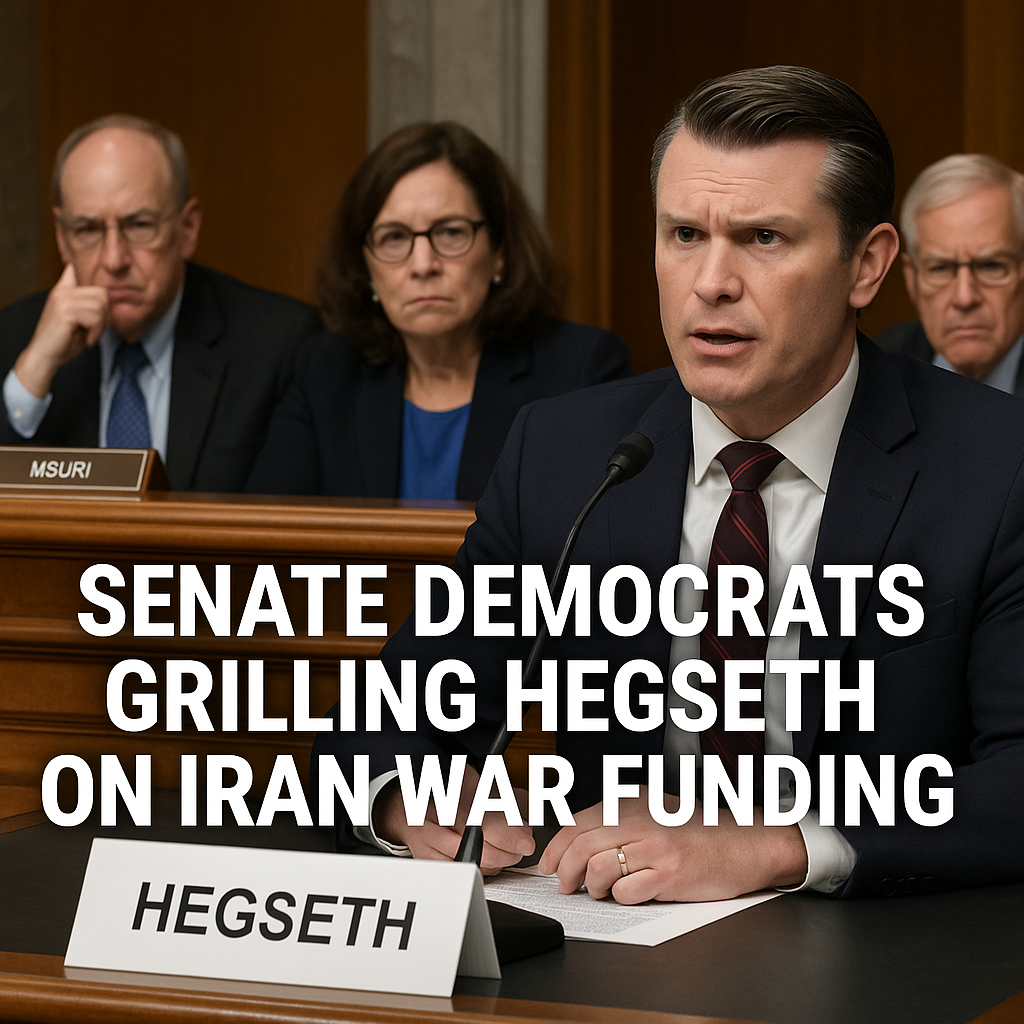
Senate Democrats Grilling Hegseth on Iran War Funding
Senate Democrats Grilling Hegseth on Iran War Funding: A Closer Look
The recent Senate hearing where Democrats questioned Fox News host Pete Hegseth about Iran war funding has ignited a complex conversation about U.S. foreign policy, military spending, and the strategic implications of conflict in the Middle East. This interrogation not only reflects ongoing concerns regarding military expenditures but also raises significant questions about the long-term implications of U.S. involvement in Iran.

Context and Emerging Perspectives
At the core of the Senate Democrats’ concerns is the escalating situation in Iran. With reports of increased military engagement and a consequential need for funding, lawmakers find themselves at a crossroads, debating the morality and efficacy of funding military operations abroad.

As Hegseth appeared before the Senate, Democrats seized the opportunity to scrutinize his perceived support for aggressive military strategies. They pointedly challenged his narratives regarding the consequences such actions would have on both regional stability and humanitarian trade-offs. Al Jazeera highlighted that many senators expressed a sentiment of frustration, arguing that continued military funding might not only escalate conflict but could also lead to dire humanitarian consequences for civilians caught in the middle.

From another perspective, reports from RT suggest that Hegseth defended his position adamantly, focusing on national security and the need to confront perceived threats from Iran that could potentially destabilize the region further. He argued for transparency in how military funds are allocated, essentially framing the discussion around national interests rather than directly addressing the criticism surrounding civilian impact.
Diverging Views on Military Funding
The interrogation brought to light divergent viewpoints on military funding. Some senators argued for greater congressional oversight and accountability in how tax dollars are spent on foreign wars. They expressed a need for a re-evaluation of military spending practices, questioning whether the projected strategic benefits justify the extensive financial investment. Several lawmakers underscored the importance of considering peace negotiations and diplomatic efforts as viable alternatives to military escalation.
Conversely, advocates of sustained military funding, including figures like Hegseth, argue that the potential threats from Iran necessitate a strong military presence. They contend that without this funding, the U.S. risks losing its leverage in negotiating safer conditions and maintaining stability in the Middle East. This camp often frames the conversation in terms of deterrence and preemption, suggesting that failures to adequately fund military initiatives could create a vacuum that might allow hostile actors to thrive.
The Broader Implications
The ramifications of this debate extend far beyond the confines of the Senate chamber. As legislators grapple with military funding, public opinion regarding U.S. engagement in foreign wars also seems to be shifting. Polls indicate a growing skepticism among Americans toward military interventions, as many citizens are increasingly questioning the efficacy and morality of warfare, especially in light of ongoing domestic issues like healthcare and education.
Furthermore, the economic implications of military spending cannot be overstated. As the U.S. grapples with inflation and economic recovery post-pandemic, reallocating military funds toward domestic initiatives is becoming an attractive proposition for some lawmakers. The disparity between foreign military spending and domestic needs creates a compelling narrative that may influence upcoming elections, prompting many candidates to reconsider their stance on military funding.
A Path Forward
As the Senate continues to discuss Iran war funding, a greater emphasis on accountability and transparency may become essential. Lawmakers need to balance national security interests with humanitarian concerns and the moral implications of their funding decisions. The complexity of these issues means that there may not be a one-size-fits-all solution, and open dialogue will be crucial.
In conclusion, the Senate’s grilling of Hegseth represents a significant moment in the larger conversation about U.S. foreign policy, military strategy, and funding. As diverse opinions surface and tensions grow, it’s clear that this dialogue is far from over, pointing to an evolving landscape in which military spending and foreign intervention will remain contentious topics. The outcome of this ongoing discussion may very well shape the future of U.S.-Iran relations and the approach to military engagement globally.