
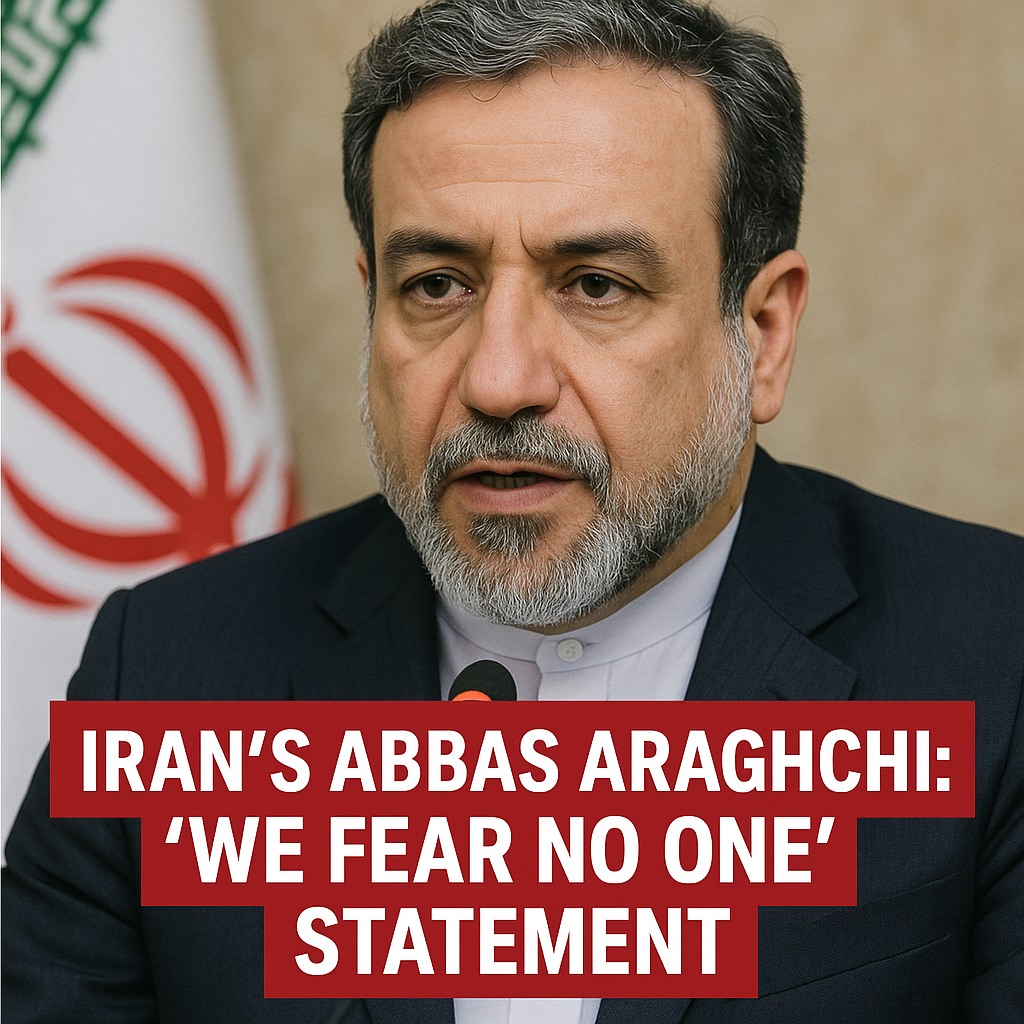
Iran’s Abbas Araghchi: ‘We Fear No One’ Statement
Understanding Iran’s Stance: Abbas Araghchi’s ‘We Fear No One’ Statement
In recent statements, Iranian diplomat Abbas Araghchi declared, “We fear no one,” emphasizing Iran’s confidence in the face of international pressure. This declaration resonates with Iran’s long-standing positions on sovereignty and resistance against external attempts to influence its governance and policies. However, the implications of such bold assertions merit a deeper examination of the regional geopolitical landscape and the reactions they provoke.

The Context of Araghchi’s Statement
Araghchi, who serves as Iran’s Deputy Foreign Minister, made his remarks amid increasing tensions in the Middle East, particularly concerning Iran’s nuclear activities and its regional influence. This statement could be interpreted as a reaffirmation of Iran’s resolve to pursue its own strategic objectives without bowing to external pressures, specifically from the United States and its allies.

Throughout the years, Iran has faced numerous sanctions and diplomatic isolations primarily driven by concerns over its nuclear program and alleged support for militant groups in the region. These challenges have often shaped the rhetoric of Iranian officials, who frequently invoke themes of sovereignty and resistance. Araghchi’s statement adds to this narrative, framing Iran as an unyielding power amid a complex web of international relations.

Regional Responses and Implications
The reaction to Araghchi’s declaration has been multifaceted. On one hand, Iranian officials and supporters within the country might interpret these comments as a source of pride, suggesting resilience in the face of adversity. This could strengthen national unity during a time when Iran is grappling with domestic economic challenges linked to sanctions.
Conversely, international observers and adversaries assess such statements with skepticism. The fearlessness espoused by Iranian officials could be regarded as a sign of defiance that may escalate tensions rather than soothe them. For instance, analysts from sources like RT have indicated that such rhetoric might provoke military postures from neighboring countries, especially Israel, which perceives Iran’s nuclear ambitions as an existential threat. This situation could fuel an arms race or prompt military engagements under the pretext of self-defense, further complicating an already volatile region.
Broader Implications for Diplomacy
Araghchi’s assertion also arrives at a time when diplomatic negotiations concerning Iran’s nuclear program are lingering uncertainly. The Joint Comprehensive Plan of Action (JCPOA), originally established in 2015, has faced significant challenges following the U.S. withdrawal in 2018. Renewed efforts to revive this agreement have been met with hurdles that reflect deep distrust between Iran and the West. Araghchi’s comments may signal a hardening stance from Iran, which could complicate diplomatic outreach efforts.
The scenario suggests a dual narrative: while Iran seeks to position itself as a strong player on the global stage, it also finds itself increasingly marginalized by international diplomatic efforts. This duality raises questions about the feasibility of future negotiations. Whether Iran’s steadfastness bolsters their bargaining power or entrenches their isolation remains a point of contention among experts.
The Balance of Power
Analyzing the intricate web of allegiances and rivalries in the Middle East is vital for understanding the ramifications of Araghchi’s statement. A stable Iran, unyielding to perceived threats, creates rippled effects on its neighbors, altering the dynamics of power and relationships across the region.
Key players, such as Saudi Arabia and Israel, remain apprehensive about Iran’s assertiveness. The emergence of normalized relationships between Israel and several Arab states challenges Iran’s previously dominant narrative, adapting to new geopolitical realities. In this light, the stakes of diplomatic relations with Iran hinge not only on nuclear negotiations but on broader regional security frameworks.
Conclusion: A Complex Landscape Ahead
Abbas Araghchi’s statement that “We fear no one” reflects Iran’s defensive posture amidst evolving international relations. The statement serves as both a declaration of strength and a potential point of contention among global and regional actors. While it resonates with nationalistic sentiments within Iran, it complicates the delicate balance of diplomacy in a tense geopolitical environment.
As the international community continues to debate the best course of action concerning Iran’s nuclear ambitions and regional activities, the implications of such declarations will be felt far beyond the borders of Iran. Only time will reveal whether this bold stance contributes to Iran’s strategic objectives or leads to heightened conflict in a volatile region.















