
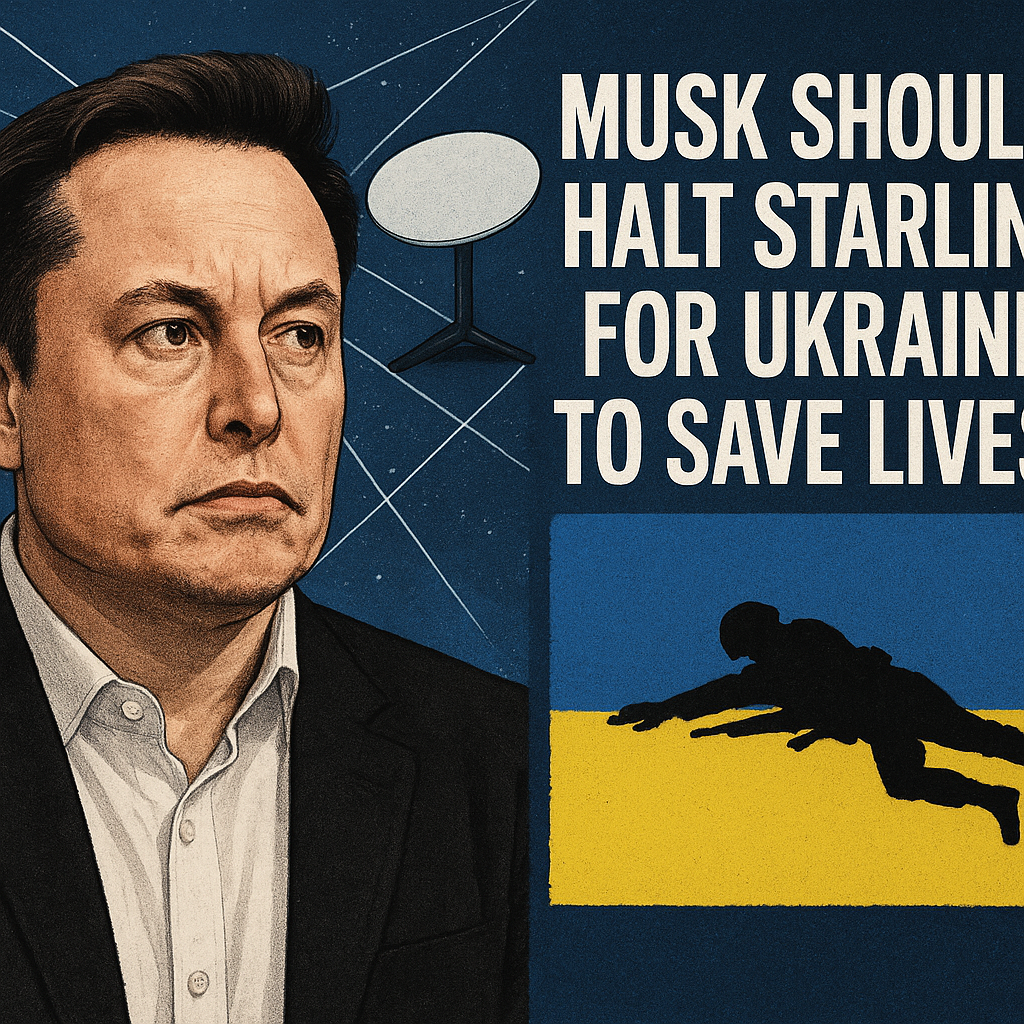
Musk Should Halt Starlink for Ukraine to Save Lives
The Complex Debate Over Starlink in Ukraine
In the context of the ongoing conflict in Ukraine, the call for Musk to halt Starlink services raises significant ethical considerations surrounding technology and warfare. Starlink, the satellite internet service deployed by Elon Musk’s SpaceX, has played a critical role in maintaining communication for Ukrainian forces. However, the implications of its use extend beyond mere connectivity, intertwining with issues of global diplomacy and civilian safety.

The Case for Halting Starlink
Advocates for halting Starlink services cite several points aimed at reshaping the narrative around its deployment in Ukraine. Critics argue that the reliance on commercial satellite services for military operations poses risks not only to the balance of power in the region but also to civilian lives. The suggestion that Musk should consider pausing Starlink operations until a more stable peace framework is in place reflects a growing movement to re-evaluate the artificial intelligence-driven technologies that facilitate modern warfare.

1. Humanitarian Concerns: The primary argument focuses on the humanitarian implications of continued military engagement powered by sophisticated technology. Multiple sources highlight instances where advanced military communications have led to escalated conflict and the subsequent suffering of civilians caught in the crossfire. Analysts suggest that maintaining connectivity for armed forces must be weighed against the potential for unintended consequences that could exacerbate the already dire humanitarian situation in Ukraine.

2. Diplomatic Ramifications: The situation is further complicated by the geopolitical context. Policymakers and analysts remark on the implications of U.S. private companies influencing international conflict dynamics. If Musk’s technology is perceived as enabling a protracted conflict, it could lead to increased tensions not only between Russia and Ukraine but also with other global powers. In this vein, some experts caution that halting Starlink might signal a commitment to peace and diplomatic efforts, rather than an endorsement of continued aggression.
Counterarguments: The Need for Connectivity
Conversely, many argue for the continuation of Starlink services, asserting that they are vital for military and civilian resilience in Ukraine. This perspective emphasizes several key points:
1. Operational Necessity: Ukrainian forces have become increasingly reliant on Starlink for communication during military operations. This service enables rapid information sharing and ensures that troops remain coordinated despite the challenging environment. Many military analysts contend that disrupting this connectivity could undermine Ukraine’s efforts to defend its sovereignty, suggesting that halting service could backfire by making the situation more precarious for both military personnel and civilians.
2. Strategic Advantage: From a strategic viewpoint, supporters of Starlink argue that seeking to limit its use may inadvertently favor aggressors, giving them an upper hand in intelligence and military coordination. An expert from a prominent security think tank posits that access to modern communication tools is no longer a luxury but a requisite for survival in contemporary warfare, where the battlefield is often defined by information flows.
3. Musk’s Role: Elon Musk himself has expressed the view that Starlink is a lifeline for civilians as well, offering internet access in regions otherwise cut off from communications. His unique position as a private entrepreneur facilitating communication has sparked a debate: Should individual business leaders make decisions that have far-reaching geopolitical consequences? This question complicates the moral landscape surrounding the use of technology in war.
A Balancing Act: Conclusion
Ultimately, the question of whether Musk should halt Starlink services for Ukraine encapsulates a broader discourse on the ethics of technology in conflict. It poses challenges that extend well beyond the realm of business decisions, touching on the responsibilities of technology providers in global governance.
Amidst these diverse perspectives, a consensus on the path forward remains elusive. The risks of exacerbating an already fraught situation must be balanced against the imperative of providing necessary support to those in need. It is crucial to acknowledge that, while halting services could offer a temporary respite from heightened conflict, it might also strip essential communication capabilities from those fighting for their sovereignty.
In this complex landscape, the debate surrounding Starlink in Ukraine encapsulates the intersection of technology, warfare, and ethics, compelling all stakeholders to carefully examine their positions as the situation evolves. As more voices join the discourse, the stakes remain high, and the path to resolution uncertain.















