
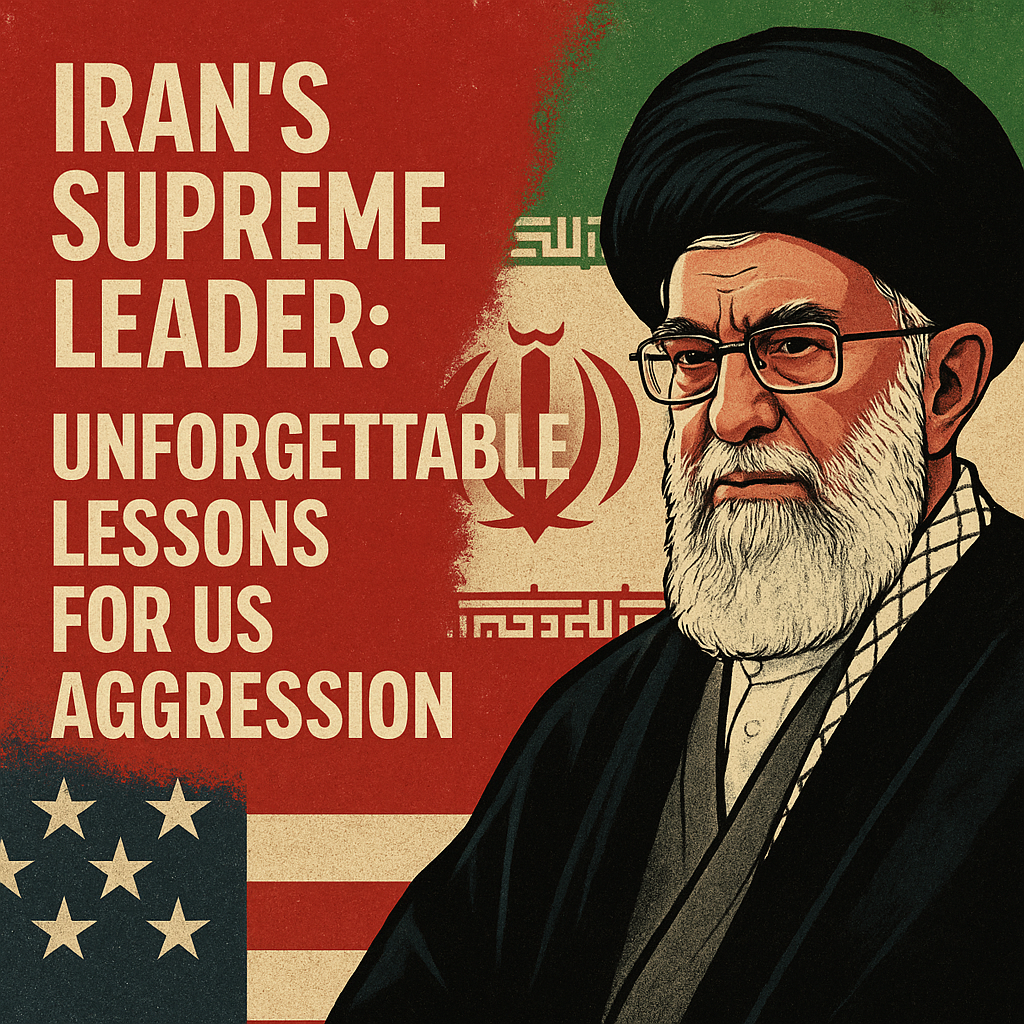
Iran’s Supreme Leader: Unforgettable Lessons for US Aggression
Understanding Iran’s Supreme Leader and the Lessons on U.S. Aggression
Iran’s Supreme Leader, Ayatollah Ali Khamenei, recently emphasized the profound repercussions that the United States could face if it continues its aggressive posturing towards Iran. His remarks serve as a stark reminder of the longstanding tensions and underline the complexities involved in U.S.-Iran relations.

The Context of Khamenei’s Warning
Khamenei’s statements come in the context of heightened military tensions in the region. Iran has frequently expressed its grievances against U.S. foreign policy, which it views as a direct threat to its national sovereignty. On multiple occasions, Iranian leaders have warned that any military action or perceived aggression could lead to “unforgettable lessons” for the U.S. This phrase embodies a multifaceted argument, where Iran’s leadership conveys both a historical memory of past conflicts and a contemporary urgency regarding its national security.

In a recent address, Khamenei reiterated that the U.S. has underestimated Iran’s resilience and capability. Reports indicate that U.S. military assets stationed in the vicinity, coupled with ongoing sanctions, have only intensified Iran’s resolve to counteract perceived threats. This mindset is rooted in historical events where Iran faced invasions or interventions, shaping a narrative that emphasizes resistance against foreign oppression.

Diverse Perspectives on U.S. Aggression
The international community remains divided on how to interpret Khamenei’s warnings. Analysts diverge greatly in their assessments of the implications of U.S. actions in the region.
Pro-Iran Viewpoint: Resistance and Sovereignty
From a pro-Iran perspective, Khamenei’s rhetoric resonates as a unifying call to defense against a powerful adversary. Supporters argue that the U.S. has repeatedly pursued an aggressive stance, evident through its military interventions in Iraq and Afghanistan, which have had devastating effects on regional stability. This view posits that Iran’s military posturing is a vital declaration of its sovereignty and a necessary measure to protect its internal and territorial integrity.
According to Al Jazeera, Khamenei’s recent remarks were articulated to rally domestic sentiment, ensuring that both military and civilian populations understand the importance of a united front in the face of external pressures. This solidarity is presented not only as a defense mechanism but also as a lesson rooted in historical context: past aggressions from foreign powers have always met with fierce resistance.
Counter-Viewpoint: Danger of Escalation
Conversely, critics of Iran’s stance warn that such defiance could lead to catastrophic confrontations, not just for Iran but for the United States and its allies. Analysts argue that while Khamenei calls for resilience, the implications of continued aggression can spiral out of control. Citing potential scenarios of military engagement, where misunderstandings could escalate into warfare, these experts advocate for dialogue over defiance. Sky News has highlighted potential flashpoints in the region, underscoring that both nations possess formidable military capabilities, raising concerns about an unpredictable chain of events.
International observers urge a more measured approach, advocating for diplomatic engagement rather than an escalation of military threats. They argue that mutual interests, including stability and economic considerations, should prevail over stubborn posturing that risks international security.
The Path Forward
As tensions in the Middle East continue to unfold, the lessons cited by Khamenei could impact not only the dynamics of U.S.-Iran relations but also the broader geopolitical landscape. The calls for resilience from Iran raise critical questions: How far is too far in asserting national sovereignty? What are the thresholds that might provoke military responses, and how might these responses affect global alliances?
Understanding the balance of power in the region requires recognizing the legitimate fears and aspirations held by both sides. While aggressive rhetoric may serve as a temporary unifier within Iran, it also fortifies opposition figures in the U.S. who argue for a competitive stance against Tehran’s ambitions.
Ultimately, grappling with these “unforgettable lessons” will demand diplomatic ingenuity and a recognition of the need for respectful engagement, transcending past grievances. As both nations navigate this complex terrain, the emphasis on lessons learned can serve as a crucial foundation for a more peaceful coexistence, should both sides choose to embark on that path.















