
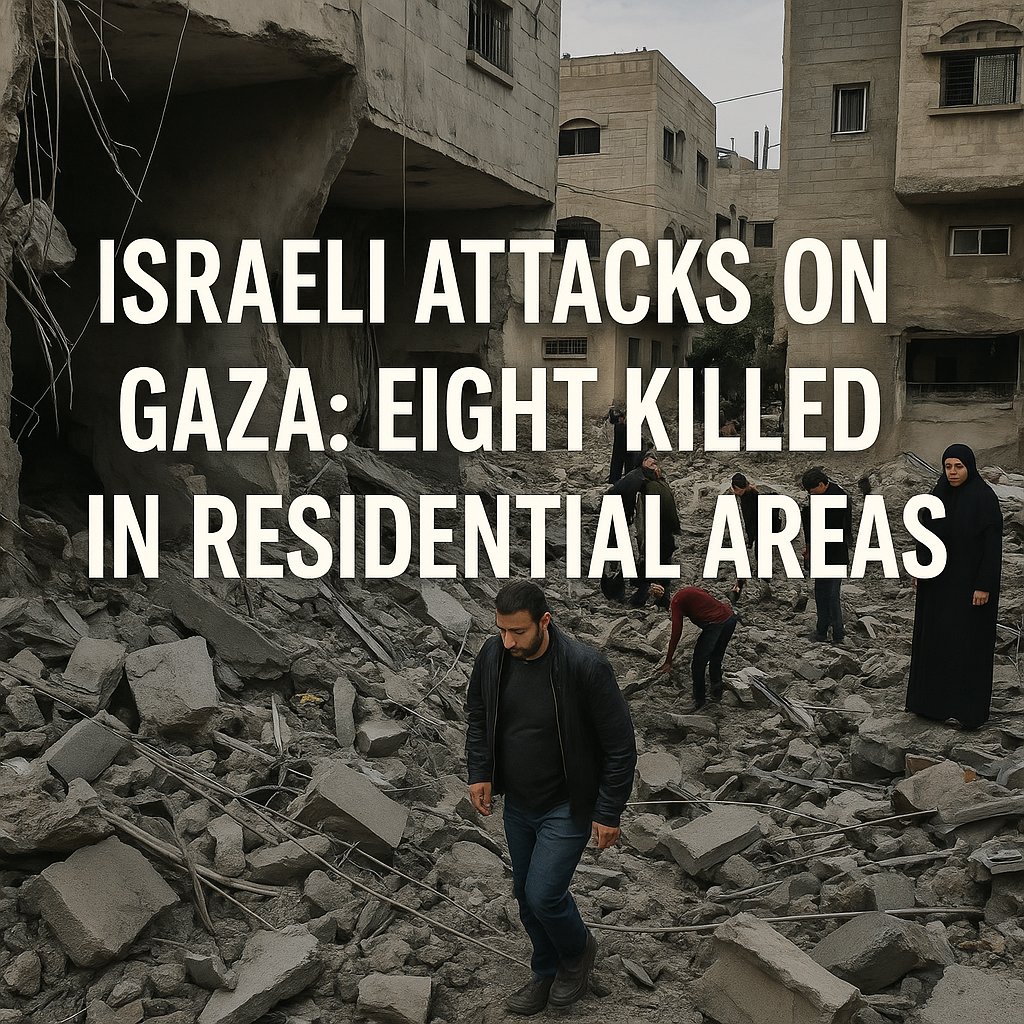
Israeli Attacks on Gaza: Eight Killed in Residential Areas
Understanding the Recent Israeli Attacks on Gaza: Eight Killed in Residential Areas
In a deeply concerning escalation of violence, recent Israeli attacks on residential areas in Gaza resulted in the tragic loss of eight lives. This incident has reignited debates over the ongoing Israel-Palestine conflict, raising questions about humanitarian implications, geopolitical consequences, and the prospect for future peace efforts.

Context of the Attacks
The conflict between Israel and Hamas has persisted for decades, marked by cycles of violence and fragile ceasefires. The targeted airstrikes in Gaza on July 18, 2026, happened amid rising tensions in the region, with sources indicating that the strikes were part of a broader campaign aimed at countering perceived threats from militant groups. According to Al Jazeera, the Israeli military stated that the strikes were “necessary for the defense of its citizens,” asserting that they targeted sites associated with Hamas, which they contend employs residential areas as shields.

However, this assertion has been met with skepticism and condemnation. Critics, including numerous human rights organizations, argue that the indiscriminate nature of such bombings often leads to a disproportionate impact on civilians and raises ethical questions about the use of military force in densely populated areas. The civilian casualties in this latest strike exemplify the tragic cost of armed conflict, raising alarms over the need for more stringent measures to protect civilian lives during military operations.

Diverse Perspectives on Civilian Impact
The reaction to the attacks emphasizes the need for a balanced perspective on the issue. On one hand, supporters of Israel emphasize the right to self-defense. They argue that Hamas’s military activities necessitate forceful responses, particularly when rockets are launched into Israeli territory. A piece from RT emphasizes the ongoing threat posed by militant groups in the Gaza Strip, framing the strikes as an essential move in a prolonged struggle for security.
Conversely, international observers and humanitarian organizations express grave concern over the casualties resulting from such military actions. A Sky News report highlights the humanitarian crisis emerging from these attacks, noting that with infrastructure already strained, the new wave of violence exacerbates the dire situation faced by civilians in Gaza. The region has long suffered from shortages of medical supplies, shelter, and basic necessities, prompting calls for an immediate ceasefire and a shift towards diplomatic solutions.
The Broader Implications
The ramifications of these attacks extend beyond immediate violence. The increase in casualties can spark broader unrest within Palestinian communities and fuel anti-Israel sentiment in the region and around the world. As calls for accountability grow, the international community faces pressure to mediate and propose solutions that could address the underlying issues contributing to the conflict.
Some experts argue that without addressing the root causes—such as ongoing settlement expansions, the blockade of Gaza, and the lack of a political horizon for peace—the cycle of violence is likely to continue. There are fears that renewed hostilities could also disrupt fragile relationships with neighboring countries, complicating international efforts aimed at achieving lasting peace.
Seeking Solutions
As this complex situation unfolds, it is crucial for both sides to engage in dialogue aimed at reducing further loss of life. Multiple sources advocate for a framework that includes not only immediate ceasefires but also a long-term commitment to peace negotiations involving all stakeholders. This could involve addressing grievances on both sides, fostering inter-community dialogue, and prioritizing humanitarian aid to those in the most affected areas.
Despite the grim status quo, there remains a glimmer of hope that comprehensive diplomatic engagement might be possible. However, achieving sustainable peace will require unprecedented cooperation from all parties involved to transcend cycles of violence and the rhetoric that often accompanies them.
The recent attacks on Gaza underscore the harsh realities of war, revealing a deeply fractured landscape where the pursuit of security often comes at the cost of innocent lives. As the world watches these unfolding events, it becomes ever more vital to foster understanding, humanitarian action, and a commitment to finding a path toward lasting peace in the region.















