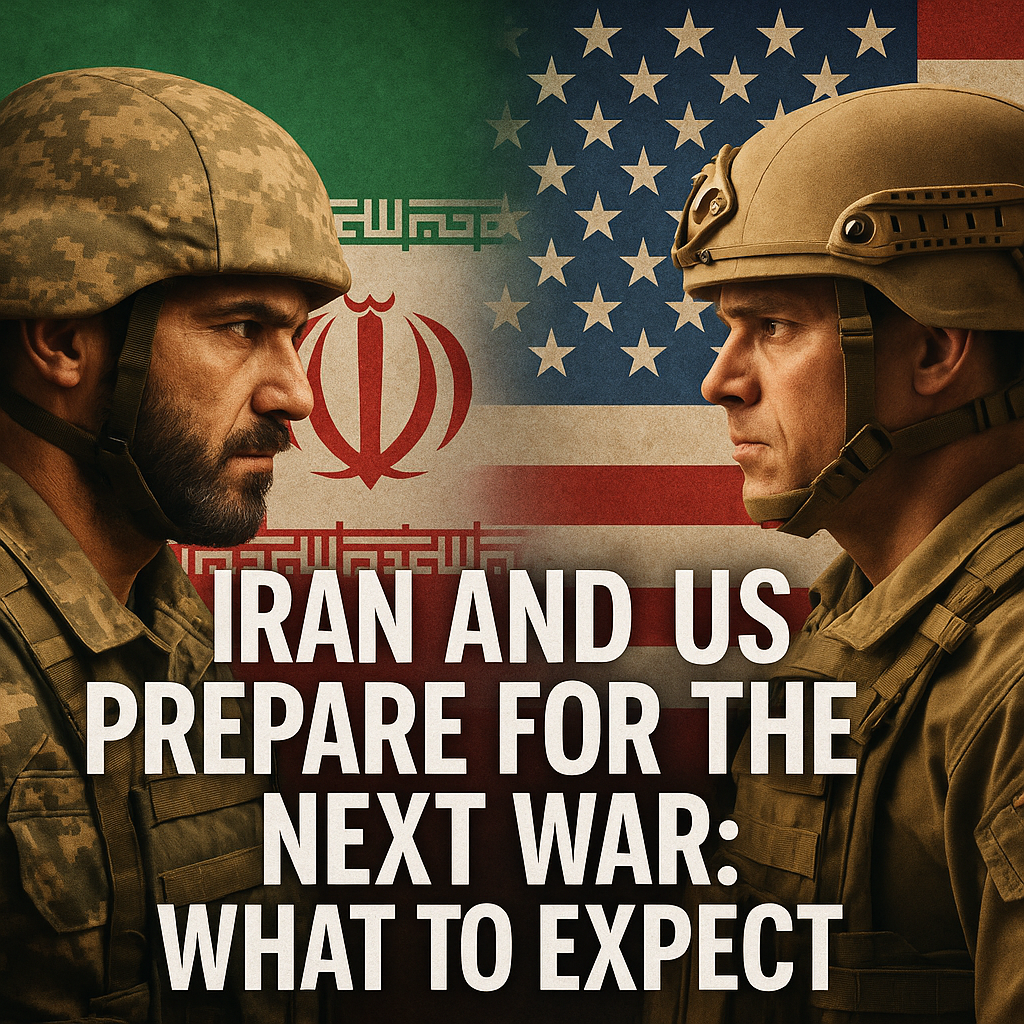
Iran and US Prepare for the Next War: What to Expect
Iran and US Prepare for the Next War: What to Expect
Tensions between Iran and the United States have reached a critical juncture, evoking fears of an impending conflict that could have far-reaching implications. Both nations appear to be escalating their military postures, chatting about a potential war scenario, and this article attempts to delineate the landscape surrounding this fraught relationship.

Heightened Military Engagements
Recent reports indicate that Iran has been ramping up its military capabilities, with officials indicating readiness to respond to what they perceive as aggressive posturing from the U.S. According to an article by RT, Iranian military leaders have framed the nation’s defense strategies as a necessary countermeasure against foreign threats, particularly from the U.S. and its allies. This mirrors sentiments expressed throughout a variety of sources, illustrating a broader, multifaceted understanding of Iran’s motivations.

In contrast, U.S. military maneuvers in the region, including increased naval deployments and joint exercises with allies, have been framed by U.S. officials as necessary for maintaining regional stability. Al Jazeera highlighted the state of uncertainty and concern among U.S. forces about Iran’s ballistic missile capabilities and its geopolitical ambitions, reinforcing the rationale for perceived military readiness. This dichotomy in narratives illustrates the complex standoff: while Iran seeks to showcase its military prowess as a deterrent, the U.S. perceives it as a provocative threat.

The Role of Proxy Forces
Another layer in this complicated equation is the involvement of proxy forces. The U.S. has consistently accused Iran of supporting militant groups across the Middle East, exacerbating regional tensions. Reports suggest that Iran has intensified its support for these proxies as a strategy to undermine U.S. influence, particularly in Iraq and Syria. On the flip side, Washington’s alliances with Gulf states and Israel have been described as a direct attempt to curtail Iran’s influence, potentially setting the stage for a broader confrontation.
This proxy dynamic complicates any predictive modelling concerning potential conflict. As both Iran and the U.S. make moves that could be interpreted as offensive or defensive, the uncertainty grows. Leaders on both sides have used inflammatory rhetoric that fuels public sentiment, making de-escalation increasingly difficult to achieve.
Economic Pressures and Domestic Politics
Compounding these military tensions are economic factors. Both nations suffer from domestic pressures that could influence decision-making regarding military action. For Iran, crippling sanctions have exacerbated economic woes, leading the government to adopt a more aggressive foreign policy as a means of diverting public dissatisfaction. The RT article underscores how this internal strife can result in external conflict, illustrating a historical precedent of governments facing crisis projecting power abroad to solidify internal support.
Conversely, U.S. domestic politics play a significant role in influencing the administration’s foreign policy. With growing anti-war sentiments in segments of the American public, especially among younger voters, there is potential for considerable political backlash against more aggressive military ventures. However, as tensions rise, the risk increases that political leaders may be tempted to adopt a more hawkish stance regardless of public sentiment.
The Path Forward
Predicting how the situation will unfold remains fraught with uncertainty. The positions of both countries are complicated by a legacy of mistrust and conflicts of interest that extend well beyond the present moment. While some analysts argue that neither side genuinely desires all-out war due to the catastrophic consequences it could entail, the potential for miscalculation remains high.
In summary, the contemporary landscape between Iran and the U.S. remains a cauldron of military posturing, proxy conflicts, and domestic pressures. As both nations grapple with their strategic objectives and the sentiments of their respective populations, the challenge lies in navigating these tensions without veering into outright conflict. Efforts at diplomatic engagement, though fraught with historical baggage, may yet provide a pathway toward de-escalation, but timely action will be crucial in averting a misstep that could lead to war.