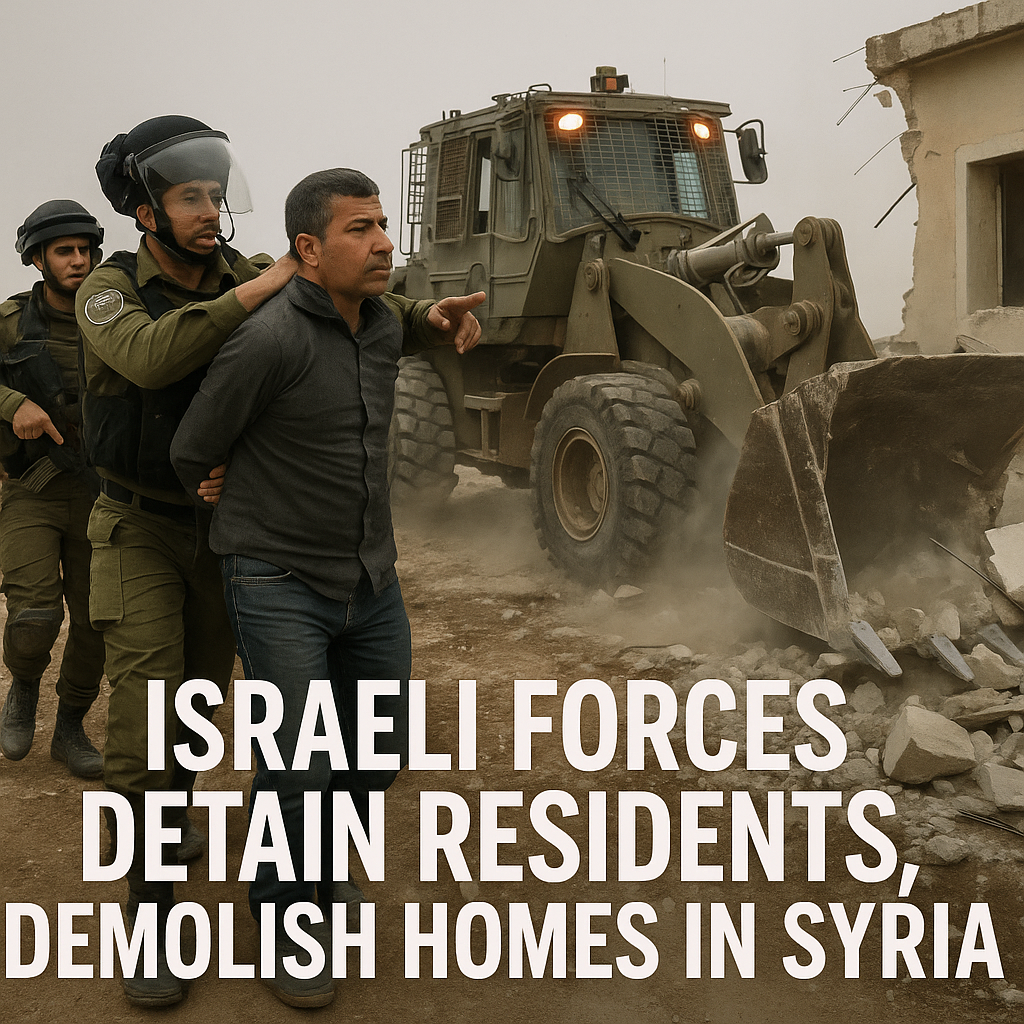
Israeli Forces Detain Residents, Demolish Homes in Syria
Israeli Forces Detain Residents, Demolish Homes in Syria
Recent events in southern Syria have drawn attention as Israeli forces executed a series of detentions and home demolitions, highlighting the ongoing complexities of regional tensions and historical grievances. This escalation not only raises humanitarian concerns but also reflects broader geopolitical dynamics that influence daily life in the area.

The Context of Recent Actions
On August 1, Israeli forces reportedly stormed several neighborhoods in southern Syria, specifically targeting areas known for their proximity to the Golan Heights. According to Al Jazeera, the operation involved detaining multiple residents, which local sources suggest was part of an ongoing strategy aimed at undermining Iranian influence in the region. Israeli officials have long expressed concerns that Iranian forces and their affiliates may establish a foothold close to their borders, prompting these aggressive security measures.

Contrasting this view, reports from RT emphasized the humanitarian implications of such actions, noting that demolitions have left families homeless and displaced residents in a war-torn country. The destruction of homes is seen as fundamentally destabilizing, exacerbating an already dire humanitarian situation. Activists and human rights organizations have condemned these actions, advocating that such measures may violate international law regarding collective punishment and the rights of civilians.

Israeli Rationale versus Humanitarian Outcry
The Israeli government’s rationale for these military operations has been consistent: to secure its borders and safeguard its citizens from perceived threats. Defense officials argue that detaining individuals suspected of collaborating with hostile forces is critical for national security. They justify demolishing homes as a punitive measure intended to deter further cooperation with militant groups.
On the other hand, the response from the international community and humanitarian groups has been one of outrage. Critics argue that these tactics only perpetuate a cycle of violence and retaliation. Human Rights Watch and other organizations have called for accountability, questioning the legality of home demolitions and mass detentions that disproportionately affect civilians.
The contrasting responses underscore a profound complexity in the situation. While Israeli authorities emphasize security needs, the narrative of suffering and instability among Syrian civilians presents a compelling argument against such military strategies.
The Impact on Local Communities
The immediate impact of such detentions and demolitions is apparent within local communities. Reports indicate that residents live in a heightened state of fear and uncertainty, knowing that they could be next. Social stability has been severely undermined, with families torn apart and communities fractured. This contributes to a broader crisis of trust not only between local populations and Israeli forces but also among various ethnic and sectarian groups within Syria, which are already grappling with the aftermath of a protracted civil war.
Moreover, residents who have been displaced face not only a lack of shelter but also dwindling resources. Access to basic necessities, including food and medical care, has become increasingly difficult, forcing many to rely on international aid—though that too has faced challenges due to ongoing conflict dynamics.
Conclusion: Navigating a turbulent landscape
The situation in southern Syria continues to be fraught with complications, as Israeli forces maintain a strategic yet controversial presence aimed at curbing Iranian influence. The conduct of these operations raises significant moral and legal questions, especially against a backdrop of already limited humanitarian conditions.
As global stakeholders observe these developments, a balanced approach is essential. Acknowledging Israel’s security concerns should not preclude addressing the urgent humanitarian crises that arise from military actions. Finding pathways toward dialogue and resolution may ultimately serve the interests of both regional stability and the well-being of civilians caught in the crossfire.
The lack of a straightforward conclusion in this ongoing situation only underscores the importance of continually seeking solutions rooted in dialogue and understanding. The stakes are high, and the path forward must prioritize human dignity and security for all involved.