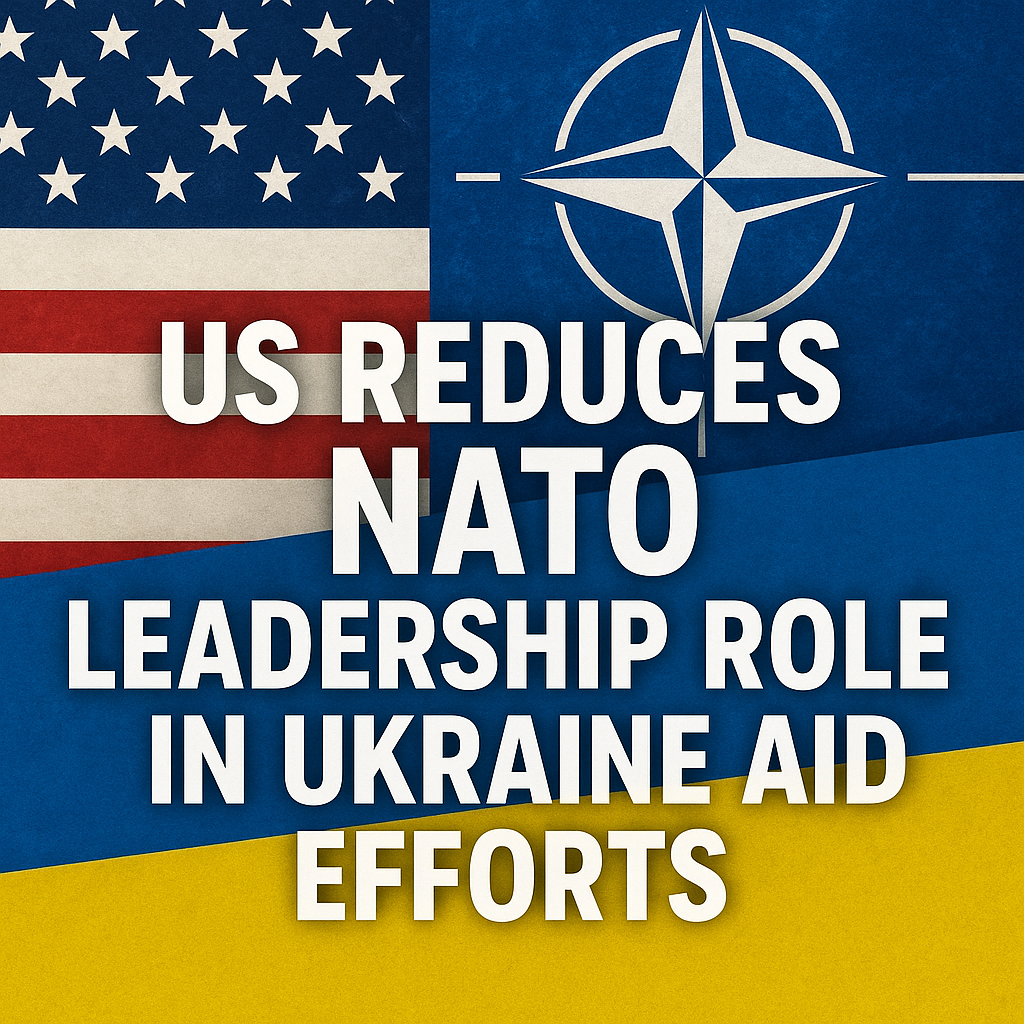
US Reduces NATO Leadership Role in Ukraine Aid Efforts
US Reduces NATO Leadership Role in Ukraine Aid Efforts
The recent shift in NATO’s leadership role regarding aid efforts in Ukraine marks a significant moment in international relations and military assistance strategies. The United States, a key player in NATO, has decided to step back from its central leadership role, prompting discussions about the future dynamics of the alliance and its commitment to supporting Ukraine against Russian aggression.

The Shift in Leadership Dynamics
The decision to reduce the US’s leadership role comes amid evolving military and political landscapes. While the US has been one of the most ardent supporters of Ukraine since the onset of the conflict, recent statements from officials suggest a recalibration of responsibilities within NATO. This transition reflects a complex interplay of factors, including domestic pressures to rethink foreign military engagements and an ongoing assessment of NATO’s collective strategies.

Sources like Al Jazeera highlight that this shift could lead to a more collaborative approach among NATO allies, where responsibilities may be spread more evenly across member nations. As the war in Ukraine continues, US Secretary of Defense Lloyd Austin emphasized the importance of collective efforts over unilateral actions. The transition aims to empower other member states to take a more active role in shaping the support mechanisms for Ukraine.

On the contrary, RT reports concerns from some European NATO members regarding the implications of a diminished US leadership role. Countries that have relied heavily on American military and financial support express anxiety about their ability to maintain the same level of assistance and strategic coordination without US guidance.
Different Perspectives on Aid Efforts
The spectrum of opinions on this leadership reduction reveals contrasting viewpoints. Proponents of a shared leadership model argue it could enhance NATO’s unity and encourage greater contributions from European countries. This approach aligns with calls for European nations to step up their defense capabilities, reflecting a growing sentiment that NATO should not solely depend on the US.
Conversely, critics warn that the US’s withdrawal from a leadership role might disrupt the sustained flow of military aid that Ukraine desperately needs. The infusion of support from the US has, until now, been seen as a critical element in Ukraine’s resistance. The fear of reduced effectiveness in aiding Ukraine’s military operations looms large, especially given the ongoing threats from Russia. As one analyst put it, “Without a strong US presence, there is a real risk that aid efforts could become less coherent and more fragmented.”
Additionally, an array of voices in the debate stresses the urgency of maintaining strong support for Ukraine amid the protracted conflict. They argue that any hesitance or perceived withdrawal of support could embolden Russian strategies, complicating the geopolitical landscape even further.
Future Implications for NATO and Ukraine
The implications of this leadership shift extend beyond immediate military tactics. As NATO seeks to redefine its strategic posture, questions about the alliance’s long-term sustainability and unity will come to the forefront. The challenge will be ensuring that all members are equally engaged and prepared to contribute to mutual defense principles.
Public sentiment in NATO countries also influences the trajectory of support for Ukraine. With rising economic concerns and global resource allocations becoming ever more pressing, governments will need to balance domestic priorities with international responsibilities. The political will to continue supporting Ukraine might fluctuate; thus, sustaining public support will be essential.
The potential restructuring of NATO leadership offers an opportunity for reflection and innovation in addressing the challenges posed by modern warfare. Engaging all member states in a more collaborative framework may provide not only logistical advantages in support efforts but also a renewed sense of solidarity among allies.
Conclusion
In conclusion, the reduction of the US’s leadership role in NATO’s Ukraine aid efforts signals a critical juncture for both the alliance and Ukraine itself. As discussions continue around the practicalities and philosophies of NATO’s engagement, what remains clear is that the effectiveness of support for Ukraine will hinge on the ability of allied nations to rapidly adapt and coordinate their efforts. In an era of geopolitical uncertainty, this collaborative spirit may very well determine the outcome of the ongoing conflict and the future of European security.