
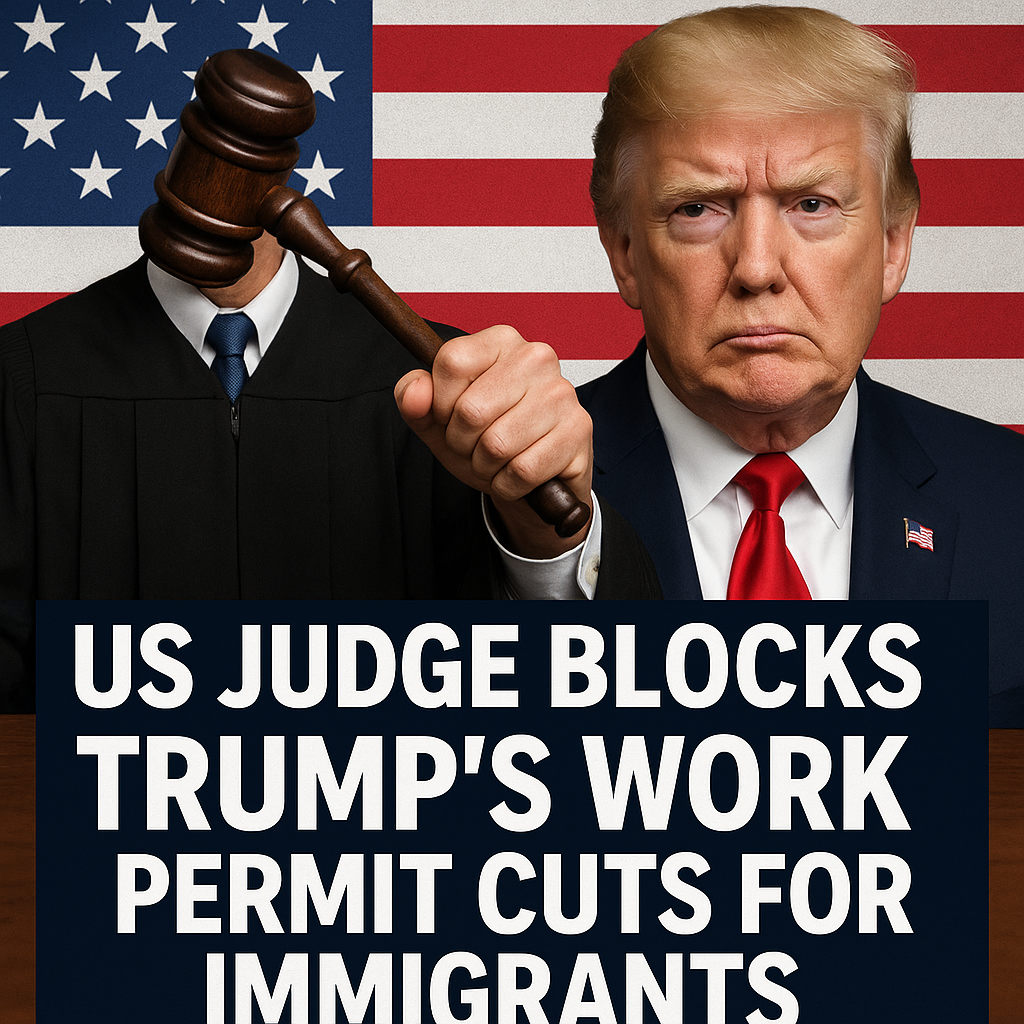
US Judge Blocks Trump’s Work Permit Cuts for Immigrants
US Judge Blocks Trump’s Work Permit Cuts for Immigrants
A recent ruling by a U.S. judge has halted the Trump administration’s efforts to rescind work permits for certain immigrants, underscoring the contentious relationship between immigration policy and legal authority in the United States. This decision, viewed through a multifaceted lens, highlights the complexities of immigration reform and its socio-economic implications.

Background on the Ruling
In July 2026, Judge Edward Chen of the U.S. District Court for the Northern District of California issued a temporary injunction, which prevents the enforcement of new regulations aimed at stripping work permits from thousands of immigrants. These permits have been vital for many individuals, enabling them to work legally in various sectors across the country.

The Trump administration had initiated this bid claiming it was part of broader efforts to protect American jobs amidst shifting economic conditions. However, the judge’s ruling emphasizes that the abrupt removal of work authorizations could lead to significant disruption in communities and the labor market. According to Chen, abolishing these permits could result in “irreparable harm” to the individuals affected and their families, many of whom have established their lives and careers in the U.S. over several years.

Diverse Perspectives on Immigration Policies
The ruling has elicited mixed reactions among lawmakers, advocacy groups, and citizens. Supporters of stricter immigration policies argue that the administration’s intended measures are necessary to safeguard job opportunities for American citizens. They contend that immigrants often compete for low-wage jobs, thus exacerbating unemployment rates among native workers. This perspective is rooted in concerns about economic stability and the socio-cultural fabric of American society.
Conversely, numerous advocacy groups and legal experts celebrate the judge’s decision, framing it as a protective measure for vulnerable populations. Organizations like the American Civil Liberties Union (ACLU) have noted that many immigrants holding these work permits are essential to various industries, including healthcare, agriculture, and technology. They argue that removing work authorization would not only endanger these individuals’ livelihoods but also disrupt the labor force, which has become increasingly reliant on immigrant contributions.
Moreover, data reflecting the economic benefits of immigrant labor cannot be overlooked. Studies indicate that immigrants often help fill labor shortages, especially in sectors where there are insufficient domestic workers. As highlighted in various reports, the participation of immigrants in the workforce can stimulate job creation and economic growth.
The Broader Implications of the Ruling
The implications of Judge Chen’s ruling extend beyond individual work permits. It raises fundamental questions about the balance of power between the judicial and executive branches in matters of immigration policy. Supporters of the decision argue that the judicial system must serve as a check on executive actions that may lead to harmful consequences without thorough consideration of human impacts.
For immigrants and their families, this ruling provides a temporary respite but highlights an ongoing uncertainty surrounding immigration policy in the U.S. Advocates assert that while this decision is a significant victory, the struggle for comprehensive immigration reform continues. As immigration policy remains a contentious topic, further litigation and legislative efforts are expected.
##### Conclusion
The blockage of the Trump administration’s work permit cuts represents a crucial moment in the ongoing debate surrounding immigration in the United States. As the judicial system steps in to address potential injustices, the resulting dialogue pushes both advocacy groups and policymakers to reflect on the complexities of immigration reform. As this story develops, it will undoubtedly shape the landscape of U.S. immigration policy and, by extension, the lives of those who seek better opportunities in America. This shows that the conversations surrounding immigration must be informed by both economic data and the very human stories that lie behind the statistics.















