Poland Protests to Russian Ambassador Over Missile Incursion
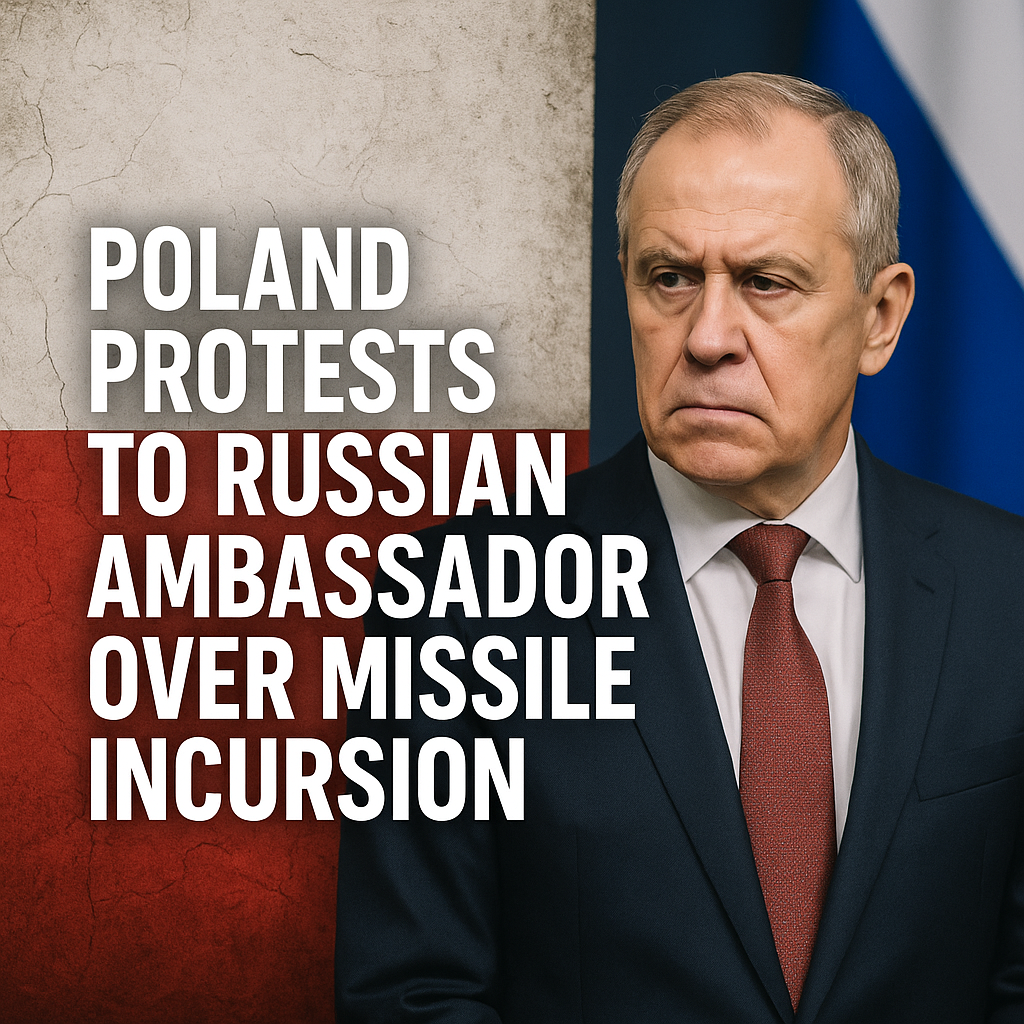
Poland’s recent protests directed toward the Russian ambassador have spotlighted tensions in Eastern Europe, particularly regarding missile incursions that have heightened concerns over national security and regional stability. These protests stemmed from allegations of Russian missile fragments landing on Polish territory, an incident that has sparked a serious diplomatic sensation.

The Incident: A Catalyst for Protest
On the morning of July 31, Polish authorities reported that fragments of what appeared to be a Russian missile had fallen within their borders. This event, though not unprecedented in the realm of military escalation, aroused significant public and governmental ire, particularly in light of Poland’s proximity to the ongoing conflict between Russia and Ukraine. Poland’s government swiftly summoned the Russian ambassador, emphasizing their condemnation of the incident and strong demand for explanations.

The Polish Foreign Minister, Zbigniew Rau, stated, “Such actions can never be considered a mistake.” Statements from various government officials reflect a unified front in condemning the perceived aggression. This aligns with Poland’s growing commitment to bolster its military readiness, as indicated by increased defense spending and cooperative initiatives with NATO allies.

Diverging Perspectives on Responsibility
Voices from both the Polish government and public resonate with the sentiment of heightened scrutiny toward Russia. Many Poles view this incident as part of a broader pattern of Russian aggression not only against Ukraine but also towards neighboring states like Poland. The protests outside the Russian embassy, marked by banners reading “No more provocations!” and calls for accountability, illustrated widespread concern over national sovereignty.
Conversely, Russian media outlets, including reports from RT, framed the missile incursion as potentially unintentional collateral damage amid ongoing military operations. Official spokespersons denied any culpability and characterized the protests as politically charged, suggesting they serve to further anti-Russian sentiment within the region. Russian defense analysts argue that such incidents should be viewed through the lens of ongoing conflicts, indicating that similar scenarios could arise from the intensifying use of military technology by various nations.
The Broader Implications of Military Provocations
The protest in Poland not only emphasizes the immediate concerns regarding territorial integrity but also reflects the broader geopolitical tensions at play. Poland’s response is emblematic of a larger narrative wherein Eastern European nations, bearing historical baggage from previous invasions, remain vigilant agains perceived threats from Russia.
Key considerations in this milieu include:
– Military Alliances: Poland’s strong alliance with NATO has led to recent military enhancements, including the increased presence of allied forces on Polish soil and advanced military exercises. This collective defense posture serves as a deterrent but also risks further aggravating Russia.
– Public Sentiment: Amidst these tensions, public opinion in Poland increasingly leans toward a hardline position against Russia. Many citizens view diplomatic protests as necessary components of national defense, a sentiment echoed in recent polls reflecting strong support for robust military measures against external threats.
– Economic Considerations: Economic stability in Poland also hangs in the balance, particularly with energy dependencies within the region. Efforts to diversify energy sources and reduce reliance on Russian gas underscore a commitment to sovereignty that finds resonance among citizens weary of external influences.
Conclusion: Navigating Tensions Through Dialogue
As Poland navigates this recent turmoil triggered by the missile incident, the complexity of reactions reflects the multifaceted nature of international relations. While the Polish government’s assertive stance and public protests signal unity against perceived aggression, the contrasting viewpoints from Russia remind us that interpretations of military actions are often politicized.
Engaging in diplomatic dialogue with clarity and purpose may offer avenues for de-escalation, but the road ahead remains fraught with challenges. Poland’s actions serve as a barometer for the shifting dynamics in Eastern Europe, underscoring the necessity for a thoughtful approach to diplomacy amid rising tensions that could affect regional stability in the years to come.