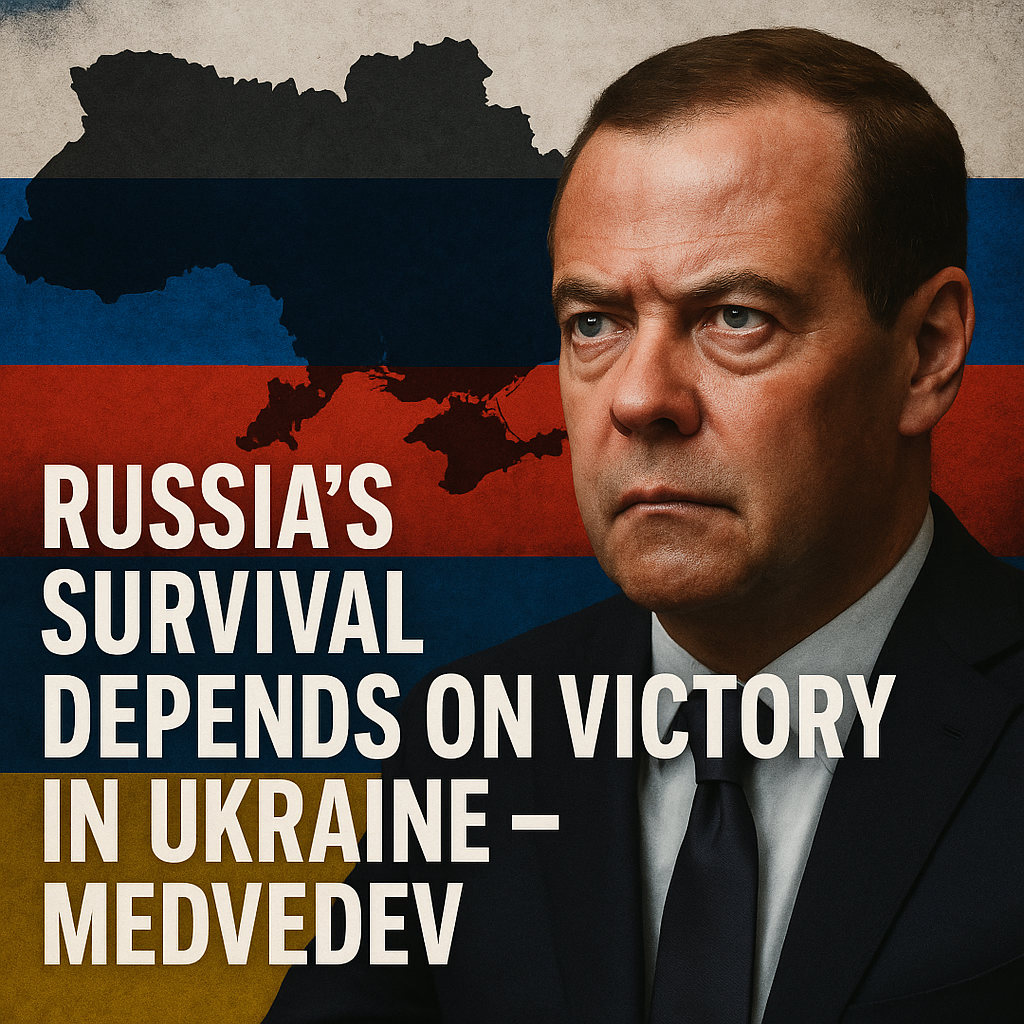
Russia’s Survival Depends on Victory in Ukraine – Medvedev
Russia’s Survival Depends on Victory in Ukraine – Medvedev
In recent remarks, Dmitry Medvedev, the former president of Russia, emphasized that Russia’s survival hinges on achieving victory in Ukraine. This assertion reflects the heightened stakes surrounding the ongoing conflict and presents a lens into the geopolitical implications for both Russia and the international community.

The Context of Medvedev’s Statements
Medvedev’s comments emerge from a backdrop of sustained military engagement between Russia and Ukraine, which has drawn widespread global attention and condemnation. As the war drags on, both nations are entrenched in a battle not only for territorial control but also for political legitimacy. Medvedev, now serving as the deputy chairman of Russia’s Security Council, portrays the conflict as existential for Russia, suggesting that failure could diminish the country’s standing and territorial integrity.

Various sources highlight the perception among Russian leaders that a defeat could undermine their governance and lead to instability. For instance, a report from Al Jazeera underscores how this conflict has been narrated within Russia, positing that the Kremlin often frames its military actions as necessary for national survival against perceived Western aggression. This narrative reinforces a sense of unity among Russian citizens, cultivating support for the military campaign—even as thousands of lives are lost.

In direct contrast, Sky News cites statements from Western leaders and analysts, who argue that such framing is a strategic manipulation intended to bolster domestic support. Critics contend that the notion of survival related to victory in Ukraine is exaggerated, portraying it instead as a reckless gamble that could further isolate Russia on the global stage and worsen its economic situation.
The Stakes of Victory
The implications of this conflict extend well beyond the borders of Ukraine and Russia. The war has reshaped political alliances, economic policies, and military strategies around the world. Countries such as the United States and members of the European Union have imposed significant sanctions on Russia, aiming to deter its military ambitions. In response, Russia’s leadership has doubled down on its claims, asserting that the sanctions are part of a broader attempt at regime change, which, according to Medvedev, necessitates a decisive military victory to reinforce the state’s integrity.
Critically, the trajectory of this military campaign poses questions about the prospects of peace and stability in the region. While Medvedev insists that failure is not an option, the realities on the ground reveal a complex scenario where both sides are facing heightened casualties and strained resources. Recent reports indicate growing dissatisfaction within Russia among both military personnel and civilians, suggesting that continued warfare might not catalyze the solidarity the Kremlin hopes for.
A Divided Perspective
What remains clear amid the contrasting narratives is the division among analysts regarding the feasibility of Medvedev’s stance. RT emphasizes a strong patriotic sentiment within Russia, arguing that the collective memory of historical conflicts fuels a desire for victory and national pride. This perspective resonates with many Russians who view the conflict through a lens of historical grievances, contributing to a potent form of nationalism.
Conversely, there is significant debate about whether these sentiments can sustain a prolonged conflict, especially when faced with stark economic consequences. International observers have noted that as casualties mount and economic sanctions linger, the earlier fervor might wane, leading to domestic challenges for the Kremlin. Such pressures might push Russian leaders to reconsider their strategic aims in Ukraine, especially if the war does not yield the quick decisive victory they hope for.
Conclusion: A Fragile Future
Medvedev’s assertion that Russia’s survival is contingent upon victory in Ukraine encapsulates a high-stakes gamble for both the Kremlin and the Ukrainian state. As the conflict evolves, the foundations upon which these narratives stand appear increasingly fragile. The dichotomy of perspectives—one of resolute nationalism versus the pragmatic acknowledgement of dwindling resources—underscores the complexity of the situation.
The international community watches keenly as signs of strategic recalibration may emerge from either side. The path ahead remains uncertain, but what is clear is that the outcomes of this conflict will resonate far beyond Ukraine, influencing global geopolitics for years to come.