
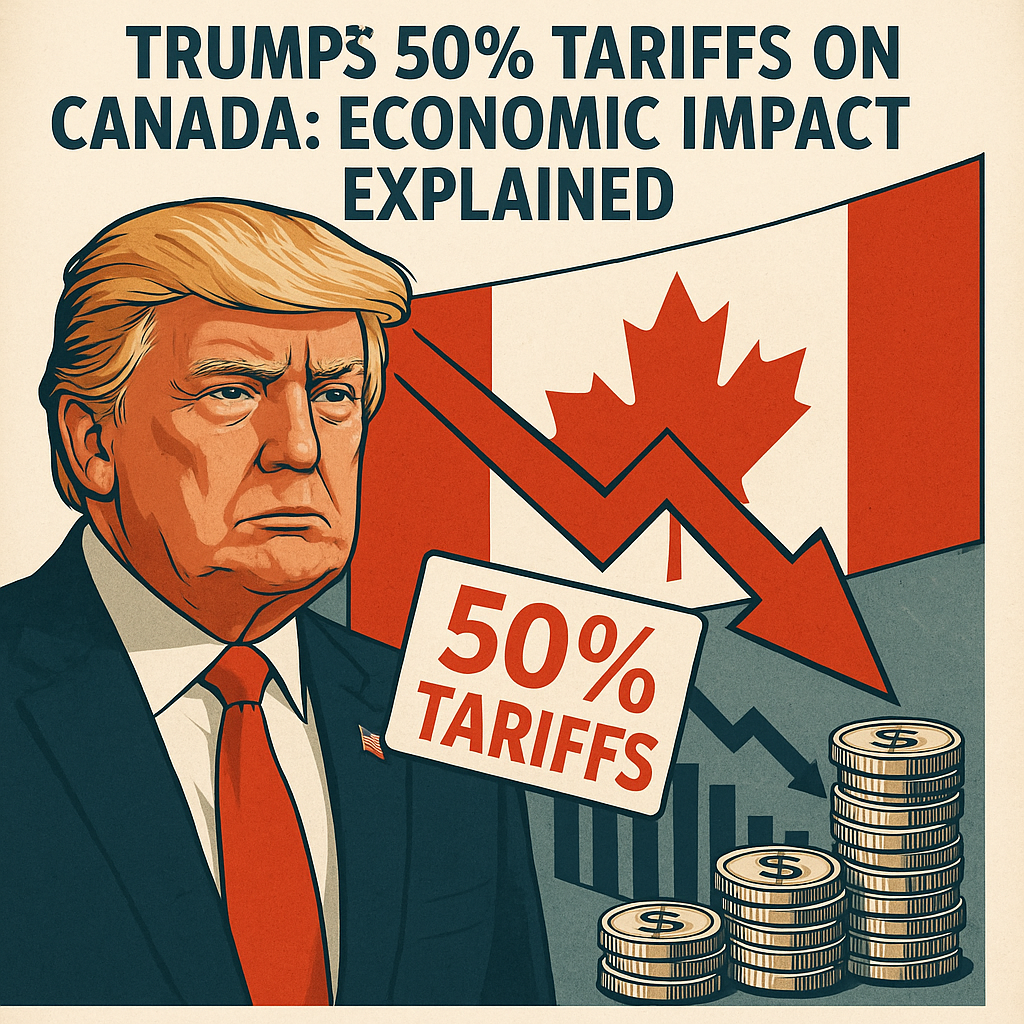
Trump’s 50% Tariffs on Canada: Economic Impact Explained
Trump’s 50% Tariffs on Canada: Economic Impact Explained
In recent developments, the announcement of a 50% tariff on Canadian imports by former President Trump has sparked widespread debate regarding its potential economic impact. This bold move not only raises questions about trade relations but also poses significant implications for both the U.S. and Canadian economies.

Immediate Consequences of Tariff Implementation
As reported by various news outlets, the immediate response to the tariff announcement has been one of alarm among economists and business leaders. Canadian Prime Minister Justin Trudeau described the tariffs as “unfortunate,” asserting that they would hurt consumers in both nations. The Canadian economy is heavily intertwined with that of the U.S., boasting substantial exports, particularly in sectors like timber, automotive, and agriculture.

Experts warn that such a drastic measure could lead to retaliatory tariffs from Canada, which might escalate into a full-blown trade war. For instance, Canada is one of the largest exporters of steel and aluminum to the U.S. The imposition of tariffs could result in increased prices for these materials, ultimately raising costs for American manufacturers. According to the Canadian government, a significant portion of its GDP is reliant on exports to the U.S., making the nation’s economy potentially vulnerable to these changes.

Moreover, a study from Al Jazeera indicated that if tariffs go into effect, American consumers could face price hikes on everyday goods. This situation could lead to reduced consumer spending and slow down economic growth in the U.S. By raising prices on foreign goods, the tariffs may paradoxically protect some industries while harming others that rely on affordable Canadian imports.
Economic Ripple Effects
The tariff decision may also have broader implications for international trade relations. Globally, the U.S. has been working to reshape its trade agreements to foster new alliances and strengthen its economic position. However, the 50% tariffs on Canada may undermine those efforts by sending a message of unpredictability to both partners and rivals alike. The risk of isolationism in trade policy could deter foreign investment and complicate existing trade deals.
Contrasting opinions have emerged among economists regarding the efficacy of such tariffs. While some argue that they could serve to protect American jobs by encouraging consumers to buy domestic products, others caution that the net effect could lead to job losses and decreased competitiveness in the global market. The reality is complex: while certain sectors may benefit from protectionism, industries that depend on Canadian imports stand to lose significantly.
Potential Long-Term Implications
Long-term, the tariffs could shift the dynamics of North American trade entirely. Canadian companies may seek to diversify their markets, potentially looking towards other partners in Asia and Europe to mitigate the effects of U.S. tariffs. This shift could lead to a possible realignment of trade relationships, with lasting impacts on supply chains that have developed over decades.
Moreover, both countries must navigate the potential legal repercussions. The United States-Mexico-Canada Agreement (USMCA) has specific stipulations regarding tariffs, and these unilateral actions may prompt legal challenges in international trade courts. Observers note that such legal disputes could further complicate already tense relations between the two neighboring nations.
Conclusion: Navigating Uncertainty
The 50% tariffs on Canadian goods, while framed by some as a means of protecting American interests, carry substantial risks that could rebound against both the U.S. and Canada. The initial reactions from political leaders, economists, and industry stakeholders underline the precarious balance of benefits and detriments. As both governments assess their next steps, the evolving landscape of international trade requires careful consideration and negotiation.
In summary, this controversial economic policy not only threatens to disrupt established trade patterns, but it also raises important questions about the future of U.S.-Canada relations. The complexity and uncertainty surrounding these tariffs highlight the intricate web of economic interdependence between the two countries.















