Trump Cancels Iran Attack: What It Means for Global Tensions
Trump Cancels Iran Attack: Implications for Global Tensions
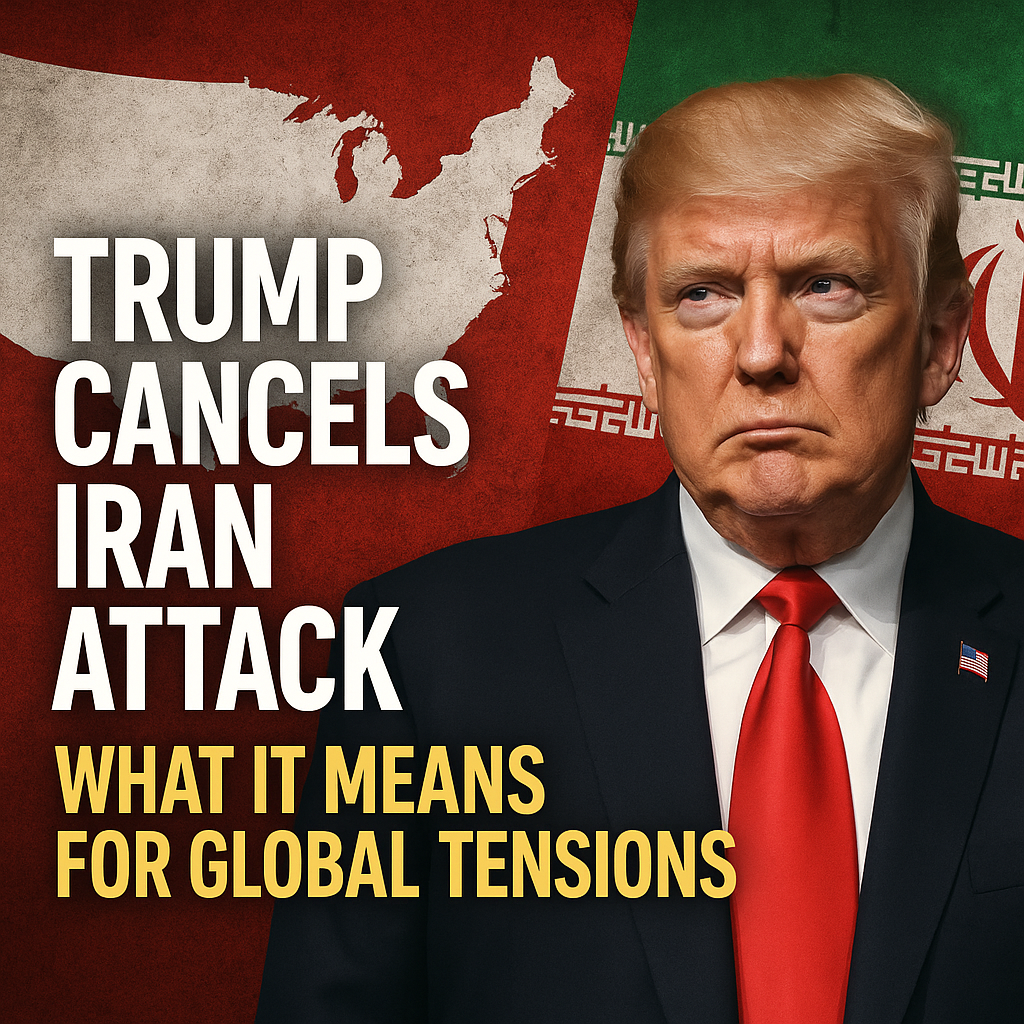
In a significant political maneuver, former President Donald Trump recently called off a planned military strike against Iran, a decision that has garnered global attention and stirred a complex web of opinions on its potential impacts.

The Decision and Its Immediate Context
The decision to cancel the attack was reportedly made hours after the response to an Iranian operation that downed a U.S. drone, escalating tensions between the two nations. While Trump justified his actions by stating that the strike might have resulted in the loss of 150 lives, many analysts argue that this is emblematic of a deeper strategy. The nature of political decision-making during times of heightened tension often involves weighing the potential costs and benefits—both immediate and long-term.

A mix of skepticism and relief has emerged following Trump’s announcement. Critics warn that the cancellation might be a temporary avoidance of military conflict while failing to address the underlying issues that continuously reignite tensions in the region. Proponents of the decision argue that it embodies caution, preventing an escalation into a full-blown conflict.

Diverging Perspectives on the Cancellation
The discourse surrounding Trump’s cancellation of the Iranian strike reveals a spectrum of opinions.
Realpolitik and Military Strategy
From a realpolitik perspective, some experts suggest the cancellation aligns with a strategic vision to avert war. In a heated political climate, characterized by growing tensions and nationalistic rhetoric, the decision can be seen as a calculated move to maintain stability not only in the Middle East but also domestically. As political commentator Max Blumenthal noted, avoiding escalation could prevent giving radical factions, both in Iran and the U.S., fuel for further conflict.
Conversely, others argue that abstaining from military action may send mixed signals. Daniel Benaim, a Middle East analyst, expressed concern that Trump’s reluctance could embolden Iran, suggesting that perceived weakness might encourage aggressive behavior. This perspective suggests that while military action is risky, the absence of a decisively strong stance may lead to its own forms of instability.
Humanitarian Concerns and Soft Power
Humanitarian concerns also play a pivotal role in the conversation. The loss of civilian life is an important factor in America’s ethical stance on foreign intervention. Trump’s acknowledgment of potential casualties reflects a growing awareness among leaders regarding the implications of military action on innocent lives. Human rights organizations have long argued that antagonistic policies only deepen grievances and perpetuate cycles of violence.
The cancellation could present an opportunity to engage Iran through diplomatic channels, a viewpoint echoed by Al Jazeera’s analysis on the broader implications for U.S.-Iran relations. Understanding this context, engaging Iran diplomatically rather than militarily could pave the way for constructive dialogue, potentially preserving regional stability and enhancing America’s international standing.
Conclusion: Uncertainties Ahead
While Trump’s decision to cancel the attack might be viewed through lenses of caution, strategy, and humanitarian considerations, it undeniably underscores the complexities surrounding U.S. relations with Iran. As various analysts articulate, the ramifications of his decision are multi-faceted, with no clear consensus on the best path forward.
The episode offers a timely reminder of the fragile nature of global diplomacy—where a single decision can resonate across continents, influencing alliances and shaping perceptions. As the world watches, many are left pondering whether this avoidance of military engagement will yield a more conducive environment for dialogue or simply be a temporary reprieve in a long-standing conflict. The future of U.S.-Iran relations remains uncertain, and policymakers will need to navigate these turbulent waters carefully to foster long-lasting solutions rather than merely postponing impending confrontations.