
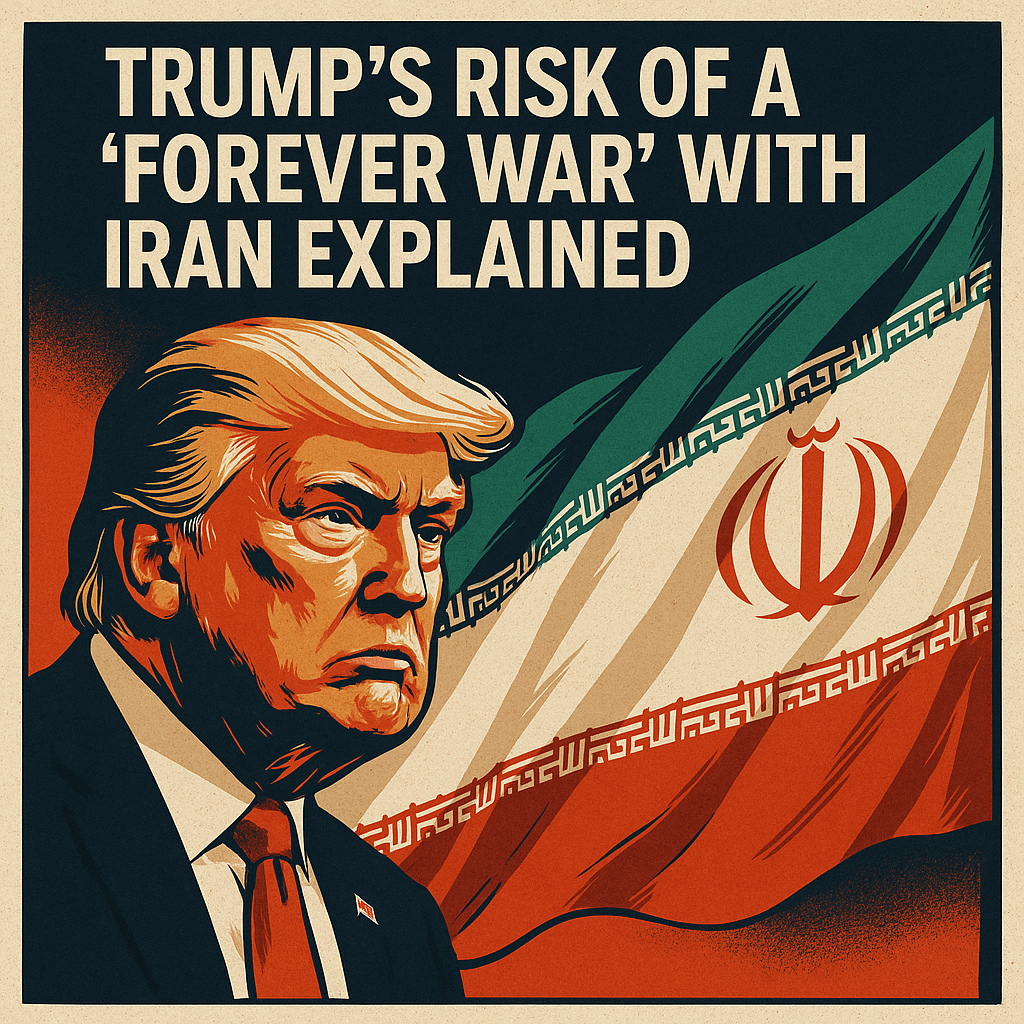
Trump’s Risk of a ‘Forever War’ with Iran Explained
Trump’s Risk of a ‘Forever War’ with Iran Explained
The potential for a ‘forever war’ with Iran has become a pressing topic in geopolitical discourse, especially amid escalating tensions following the U.S. withdrawal from the Iran nuclear deal. With former President Donald Trump’s approach still influential in American foreign policy, an understanding of his strategies reveals crucial insights into the ongoing threat of long-term conflict.

The Roots of Rising Tensions
The history between the U.S. and Iran is rife with conflict, dating back to the 1953 CIA-backed coup that overthrew Iran’s democratically elected Prime Minister Mohammad Mossadegh. These historical grievances now inform contemporary policy, as varying administrations grapple with how to manage Iran’s regional influence and nuclear ambitions.

Trump’s decision to withdraw from the Joint Comprehensive Plan of Action (JCPOA) in 2018 was a significant pivot. Promised to counter Iran’s nuclear program, the withdrawal alienated both U.S. allies and Tehran, leading to retaliatory measures from Iran, including heightened military provocations. According to Al Jazeera, the U.S. re-imposing strict sanctions resulted not only in economic turmoil for Iran but also in an increase in hostility and military tensions in the region. This reality suggests that Trump’s choices risk entrenching the U.S. in an ongoing cycle of conflict, where military responses become the norm rather than exceptions.

The Cycle of Military Engagement
A ‘forever war’ suggests a conflict without clear resolution or endpoint, often characterized by ongoing military engagements and unstable political solutions. The New York Times noted that under Trump, coupled with advisors pushing a hardline approach, there is a palpable risk of being drawn into military confrontations. Events such as the targeted killing of Iranian General Qassem Soleimani in early 2020 elevated these fears, as it was viewed not just as retaliation but as an escalation that could synergize a wider war.
PTA surveys suggest a split in American public opinion on military involvement in Iran, with some supporting interventionist policies while others advocate for diplomacy first. The latter group, reflecting sentiments from various experts, argues that escalating military operations without a coherent long-term strategy could entrap the U.S. deeper into regional conflicts, similar to Afghanistan and Iraq.
Diplomacy: A Possible Path Forward
Despite the prevailing fear of military escalation, alternative viewpoints from sources like RT emphasize the importance of diplomacy. Critics of a confrontational stance argue that the best solution involves dialogue and the reintegration of negotiations regarding Iran’s nuclear program. They cite precedents where diplomacy yielded more sustainable results than military action, including historical negotiations with North Korea, albeit with mixed outcomes.
Efforts to restore the Iran deal, albeit fraught with difficulties, highlight the complexity of the U.S.-Iran relationship. Negotiators face not only opposition from hardliners in Iran but also internal political pressures in the U.S. where calls for more aggressive stances remain loud. As expert analysts note, the absence of a definitive strategy continues to pose a challenge to American foreign policy, which runs the risk of perpetuating a cycle of violence.
Dangers of an Escalating Conflict
Understanding the imminent dangers of a prolonged confrontation is essential. If military measures are continually adopted, the likelihood of U.S. troops becoming ensnared in an unending conflict increases drastically. Historically, the absence of a clear exit strategy in conflicts has led to protracted engagement, significant loss of life, and costly expenditures, further complicating American foreign policy legitimacy globally.
Conversely, proponents of military interventions argue that firm actions may deter Iran from pursuing aggressive regional policies or expanding its nuclear capabilities. This perspective suggests an entrenched belief that deterrence through strength is imperative. Nevertheless, whether this will genuinely curb Iran’s ambitions or stir deeper resentment remains a matter of contentious debate.
Conclusion: The Balancing Act Ahead
The ongoing tensions underscore a delicate balancing act for U.S. policymakers. As information flows from diverse sources—ranging from hardline military strategies to diplomatic overtures—it becomes clear that the path forward is laden with complexities. The potential for a ‘forever war’ with Iran hinges not only on actions taken but also on the narratives adopted by those in power.
In summary, to prevent the descent into a prolonged conflict, a renewed focus on diplomacy, coupled with resolving historical grievances, may hold the key to a sustainable future in U.S.-Iran relations. As the geopolitical landscape continues to evolve, understanding these multi-dimensional perspectives will be crucial in guiding decisions that affect not just the two countries but global peace as a whole.















