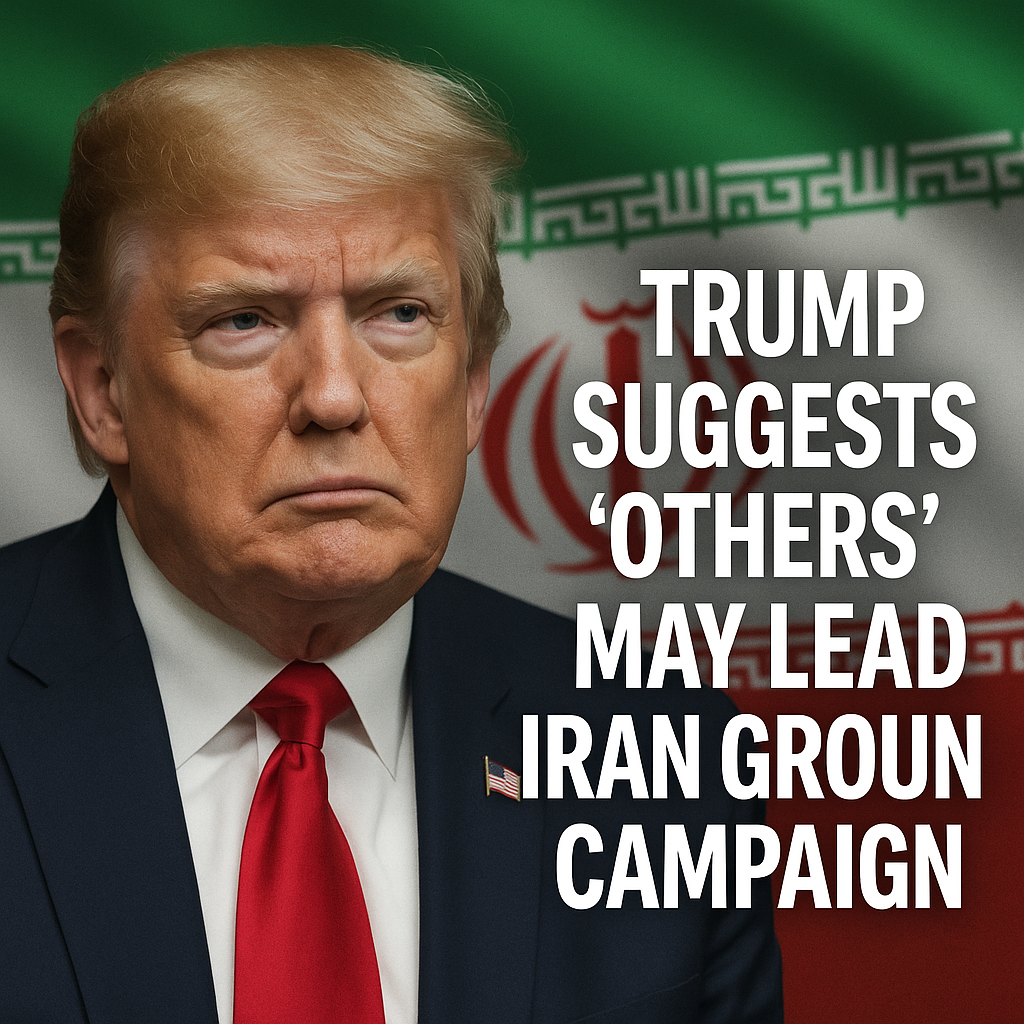
Trump Suggests ‘Others’ May Lead Iran Ground Campaign
Trump Suggests ‘Others’ May Lead Iran Ground Campaign
Former President Donald Trump has ignited conversations around the complexities of military intervention in Iran by suggesting that other nations should take the lead in any potential ground operation within the country. This remark comes amid discussions highlighting the ongoing tensions between the United States and Iran, emphasizing the intricate web of geopolitical interests affecting global diplomacy.

Context of Trump’s Statement
Trump’s comments were framed within a broader context of his administration’s approach to foreign policy, particularly regarding Iran. He indicated that while the U.S. should preserve its strategic interests in the region, it might be prudent for allies in the Middle East, such as Israel or Arab states, to undertake more direct military engagements. This perspective suggests a shift from unilateral American involvement to a more collaborative approach, which raises various implications for international relations.

From a geopolitical standpoint, the idea of “others” leading a ground campaign aligns with the longstanding U.S. strategy of coalition-building among its allies. During his presidency, Trump emphasized an “America First” approach, advocating for countries in conflict regions to take more responsibility for their national security. This stance resonates with sentiments expressed by various analysts who argue for a re-evaluation of American military duties abroad.

Mixed Reactions from Global Analysts
The response to Trump’s comments has been mixed, showcasing a spectrum of opinions on the feasibility and appropriateness of such an approach. Some experts argue that involving other nations in any military engagement in Iran could provide a strategic advantage by leveraging local knowledge and resources. Dr. Sarah Haines, an expert in Middle Eastern relations at the Rand Corporation, noted, “Having regional players take the lead could potentially reduce the negative perceptions of American intervention, which are often fueled by historical grievances.”
Conversely, there are concerns about the likelihood of synchronizing military efforts among disparate allies, especially given the varied objectives and strategies of regional actors. A piece from Al Jazeera highlighted that Iran’s geopolitical landscape is fraught with complexity; any ground operation would likely face substantial resistance, not just from Iranian forces but potentially from proxy groups aligned with Iran across the region. Analysts warn that reliance on others could lead to a fragmented approach, complicating operational efficiency and outcomes.
This divergence in views highlights a critical uncertainty—while the notion of outsourcing military operations may seem pragmatic, the real-world implications could be fraught with complications that undermine strategic objectives.
The Role of Diplomacy and Dialogue
Beyond the battlefield, many experts advocate for prioritizing diplomatic efforts over military responses. Several commentators emphasize that the long-standing effects of military actions have historically resulted in regional destabilization. They argue that a robust diplomatic framework could provide more sustainable solutions.
In this light, Trump’s idea of allowing others to take the lead might actually coincide with an increase in dialogue and negotiations among regional powers. The potential for diplomacy cannot be overstated; rather than jumping directly into foreign military interventions, a multi-faceted approach that includes negotiation, economic sanctions, and diplomatic relations could yield better outcomes in the long run.
It’s vital to consider that military solutions have often led to unintended consequences, further entrenching conflicts rather than resolving them. Therefore, while Trump’s suggestion opens a door for discussion about different approaches, it is crucial to weigh the historical context of military interventions against a backdrop of enhanced diplomatic efforts.
Conclusion: A Complex Web of Interest
In conclusion, Trump’s calls for “others” to lead a potential ground campaign in Iran signal a nuanced shift in how military commitments might be perceived in the future. The complexity of modern geopolitics requires an examination of both military and diplomatic strategies to navigate the interests of various nations involved. Though some may find appeal in the idea of delegating ground operations to allied states, the historical caution surrounding such actions warrants a comprehensive understanding of both the risks and benefits involved.
As this discussion evolves, the international community remains engaged in closely watching potential developments, as well as assessing the possibility of diplomatic avenues that might avoid further escalation in a region that has suffered from prolonged tensions. The interplay of military readiness and diplomatic initiatives will undoubtedly shape the geopolitical landscape as the world grapples with the realities of intervention and cooperation.