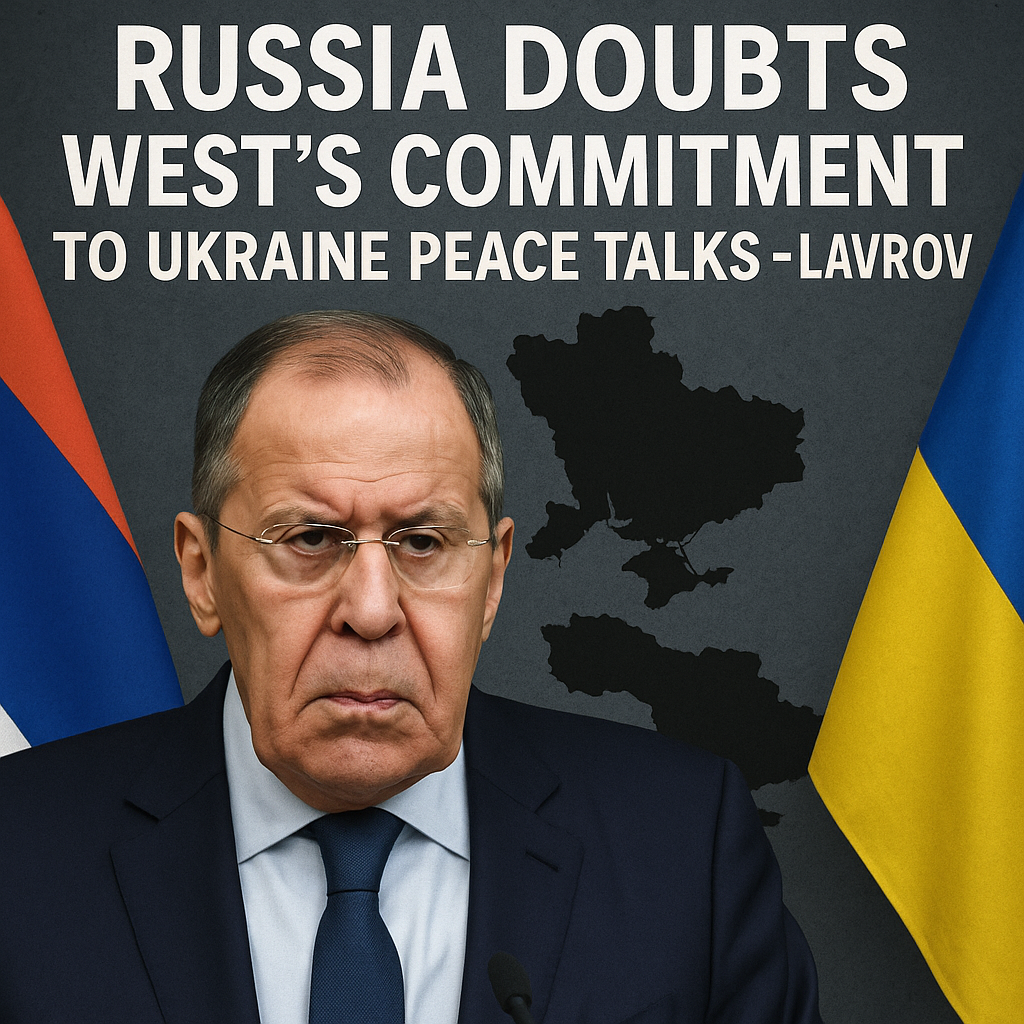
Russia Doubts West’s Commitment to Ukraine Peace Talks – Lavrov

Russia’s skepticism towards the West’s commitment to peace talks regarding Ukraine has become increasingly pronounced, especially with recent statements from Foreign Minister Sergey Lavrov. Lavrov’s comments have sparked renewed debates about the effectiveness and sincerity of ongoing dialogues surrounding the conflict that has gripped Ukraine since 2014.

The Basis of Russia’s Doubts
In an address that captured the attention of international media outlets, Lavrov expressed concern that the West lacks “goodwill” for genuine discussions aimed at resolving the ongoing conflict. This assertion reflects a broader sentiment within the Russian government that sees Western involvement as largely strategic, intent on undermining Russia rather than fostering a lasting peace. According to Lavrov, “The West, primarily the US, does not exhibit a genuine desire to resolve the crisis,” implying that the prevailing narratives are orchestrated to serve Western interests rather than the pursuit of peace.


This skepticism is not unfounded; many analysts suggest that the geopolitical dynamics at play often complicate negotiations. Reports indicate that Western nations have increased military support for Ukraine while simultaneously advocating for dialogue, creating a perception of a paradox in intentions. The Russian government interprets this as a power play where discussions are merely a tactic to gain leverage rather than a sincere effort toward resolution.


West’s Response and Contrasting Views
Contrary to Lavrov’s assertions, representatives from various Western nations argue that they are committed to a diplomatic resolution. The US, European Union, and other allies have frequently emphasized their desire to engage in talks, advocating for Ukraine’s sovereignty while maintaining pressure on Russia through sanctions and military aid. According to a recent statement from a U.S. State Department official, the West remains open to negotiations that respect Ukraine’s territorial integrity.
The disparity in perspectives raises important questions about the feasibility of peace talks. While the West might genuinely seek to engage in dialogue, the levels of military support are perceived by Russia as contradictory to the claims of wanting peace. This creates a climate of mistrust, making any negotiations difficult. Furthermore, some analysts suggest that the West’s insistence on pre-conditions—such as Russia withdrawing its troops—could be viewed as an ultimatum rather than an invitation to dialogue.
Analyzing the Path Forward
Given the complex layers of international relations and the deep-seated grievances on both sides, it is crucial to assess the possible pathways forward. Lavrov’s comments highlight an essential obstacle: the fundamental trust deficit between Russia and the West. For constructive negotiations to take place, both parties must commit not only to dialogue but also to fostering a climate of trust.
Challenges Ahead
– Mistrust and Hostility: For nations involved in a protracted conflict, mistrust becomes a formidable barrier. Each side’s narrative about the other’s intentions often frames their domestic policies and international strategies.
– Domestic Political Pressures: Leaders in both Russia and the West face significant domestic pressures that influence their positions. For instance, in the West, leaders must balance public opinion—many citizens favor a strong stance against Russia. In contrast, Russian leadership uses external threats to consolidate internal support.
– Global Implications: The war in Ukraine has broader repercussions for global stability and may influence relations with other nations. Non-aligned countries also observe the dynamics, which could sway their international alliances.
The Case for Diplomacy
Despite these daunting challenges, there is room for optimism. Scholars and diplomats advocate for third-party mediation and international forums that provide neutral ground for discussions. Involving impartial entities could help bridge the trust gap and offer a fresh perspective that might pave the way for substantive negotiations.
Collaboration with international organizations, such as the United Nations or the Organization for Security and Co-operation in Europe (OSCE), could help facilitate dialogue and monitor agreed-upon outcomes. By creating an environment where both sides feel secure, negotiations may yield progress in the long term.
Conclusion
As Lavrov’s assessment illustrates, skepticism regarding the West’s commitment to Ukraine peace talks remains a significant concern. The diverging views on intentions and actions raise essential questions about the future of Ukraine and the possibilities for peace in the region. Ultimately, any chance for resolution will require both parties to engage earnestly and foster mutual trust. While the road ahead is fraught with complexity, the potential for diplomatic engagement offers a glimmer of hope amidst the ongoing conflict.