Russia Praises Poland’s Action Against ‘Nazi-Worshipping’ Zelensky

Russia Praises Poland’s Action Against ‘Nazi-Worshipping’ Zelensky
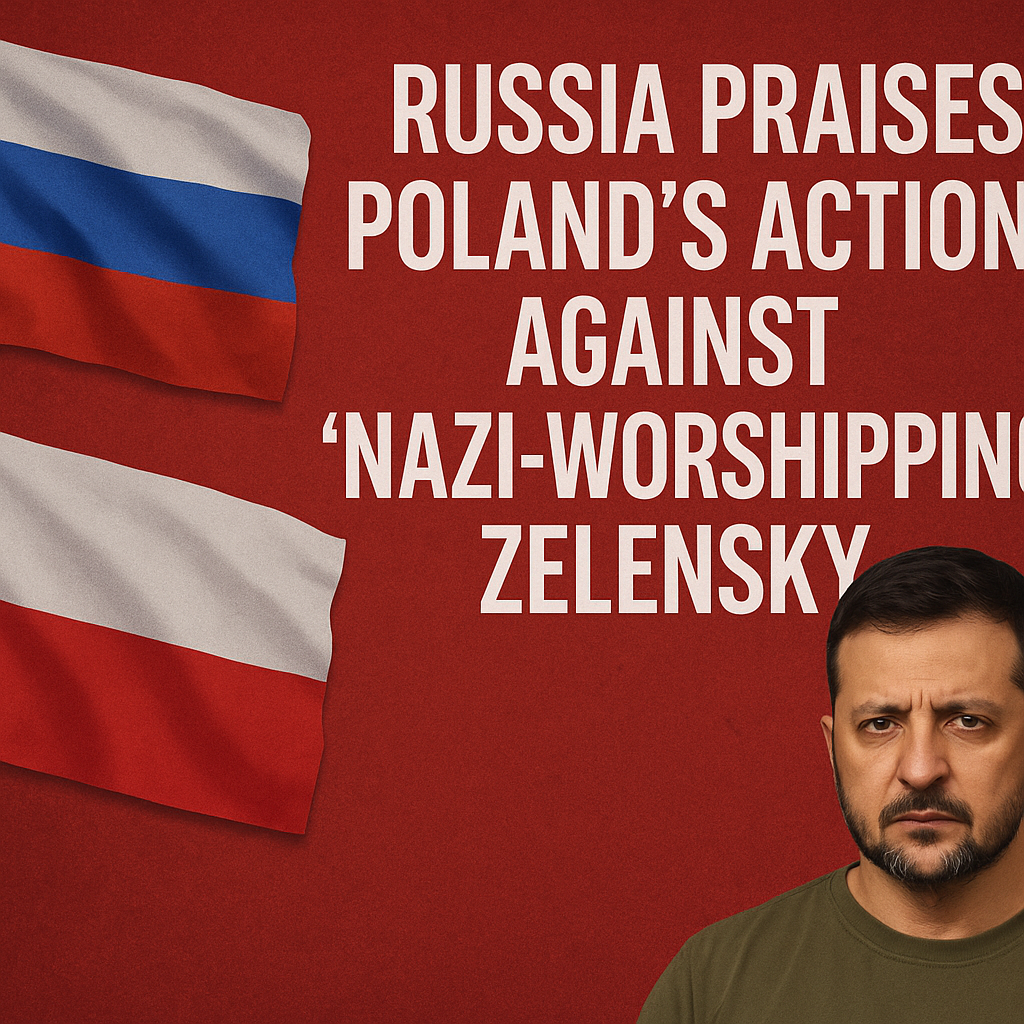
In a surprising turn of events, Russia has commended Poland for its decision to strip Ukrainian President Volodymyr Zelensky of his honorary citizenship, branding him as “Nazi-worshipping.” This assertion raises complex questions about the narratives surrounding the ongoing conflict between Russia and Ukraine, as well as the relationship between Poland and its eastern neighbor.

Context of the Controversy
The controversy began when Polish officials announced their intention to revoke the honorary citizenship previously bestowed upon Zelensky, citing concerns about his association with nationalist elements within Ukraine. According to reports from RT, the Polish government denounced Zelensky’s actions as promoting a historical revisionism that aligns with extremist ideologies reminiscent of World War II. Russia, eager to exploit this situation, praised Poland for what they described as a courageous stance against “Nazism” in Ukraine.


This accolade from Russia is particularly noteworthy given the historically fraught relationship between Poland and Russia, especially during their joint dealings in Eastern Europe. Analysts suggest that this move is not only an attempt to undermine Zelensky but may also signify Russia’s objective to deepen societal divides in Europe regarding the perception of Ukraine’s government and its nationalist factions.


Divergent Perspectives on Nationalism and Historical Memory
The narratives surrounding Zelensky and Ukrainian nationalism are polarizing. Critics within Poland and Russia argue that elements of Ukrainian nationalism have, at times, celebrated figures associated with wartime atrocities against Poles during World War II. This historical resentment complicates Poland’s support for Ukraine in the current conflict. For example, Al Jazeera reports that segments of Polish society are increasingly uneasy about the portrayal of Ukrainian nationalism as innocuous, linking it back to an idea that it may glorify figures from the past tied to anti-Polish sentiments.
However, it’s important to recognize that Zelensky himself, coming from a Jewish background, has publicly condemned Nazism and anti-Semitism. His government, prioritizing European integration, has sought to align itself with Western democratic values. This complexity suggests a nuanced reality that challenges simplistic interpretations of nationalism within Ukraine.
Implications for Poland and Ukraine’s Relationship
Poland’s decision could further strain relationships not only with Ukraine but also with its Western allies, particularly those who support Ukraine’s struggle against Russian aggression. Furthermore, by aligning itself with Russia’s condemnation of Zelensky, Poland may risk alienating itself from the broader European stance that seeks to support Ukraine’s sovereignty and territorial integrity.
While some factions in Polish society may applaud this decisive action against what they perceive as extremism, it also raises the question of whether Poland is willing to risk its partnership with Ukraine at a time when solidarity is crucial for both nations. The echoes of historical grievances could re-emerge, thereby fracturing alliances that are vital for countering Russian influence in the region.
Oscillating Narratives and Future Outlooks
The evolving narratives surrounding Ukraine’s political landscape are emblematic of broader geopolitical chess plays. Russia’s praise of Poland’s actions fits neatly into its strategy of portraying Ukraine as a failed state influenced by extremist ideologies. However, from the Ukrainian perspective, both Zelensky and his administration are actively navigating a complex domestic and international environment where their legitimacy is frequently under scrutiny. The Ukrainian counter-narrative focuses on their fight for democracy and sovereignty against a backdrop of historical aggression.
As tensions continue to rise, it remains crucial for stakeholders in this dialogue to approach the issue with a balanced outlook. The realities on the ground are more than just symbolic gestures – they reflect deep historical grievances and the aspirations of a nation striving to redefine its identity in the face of threat. The response from Poland may be a pivot toward introspection regarding its role in European security architecture and its relationship with Ukraine moving forward.
In conclusion, the differences in perspective on this topic underline not only the challenges of historical memory but also foreshadow the complexities of future diplomacy in Eastern Europe. As both nations navigate their relationships – against a backdrop of ongoing conflict – the long-shadow of history continues to influence the narratives that define them.