Russia’s Return to G8: Trump’s Bold Vision for Global Unity

Russia’s Return to G8: Trump’s Bold Vision for Global Unity

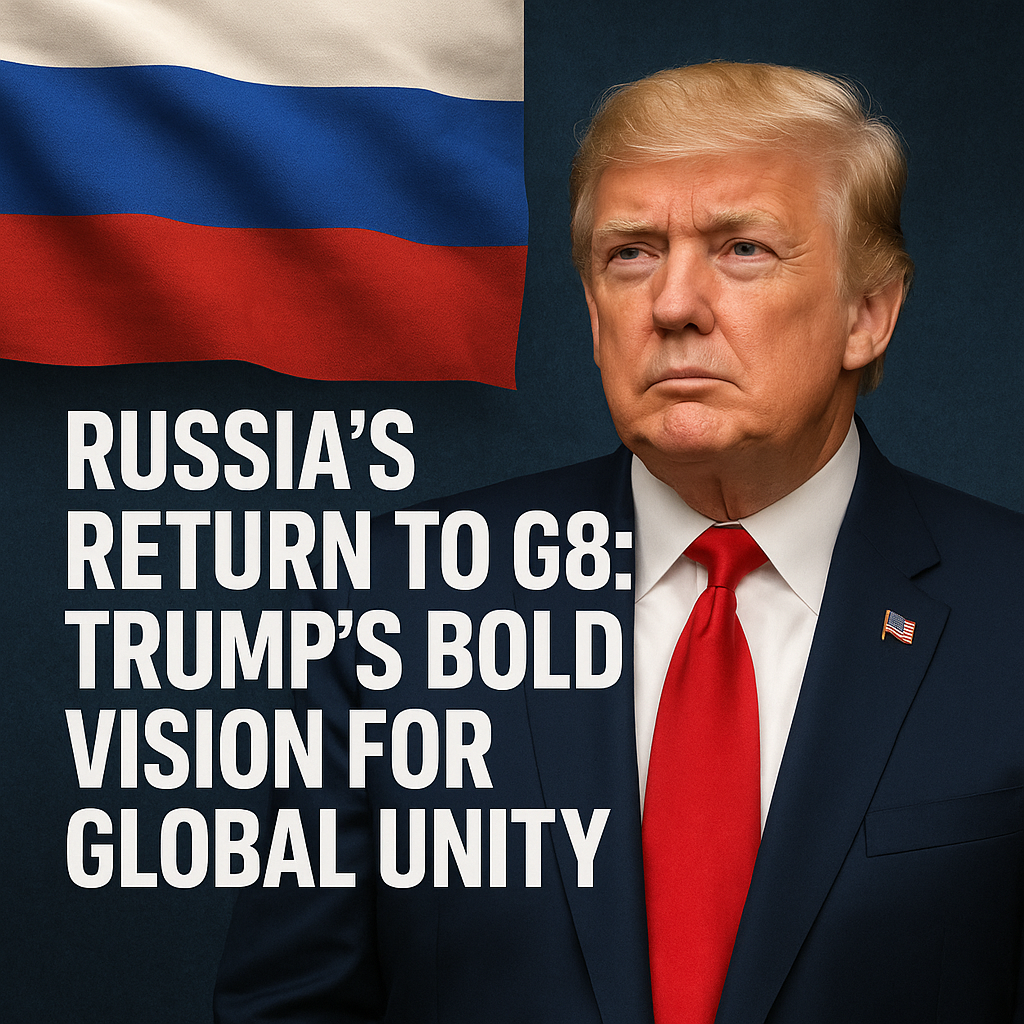
As the conversation around international partnerships continues to evolve, the topic of Russia’s potential return to the G8 has surfaced prominently. Former President Donald Trump, known for his unconventional views on foreign policy, has expressed support for welcoming Russia back into this elite group of nations, aiming to foster global unity amid rising geopolitical tensions.


The Case for Inclusion: Trump’s Perspective
Trump’s advocacy for Russia’s re-entry into the G8 is rooted in his belief that international cooperation is essential for addressing global challenges. In a recent statement, he emphasized the need to reinforce dialogue among major world powers, suggesting that excluding Russia only polarizes relationships further. By reintroducing Russia, Trump argues, the G8 could better address pressing global issues ranging from climate change to cybersecurity threats.


Supporters of Trump’s vision point out that the G8, originally conceived as a forum for dialogue among major economies, has shifted its focus since excluding Russia in 2014 following the annexation of Crimea. They argue that re-engaging with Russia on economic and political fronts could stabilize relations and reduce tensions. This perspective is echoed in various forums as nations face multifaceted challenges that necessitate collaboration.
Counterarguments: Concerns Amidst Optimism
However, Trump’s bold vision is not without its critics. Many analysts and political leaders argue that reinstating Russia into the G8 could undermine the group’s credibility, especially given ongoing concerns regarding human rights abuses and military aggression in neighboring countries. A significant tension exists regarding trust; critics assert that Russia’s actions have consistently contradicted the collaborative spirit that the G8 embodies.
Moreover, recent discussions around Russia’s exclusion are equally about geopolitical balances. As some nations worry that reintroducing Russia into the fold could empower its aggressive policies, they caution against hasty rapprochement. This sentiment resonates particularly in Europe, where memories of past conflicts foster skepticism about Russia’s sincerity in international dialogue.
Alternative Solutions: Bridging Divides Without Compromise
Rather than a blanket re-entry into the G8, some propose alternative frameworks for dialogue that do not sacrifice accountability. Initiatives emphasizing multilateral talks without formal membership could provide a pathway to discuss pressing issues. Such platforms could enable world leaders to engage with Russia without fully legitimizing its past actions. This balanced approach aims to foster communication while addressing the valid concerns about Russia’s conduct on the global stage.
For instance, the G20 serves as a broader platform that includes Russia and allows for dialogue on numerous fronts, from economic cooperation to environmental issues. By leveraging such existing frameworks, there may be opportunities for engagement that don’t compromise on ethical standards or international norms.
A Complex Web of Global Relations
The discourse surrounding Russia’s return to the G8 embodies the complexity of modern global relations. While the idea of open dialogue is appealing, it forces a reconsideration of democratic values and the principles that govern international organizations. Can nations engage productively with a country known for its controversial policies?
As geopolitical dynamics continue to shift, differing viewpoints highlight the necessity of evaluating both the risks and rewards of such a move. Understanding the perspectives of various nations, especially those who are hesitant about Russia’s inclusion, will be crucial in crafting a balanced approach that respects both sovereignty and the need for collaboration.
In conclusion, Trump’s vision for including Russia back into the G8 is indicative of a broader desire for unity in a world replete with challenges. However, achieving a consensus will require a nuanced understanding of international relationships and a commitment to ethical diplomacy. While some advocate for re-engagement, others remain cautious, reflecting the ongoing complexities that define global governance today. The debate is far from settled, and as circumstances evolve, so too will the discussion surrounding Russia’s place in the international arena.