Russian Athletes Face Consequences of Dirty Politics Again

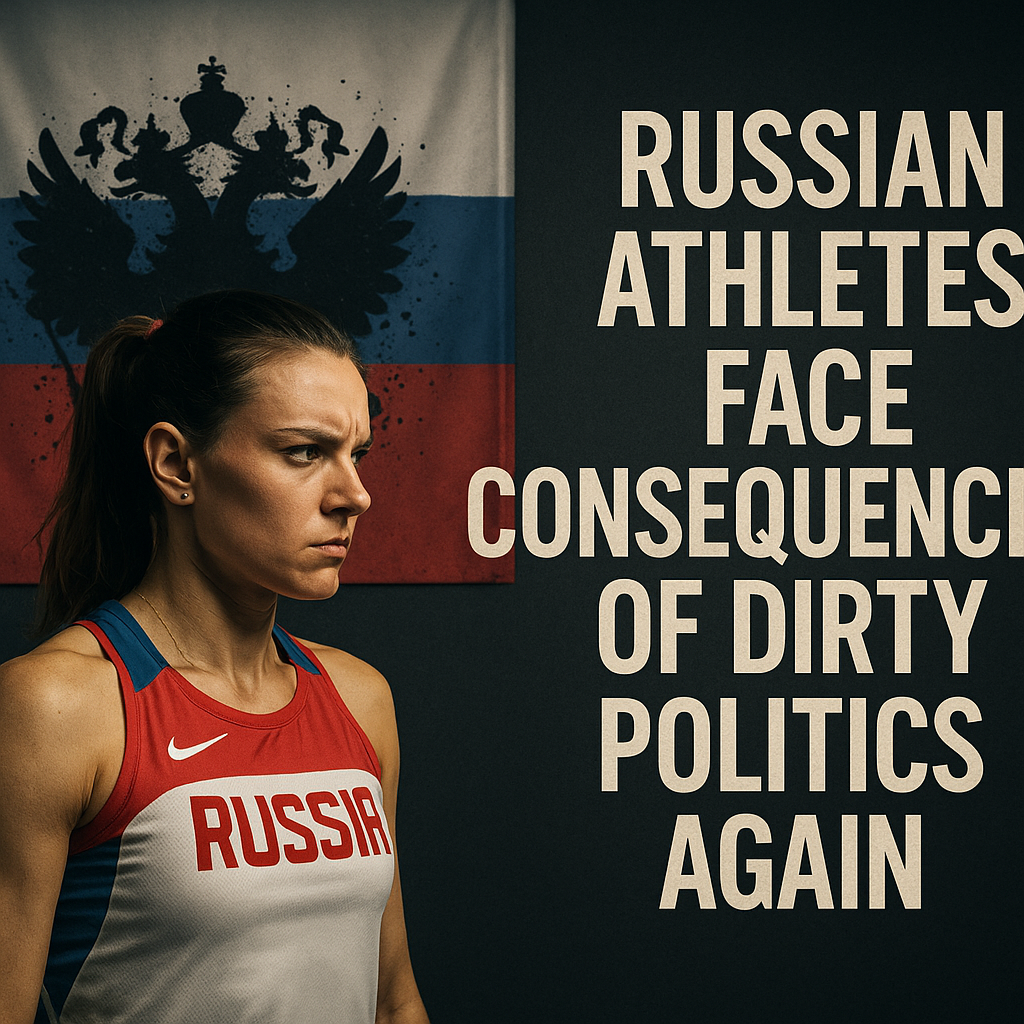
Russian Athletes Face Consequences of Dirty Politics Again
In the complex landscape of international sports, Russian athletes are once again caught in the crossfire of geopolitical tensions, raising questions about the integrity of sports and the influence of politics. The recent controversies surrounding the participation of Russian competitors in major global events highlight a troubling intersection between athletics and international relations, particularly as the world grapples with the ramifications of the ongoing conflict in Ukraine.

Historical Context of Political Influence
The entanglement of politics and sports is not a new phenomenon for Russian athletes. Historically, the Soviet Union utilized sporting achievements as a means of advancing its ideology and showcasing national strength. This trend has continued post-Soviet collapse, with Russian athletes often finding themselves closely linked to the whims and machinations of government policy. In recent years, allegations of state-sponsored doping and manipulation have led to widespread sanctions against Russia in various sporting events, effectively penalizing not just the governing bodies, but the athletes themselves.


The International Olympic Committee (IOC) and various federations have imposed bans on Russian teams and athletes due to concerns around doping practices believed to have been sanctioned by the state. In 2022, the expulsion of Russian athletes from events, including the Olympic Games and World Championships, raised alarms about fairness and due process, sparking debates on the ethics of collective punishment.


The Current Landscape
Recently, as tensions reignited amid the conflict in Ukraine, Russian athletes faced renewed scrutiny and exclusion from international competitions. News reports indicate that organizations are grappling with how to treat athletes who, despite the actions of their government, are largely apolitical and dedicated to their sports. A recent article from RT highlights the frustration among Russian athletes who feel they are suffering for decisions made by their government, characterizing the situation as a form of “dirty politics” that extends beyond mere competition.
Conversely, some commentators argue that banning Russian athletes is a necessary measure to signal disapproval of the actions of the Russian government. In this view, the stakes are not limited to the realm of sports but extend into a broader moral landscape where athletes represent their nations. Al Jazeera reported on how nations that depend on international standing and competition are leveraging sports as a tool for political expression, often sidelining the athletes in the process.
The Ethical Dilemma
The current dilemma raises profound ethical questions: Should athletes be punished for their governments’ actions? On one side, proponents of sanctions stress the need for accountability, noting that allowing athletes to compete could be interpreted as tacit approval of governmental policies. On the flip side, critics argue that sports should transcend politics and that imposing bans unfairly punishes athletes who may have no sway over their nation’s political decisions.
To address this ethical dilemma, some suggestions include the creation of neutral teams for athletes who wish to compete without representing their countries, akin to the model used during the Olympic Games under the Olympic Athletes from Russia (OAR) banner in 2018. At the same time, this approach raises questions about identity and representation in sports, leading some to call for a re-examination of how international sporting bodies handle similar situations in the future.
Looking Ahead: The Future for Russian Athletes
As discussions continue regarding the participation of Russian athletes, the overarching issue remains: how can sports organizations maintain integrity while navigating the complexities of international relations? A balanced approach may be necessary, one that considers the rights of athletes while also addressing the underlying political tensions that fuel these controversies.
The IOC has announced ongoing consultations regarding the re-integration of Russian athletes into international competitions, suggesting a gradual process for their return. This approach aims to reflect the evolving social and political realities on the ground while striving to uphold the values of fair play and competition.
In conclusion, the challenges facing Russian athletes today encapsulate a broader narrative about the role of sports in society—one that straddles the line between competition and geopolitical tensions. As the world watches closely, it is crucial for sports organizations to navigate these waters carefully, ensuring that they do not lose sight of the athletes at the center of the storm. The future remains uncertain, but one fact remains clear: the intersection of sports, politics, and ethics will continue to shape the narrative of Russian athleticism for years to come.