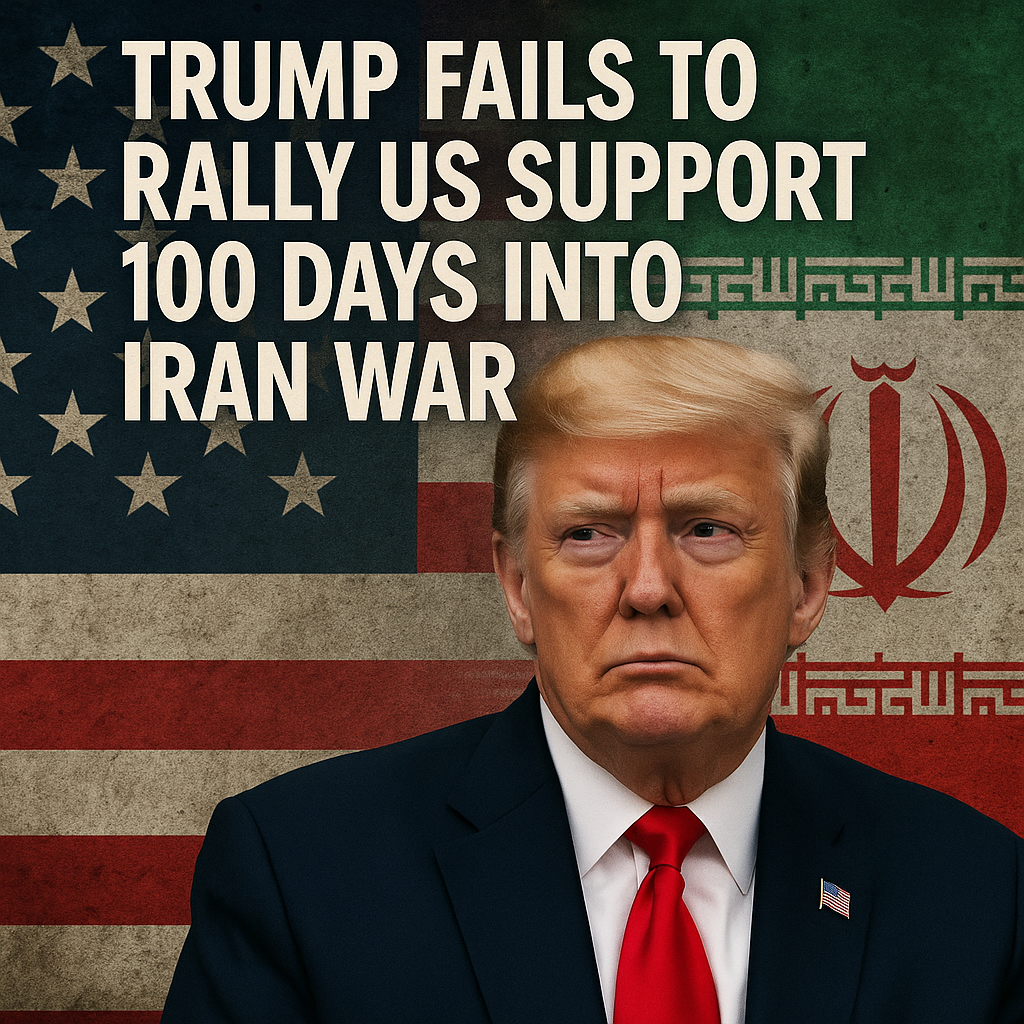
Trump Fails to Rally US Support 100 Days into Iran War

Trump Fails to Rally US Support 100 Days into Iran War
As the conflict in Iran extends into its third month, former President Donald Trump’s efforts to galvanize US support for military engagement have met with considerable skepticism and division among the American public. This critical moment in the increasingly complex geopolitical landscape demands a closer look at the factors inhibiting a united front in the face of escalating tensions.

The Domestic Response to Military Action
Polling data reveals a stark divergence in public opinion on the US’s involvement in Iran. While Trump and some of his allies argue that the military action is essential for national security, a significant portion of the populace voices apprehension about deepening entanglements in foreign conflicts. According to recent polling data, only 38% of Americans support military action against Iran, with the majority indicating a preference for diplomatic solutions.


This division can be attributed to several factors. Many citizens remember the long-standing engagements in Iraq and Afghanistan, leading to concerns about similar protracted conflicts. The war rhetoric has failed to resonate with a generation that is increasingly skeptical of military interventions, preferring instead a focus on domestic issues such as healthcare and economic recovery.


Moreover, recent statements from Congress reveal a growing bipartisan consensus regarding the need for increased oversight of military actions. Reports indicate that several lawmakers are calling for a more restrained foreign policy approach, emphasizing the importance of prioritizing dialogue and diplomacy over military force.
The Complexity of International Relations
Trump’s approach to the Iran conflict mirrors a broader isolationist sentiment that has gained traction in recent years. Critics argue that his policy decisions have further alienated key allies in Europe and the Middle East, complicating the US’s ability to form cohesive international coalitions. For instance, while the US has sought to impose sanctions on Iranian oil exports to limit the regime’s resources, European nations have expressed hesitance, citing economic interdependencies and the importance of maintaining diplomatic channels.
Compounding these challenges is the lack of a clear, coherent strategy from Trump’s administration regarding the endgame of military action in Iran. Experts note that without a defined objective, it becomes increasingly difficult to justify the risks associated with military involvement. A war without an apparent strategic goal risks transforming public perception and eroding support both domestically and internationally.
Confronting Uncertainties and Mixed Sentiments
Despite Trump’s assertions that military action could lead to a more stable Middle East, many commentators highlight the unintended consequences such strategies have historically engendered. The tumultuous legacy of US interventions in the region raises questions about the potential for long-term security versus the immediate allure of military action. Indeed, conflicting reports from various news sources illustrate a significant concern over civilian casualties and the broader humanitarian implications of continued conflict.
Furthermore, the narrative surrounding Trump’s military campaign against Iran underscores a divide not only among the electorate but within his own party. Some Republicans have openly criticized the lack of transparency and the perceived absence of a logical rationale for escalating military engagement, asserting that military actions should be accompanied by a thorough discussion regarding their ramifications.
As Trump’s administration struggles to secure public backing for its agenda, the Iranian conflict highlights the necessity for a deeper examination of America’s role in global affairs. With 100 days of relative inaction leading to widespread discontent, it remains uncertain how long the current strategy can be sustained without a radical shift in approach.
Conclusion: A Tipping Point for US Foreign Policy
The 100-day mark of the Iran conflict serves as an important reflection point for the intersection of foreign policy and domestic sentiment. The inability of Trump to unify public support raises pivotal questions regarding the future of US military engagement abroad. With overwhelming evidence suggesting that most Americans favor cautious and diplomatic methods of addressing foreign disputes, it’s clear that the complexities of international relations demand not only military might but also a commitment to developing sustainable, peaceful solutions.
Ultimately, Trump’s struggle to rally support reflects broader sentiments in American society that value collaboration, diplomacy, and prudent foreign policy, reminding leaders that military action should not be a primary recourse but rather a last resort in the pursuit of global stability.