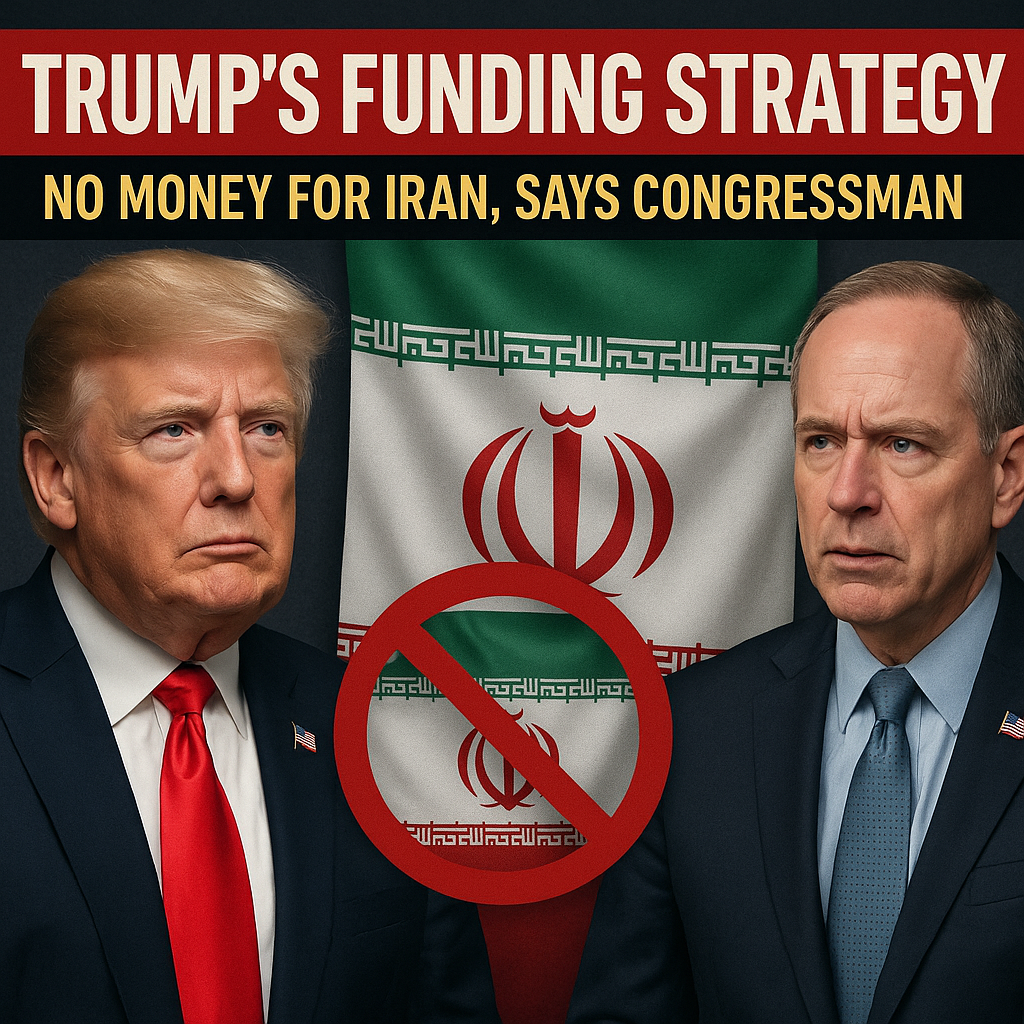
Trump’s Funding Strategy: No Money for Iran, Says Congressman

Trump’s Funding Strategy: Firm Stance on Iran Support
In recent discussions surrounding U.S. foreign policy, a prominent narrative has emerged: Trump’s funding strategy explicitly states “no money for Iran.” This declaration from a U.S. Congressman is underpinned by a complex backdrop of geopolitical tensions and domestic political motivations.

The Context of Trump’s Funding Strategy
The insistence that American financial resources will not be directed towards Iran reflects a broader strategy that aligns with Trump’s administration’s longstanding approach to the Middle East. Critics note that previous administrations had at times engaged financially with Iran as part of diplomatic negotiations aimed at managing nuclear development and regional instability. However, Trump’s presidency marked a significant shift towards a more isolationist stance, particularly in terms of financial engagements with nations deemed adversarial.


In a recent report, a U.S. Congressman emphasized that Trump would not approve financial support to Iran, effectively shutting down any potential avenues for economic aid or “loads of money” that could facilitate the regime’s ambitions. This perspective finds a receptive audience among Trump supporters and those skeptical of Iran’s geopolitical intentions.


Varied Reactions to the Funding Approach
While this hardline stance has its proponents, it is met with criticism from those who argue that such a strategy is shortsighted. Articles from various sources have highlighted the potential consequences of disengaging with Iran economically. For example, a viewpoint present in some circles suggests that withholding funds may further escalate tensions rather than foster peace. Critics argue that financial support in exchange for diplomatic concessions could provide a pathway to lower hostilities in the region, citing instances where strategic engagement has yielded positive results.
Conversely, proponents of Trump’s funding strategy view it as a necessary form of deterrence against a regime that they perceive as untrustworthy. By restricting financial aid, they argue that the U.S. sends a clear message of disapproval regarding Iran’s support for terrorist organizations and its threatening nuclear program.
The Impact on U.S.-Iran Relations
The implications of Trump’s funding strategy extend beyond immediate financial considerations. U.S.-Iran relations have historically been fraught with tension, particularly after the withdrawal from the Joint Comprehensive Plan of Action (JCPOA) in 2018. This withdrawal, coupled with the reinstatement of harsh sanctions on Iran, created an environment wherein negotiations became increasingly difficult.
A consensus within certain political spheres suggests that a continued lack of funding only serves to widen the rift between the two nations. As political analysts point out, while economically isolating Iran might appeal to some segments of the American populace, it could inadvertently contribute to further radicalization and conflict in the region.
A Diverse Spectrum of Opinions
Ultimately, Trump’s funding strategy embodies a spectrum of opinions, with various stakeholders expressing divergent views on its potential consequences. Insight from multiple reputable sources indicates a nuanced landscape where opinions range from fervent support to staunch opposition.
Some commentators highlight the risks of inconsistency in U.S. policy, arguing that abrupt financial restrictions could undermine long-term stability in the region. Conversely, there remains a strong faction that advocates for a resolute stance against perceived threats from Iran, viewing the decision to withhold funds as a demonstration of strength.
As discussions continue and the 2024 election season looms, observers may see shifts in these dynamics. Will the U.S. continue along this hardline path, or is there potential for a reassessment of engagement strategies with Iran? What remains clear is that the strategy of denying resources underscores a pivotal aspect of American foreign policy that will have lasting ramifications, not just for U.S.-Iran relations, but also for the broader geopolitical landscape.
In conclusion, Trump’s approach to funding Iran signifies a stark choice in American diplomacy—one that prioritizes national security concerns but may lack the nuanced understanding required to foster long-term peace.